


VDA 6.3 Scoring System A B C Grades Explained for Suppliers [2026]

In supplier quality audits, one of the most important topics I explain to teams is “VDA 6.3 scoring system grades A B C explained” because this directly affects supplier approval, business continuity, and OEM confidence.

As a Quality Manager and certified process auditor, I have seen suppliers lose nominations not because their product failed, but because their process audit scoring was weak and risks were not controlled.

In this detailed guide, I will explain how the scoring works in a simple human way with practical supplier examples, audit formulas, and real shopfloor interpretations so that you can prepare confidently for 2026 supplier audits.

Current references continue to confirm the widely used thresholds of A = 90% and above, B = 80–89%, and C = below 80%, along with downgrade rules for critical nonconformities.

VDA-6.3-scoring-system-grades-A-B-C-explained

For most automotive suppliers, especially Tier 1 and Tier 2 manufacturers, VDA 6.3 is not just an audit checklist. It is a business risk indicator used by OEMs and sourcing teams to decide whether a supplier is fully approved, conditionally approved, or at risk.

From my experience, more than 70–80% of supplier escalation cases are linked to process weaknesses in planning, supplier management, production controls, or customer complaint handling rather than pure dimensional defects.

VDA 6.3 grades are assigned based on the final compliance percentage of the process audit. Grade A means 90% or above, Grade B means 80% to 89%, and Grade C means below 80%.

However, critical findings such as zero-point questions, severe process risks, or automatic downgrade criteria can reduce the final grade even if the overall percentage looks acceptable.

What Is the VDA 6.3 Scoring System for Suppliers?

The VDA 6.3 assessment grades are used to measure how capable a supplier’s processes are across the entire product lifecycle, from planning to customer support. The scoring system is based on individual audit questions that are assigned 0, 4, 6, 8, or 10 points depending on the level of compliance and risk observed during the audit.

As a supplier-facing auditor, I always tell teams that this is not a document-only audit. The scoring reflects how well the process works in reality on the shopfloor.

For example, a control plan may exist on paper, but if the operator is using an outdated work instruction, the score can still drop to 4 or even 0 points.

A recent industry trend shows that automotive OEMs increasingly rely on risk-based process audit scoring rather than paperwork review alone. This aligns with broader IATF 16949 and supplier quality maturity practices, where process stability and prevention controls carry more weight.

For suppliers, this means the audit score directly influences:

  • supplier approval status
  • new business awards
  • SOP readiness
  • customer escalation risk
  • re-audit frequency
  • supplier development action plans

VDA 6.3 scoring system grades A B C explained:

This is the most important section for suppliers because the final grade is what customers usually review first.

The standard grading structure is:

  • Grade A = ≥ 90%
  • Grade B = 80% to 89%
  • Grade C = < 80%

These thresholds remain the most commonly used evaluation criteria in current supplier audits.

Let me explain this in a simple supplier example.

Suppose your production process audit score is 92% in P6 (Process Analysis / Production). Under normal conditions, this would be an A grade, meaning the process is considered capable and well controlled.

Now imagine the same supplier scored 92% overall, but one critical question related to special characteristic control was scored 0 points. In many OEM audit practices, this can lead to automatic downgrade from A to B or even C depending on severity.

This is why process audit result interpretation must always go beyond percentage alone.

How Individual Question Scoring Works?

Each question in VDA 6.3 follows a fixed VDA 6.3 evaluation formula based on compliance level and process risk.

Typical score levels:

  • 10 points = full compliance
  • 8 points = minor deviation
  • 6 points = partial compliance
  • 4 points = major deviation
  • 0 points = no compliance / severe risk

Let me explain with a supplier example from incoming material inspection.

Example 1: 10 Points

Incoming inspection criteria are defined, gauge calibration is valid, records are maintained, and defect escalation is working properly.

Result: 10 points

Example 2: 8 Points

System is working, but one operator missed record entry for one batch.

Result: 8 points

Example 3: 4 Points

Inspection standard exists, but operators are not following sampling frequency.

Result: 4 points

Example 4: 0 Points

No inspection at all for safety-critical purchased components.

Result: 0 points

In actual supplier audits, I often see 4-point findings in layered process audits, control plan adherence, and reaction plans.

VDA 6.3 Evaluation Formula and Percentage Calculation:

The VDA 6.3 evaluation formula is simple but very important for supplier teams.

The calculation is:

Final Score % = (Total Points Obtained / Maximum Possible Points) × 100

VDA-6.3-Evaluation-Formula

Let us take a practical supplier example.

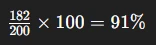
Assume the total possible score for audited questions is 200 points.

The supplier obtained 182 points.

Then:

Final result = 91% = Grade A

This is the minimum score VDA 6.3 suppliers aim for during customer audits.

Supplier Example: Grade A Audit Scenario

Let me explain this exactly as I would during a supplier coaching session.

A machining supplier producing steering components undergoes a VDA 6.3 process audit.

Audit findings:

  • Project management strong
  • PFMEA updated
  • SPC running on CTQ dimensions
  • Gauge R&R acceptable
  • reaction plan active
  • no customer complaints in last 6 months

Final score = 94%

This becomes Grade A

In supplier development language, this means:

  • process capable
  • low risk
  • supplier approved
  • business continuation safe

Supplier Example: Grade B Audit Scenario

Now let us take a more realistic case.

A stamping supplier scores 85%.

This falls under Grade B.

Common findings may include:

  • delayed calibration records
  • incomplete operator skill matrix
  • weak preventive maintenance evidence
  • delayed closure of previous audit actions

This supplier is generally acceptable, but corrective action VDA 6.3 requirements become mandatory.

In most OEM programs, the supplier is asked to submit:

  • 8D report
  • action plan
  • root cause analysis
  • effectiveness verification timeline

Usually within 15 to 30 days.

VDA 6.3 Pass/Fail Criteria:

For suppliers searching online, the most important point is this:

VDA 6.3 pass fail criteria are not based only on the final percentage. Critical risks, zero-point findings, or severe control failures can automatically reduce the final grade.

A score above 90% is generally Grade A, but critical product or process risks may still prevent full approval.

What Grade A Really Means for Suppliers?

A Grade A is generally awarded when the final process audit scoring is 90% or above, and there are no major risk findings that trigger downgrade rules.

In practical terms, this means the supplier’s processes are considered quality capable, stable, and low risk. Current references continue to support this threshold and define A as full compliance / quality capable.

From my audit experience, Grade A is not just about scoring above 90%. The process must also demonstrate strong prevention controls, evidence-based monitoring, and immediate reaction plans for deviations.

For example, if your PFMEA, Control Plan, SPC, and operator training matrix are all aligned and effectively implemented, it strongly supports an A-grade outcome.

A supplier with Grade A is usually viewed as:

  • process capable
  • low customer risk
  • business award ready
  • nomination safe
  • reduced re-audit frequency

Many OEMs and Tier 1 customers use Grade A suppliers as preferred sources for new launches and ramp-up programs.

VDA 6.3 Grade A Requirements in Real Audits?

The VDA 6.3 grade A requirements go beyond documentation. I always tell suppliers that auditors look for evidence of control on the shopfloor.

Typical expectations include:

  • updated PFMEA
  • approved Control Plan
  • reaction plan for out-of-control conditions
  • calibration validity
  • process capability studies
  • operator qualification records
  • layered process audits
  • traceability system

For example, if a machining supplier shows CpK > 1.67 on safety dimensions, reaction plan records for every SPC alarm, and preventive maintenance closure within target, this strongly supports Grade A.

A recent supplier report example also shows suppliers scoring 96–98% with A classification when no zero-point or star-question failures exist.

Supplier Example – Realistic Grade A Case:

Let me explain this with a practical automotive example.

A forging supplier manufacturing steering knuckles was audited under P5, P6, and P7.

Key observations:

  • supplier management fully approved
  • incoming raw material verification robust
  • heat treatment traceability maintained
  • SPC active on bore diameter
  • customer complaints closed within 10 days
  • no repeat issues in 12 months

Final score = 93%

No zero-point finding.

No critical star-question failure.

Final rating = A

This is exactly how process audit result interpretation should be done.

What Grade B Means for Suppliers?

A Grade B is normally assigned when the final score is 80% to 89%. This means the supplier is conditionally acceptable, but improvement is required before full confidence can be restored.

In simple words, the customer is saying:

“Your process is working, but we still see risks.”

This is one of the most common VDA 6.3 assessment grades I see during routine supplier audits.

Typical issues leading to Grade B:

  • incomplete preventive maintenance
  • weak mistake-proofing
  • overdue calibration
  • operator skill gaps
  • delayed CAPA closure
  • poor supplier sub-tier control

In many OEM systems, a B-grade supplier remains approved but must submit corrective action VDA 6.3 plans within a strict timeline.

Usually:

  • 7 days for containment
  • 14 days for root cause
  • 30 days for implementation
  • 60–90 days for effectiveness

Supplier Example – Grade B Scenario:

Let me share a very common supplier example.

A plastic molding supplier scored 86%.

At first glance, this looks acceptable.

However, audit findings included:

  • mold PM overdue by 18 days
  • no evidence of last layer audit
  • skill matrix not updated for 2 operators
  • no documented reaction plan for flash defects

Because the process was still functioning and product risk was moderate, the supplier received Grade B.

This means business may continue, but close monitoring is expected.

What Grade C Means for Suppliers?

A Grade C is the most critical outcome in VDA 6.3.

This is generally assigned when the minimum score VDA 6.3 requirement of 80% is not met, or when critical findings trigger automatic downgrade.

A Grade C means:

  • process not capable
  • major quality risk
  • immediate action required
  • possible business hold
  • possible re-audit at supplier cost

This is where supplier escalation usually starts.

Many customer manuals clearly mention that a C rating can directly affect supplier evaluation status irrespective of other score factors.

Automatic Disqualification and Downgrade Rules:

This is the most important section in the entire article.

The automatic disqualification VDA rules are what many suppliers misunderstand.

Even if the total score is above 90%, the supplier can still be downgraded.

For example:

  • one 0-point question
  • one critical star question
  • one sub-element below threshold
  • one severe process risk

can downgrade the result.

For example, references show:

  • A → B downgrade if any process element is below 80%
  • A/B → C downgrade if critical element is below 70%
  • zero-point star questions may directly force C rating

This is one of the biggest VDA 6.3 pass fail criteria that suppliers must understand.

Critical Example – 92% but Still Downgraded:

Let me explain a real-world style example.

Supplier score = 92%

Looks like Grade A.

But during audit:

Question: special characteristic monitoring

Finding: No SPC, no reaction plan, no traceability

Score = 0 points

This is a critical product safety risk.

Result: downgraded to B or C

This rule is clearly supported by multiple VDA-based evaluation references.

This is why I always advise suppliers to focus on high-risk questions first, especially:

  • star-marked questions
  • safety characteristics
  • customer-specific requirements
  • traceability
  • reaction plan controls

Key Scenario:

A supplier can receive Grade B or Grade C even with a high percentage score if the audit contains zero-point critical findings, star-question failures, or process element scores below downgrade thresholds. In VDA 6.3, final grade depends on both percentage score and risk severity, not percentage alone.

How to Improve from Grade C to Grade A?

One of the most common questions I receive from supplier teams is: “How do we move from a C grade to A in the next audit?”

The good news is that this is absolutely possible if the improvement actions are structured and evidence-based.

The first step is to separate systemic issues from isolated issues. For example, if the low score came from one isolated calibration lapse, the recovery plan will be different from a plant-wide process control weakness.

In my experience, suppliers that move from below 80% to above 90% within 90 days usually focus first on high-risk questions and star-marked requirements.

A practical improvement roadmap should cover:

  • root cause analysis
  • immediate containment
  • permanent corrective actions
  • effectiveness checks
  • management review
  • pre-audit verification

This is fully aligned with current VDA 6.3 follow-up and closure expectations.

Step 1: Close All Critical 0-Point Findings First

The fastest way to improve the process audit scoring is to close every 0-point and 4-point finding first.

For example, if the customer identified:

  • no traceability
  • no reaction plan
  • no SPC on critical dimensions
  • no PFMEA update
  • missing process release

these should be the first priority.

I always tell suppliers not to spend time polishing documentation while critical production controls are weak. A missing traceability control in serial production can directly lead to a C rating and customer escalation, even if all other areas look good.

A very practical example is a machining supplier that scored 76% because no reaction plan existed for bore diameter variation. After implementing SPC alarm limits, escalation matrix, and hourly verification checks, the next audit score improved to 91%.

That is how process audit result interpretation converts into real action.

Step 2: Use 8D and Corrective Action VDA 6.3 Approach

For every Grade B or Grade C finding, I strongly recommend using a formal 8D corrective action approach.

A strong corrective action VDA 6.3 plan should include:

  • D1: team formation
  • D2: problem definition
  • D3: containment action
  • D4: root cause
  • D5: permanent corrective action
  • D6: validation
  • D7: prevention
  • D8: closure and recognition

Current audit checklist references also emphasize cause analysis and effectiveness verification as key evaluation points.

For example, if incoming material defects are causing line stoppage, the corrective action should not simply say “supplier informed.”

Instead, it should include:

  • revised incoming inspection frequency
  • supplier containment lot segregation
  • updated supplier scorecard
  • revised escalation threshold
  • effectiveness evidence after 30 days

This is what customers expect during follow-up audits.

Step 3: Focus on P5, P6, and P7 for Faster Score Improvement

From my practical experience, the quickest score improvements usually come from P5, P6, and P7 because these are the areas customers review most closely in supplier audits.

These include:

  • supplier management
  • serial production control
  • customer complaint handling
  • field failure response
  • traceability
  • process capability

Many suppliers improve by 8–12 percentage points just by strengthening these three process elements.

For example:

  • P5 = supplier incoming controls
  • P6 = shopfloor process controls
  • P7 = complaint closure and warranty feedback

These areas are clearly highlighted in recent process audit guidance.

Supplier Audit Preparation Checklist (Practical Version):

Before every customer or internal audit, I recommend using this supplier readiness checklist.

Documentation Readiness:

  • PFMEA latest revision
  • Control Plan updated
  • process flow diagram approved
  • SOP / work instructions latest version
  • customer CSR compliance
  • calibration validity

Shopfloor Readiness:

  • operator training matrix
  • visual standards
  • poka-yoke validation
  • SPC live records
  • reaction plan displayed
  • segregation for rejection parts

Management Readiness:

  • KPI dashboard
  • rejection trend
  • customer complaints
  • supplier PPM trend
  • 8D status
  • previous audit closure evidence

This directly supports better VDA 6.3 assessment grades.

Common Supplier Mistakes That Reduce Scores:

This section is very important because I repeatedly see the same issues during audits.

Mistake 1: Documentation Not Matching Shopfloor

PFMEA says 100% inspection.

Operator is doing hourly checks.

This creates immediate score reduction.

Mistake 2: No Evidence

Teams verbally explain controls but cannot show records.

No evidence = lower score.

Mistake 3: Weak Reaction Plan

Many suppliers show SPC charts but no defined action when process goes out of control.

This often results in 4 or 0 points.

Mistake 4: Previous Audit Actions Still Open

This is one of the fastest ways to lose trust with customers.

In my experience, repeat findings alone can reduce the customer’s confidence even before formal scoring begins.

How to Improve VDA 6.3 Audit Grade From C to A?

To improve a VDA 6.3 audit grade from C to A, suppliers should first close all critical 0-point findings, strengthen serial production controls, implement 8D corrective actions, and validate effectiveness through evidence-based follow-up audits.

Most score improvements come from better control plans, SPC, traceability, and complaint closure systems.

From a Quality Manager and certified auditor perspective, the best way to use the VDA 6.3 scoring system grades A B C explained framework is to treat it as a risk reduction tool rather than only an audit score. Suppliers that consistently maintain above 90% scores usually have stronger preventive systems, better operator discipline, and faster CAPA closure cycles.

In today’s automotive environment, customers increasingly link supplier audit scores with sourcing decisions, launch readiness, and business continuity.

This makes VDA 6.3 one of the most important process maturity tools for 2026 and beyond.

Final Conclusion:

To summarize everything clearly:

  • A = 90% and above
  • B = 80–89%
  • C = below 80%

But as I explained throughout this article, percentage alone is not enough.

The final audit findings classification also depends on:

  • critical findings
  • zero-point questions
  • downgrade rules
  • process risk severity
  • evidence effectiveness

Suppliers who focus on process discipline, preventive controls, and timely corrective action closure consistently perform better in VDA 6.3 audits and customer assessments.

Frequently Asked Questions (FAQs)

1. What is the VDA 6.3 scoring system and how does it work?

The VDA 6.3 scoring system is a process audit evaluation method used mainly in the automotive industry to assess how effectively a supplier manages its processes from project planning to customer support.

Each audit question is typically scored as 0, 4, 6, 8, or 10 points based on the level of compliance and process control observed during the audit.

The total score is then converted into a percentage using the standard formula: (points obtained ÷ maximum points) × 100. Based on the final percentage and any critical findings, the supplier is assigned a Grade A, B, or C.

2. What do Grade A, Grade B, and Grade C mean in VDA 6.3?

In VDA 6.3, the grades are used to quickly show the supplier’s process capability and risk level.

  • Grade A: 90% and above
  • Grade B: 80% to 89%
  • Grade C: Below 80%

A Grade A means the supplier process is considered stable and low risk.

A Grade B means the supplier is acceptable but requires improvement actions.

A Grade C means the process has major weaknesses and needs urgent corrective actions, and in some cases, it may affect customer approval or future business opportunities.

3. What is the minimum score required to pass a VDA 6.3 audit?

The minimum score VDA 6.3 suppliers usually need to pass is 80%, which generally corresponds to Grade B. However, it is important to understand that a percentage above 80% does not always guarantee a pass if there are critical 0-point findings or downgrade conditions.

Many customers also expect strategic suppliers to maintain 90% or above for continued confidence and new project nominations.

4. Can a supplier get a Grade C even if the score is above 90%?

Yes, this is one of the most important points suppliers must understand. A supplier can still receive a Grade C or a downgraded grade even with a score above 90% if the audit includes:

  • 0-point critical questions
  • failure in special characteristics control
  • traceability gaps
  • severe customer-specific requirement violations
  • major product safety risks

This is often called automatic disqualification or downgrade logic in the VDA 6.3 pass fail criteria.

5. How is the VDA 6.3 final percentage calculated?

The final percentage is calculated using the VDA 6.3 evaluation formula:

VDA-6.3-Evaluation-Formula

For example, if a supplier scores 182 points out of 200, the calculation becomes:

This means the supplier gets 91%, which usually falls under Grade A.

6. What are the most common reasons suppliers lose marks in VDA 6.3 audits?

From a practical supplier audit perspective, the most common reasons for low scores include poor shopfloor control and lack of evidence.

Typical reasons include:

  • outdated PFMEA
  • weak Control Plan linkage
  • no SPC records
  • missing calibration evidence
  • operator training gaps
  • delayed corrective actions
  • poor traceability

These issues often reduce the process audit scoring significantly, especially in P5, P6, and P7.

7. How can a supplier improve from Grade C to Grade A?

A supplier can improve from Grade C to Grade A by first addressing all critical and 0-point findings, followed by implementing a structured 8D corrective action plan. The focus should be on high-risk process controls such as SPC, traceability, reaction plans, operator training, and preventive maintenance.

In many real supplier cases, scores improve by 10–15 percentage points within 60 to 90 days when corrective actions are effectively implemented and verified.

8. Which process elements are most important for scoring in VDA 6.3?

While all process elements are important, in supplier audits the most heavily reviewed sections are usually:

  • P5 – Supplier management
  • P6 – Production process
  • P7 – Customer support and complaint management

These directly impact serial production quality, defect prevention, and customer satisfaction, which is why they often carry the most weight during supplier evaluation and scoring.

9. Is VDA 6.3 mandatory for automotive suppliers?

VDA 6.3 may not always be legally mandatory, but for many OEMs, Tier 1 suppliers, and global automotive programs, it is often a customer-specific mandatory requirement.

Many sourcing decisions, supplier approvals, and launch readiness reviews depend on the VDA 6.3 assessment grades. In practice, suppliers working with German OEMs and international automotive customers are very often expected to comply with it.

10. Why is VDA 6.3 scoring important for supplier business growth?

The VDA 6.3 scoring system grades A B C explained framework is important because customers use it as a direct indicator of supplier process maturity, quality risk, and future business readiness.

Suppliers with Grade A are generally seen as low-risk partners and are more likely to receive new business awards, long-term contracts, and strategic project nominations.

A strong audit score also improves customer trust, reduces escalations, and supports better supplier performance metrics such as PPM and on-time delivery.

This Page uses Affiliate Links. When you Click an Affiliate Link, we get a small compensation at no cost to you. Our Affiliate Disclosure for more info.

Leave a comment