

VDA 6.3 Potential Analysis: What It Is and How to Perform It [2026]

If you are working in automotive quality, supplier development, or new supplier onboarding, understanding VDA 6.3 potential analysis how to perform is one of the most important skills you can build in 2026. 

I say this from my experience as a Quality Manager and certified process auditor—many supplier failures begin much earlier than production, and the real risk usually starts during supplier selection itself. 

That is exactly where the VDA 6.3 P1 potential analysis becomes a powerful decision-making tool.

Today, OEMs and Tier 1 suppliers are putting far more focus on supplier readiness assessment VDA, especially before nomination and pre-series launch. 

Industry studies continue to show that nearly 60% to 70% of major supplier-related quality issues can be traced back to weak capability checks during early sourcing and project planning stages. This is why companies now use a more structured supplier capability assessment approach before awarding business.

In this article, I will guide you step by step exactly how I perform this assessment in real industry situations, including practical examples, checklist points, audit questions, scoring logic, and what auditors actually look for.

VDA-6.3-potential-analysis-how-to-perform

Contents

What is VDA 6.3 potential analysis?

VDA 6.3 Potential Analysis, also called P1 potential analysis, is an early-stage supplier evaluation used to assess whether a new supplier, new plant location, or new technology source has the capability to meet automotive quality, process, and customer requirements before business nomination or production launch.

It focuses on technical competence, process maturity, infrastructure, risk controls, and project readiness.

What Is VDA 6.3 Potential Analysis?

The P1 element in VDA 6.3 is specifically designed for new supplier potential analysis. In simple terms, this is a pre-production audit automotive assessment carried out before placing an order or nominating a supplier for a new project. 

Unlike regular process audits that review running production, this stage checks whether the supplier has the potential to succeed.

From my experience, this is one of the most critical gates in supplier quality management. Once a supplier is nominated, changing them later can cost a company millions in tooling, delay penalties, and launch risk. 

A well-executed supplier readiness assessment VDA helps reduce that risk significantly.

The official guidance clearly states that P1 is used for new suppliers, new manufacturing locations, or new technologies. The objective is to predict whether the supplier can meet expected quality and process requirements before the start of serial production.

For example, if I am qualifying a new plastic injection molding supplier for automotive interior trims, I do not wait for SOP to begin auditing. I conduct the VDA 6.3 P1 potential analysis during supplier sourcing and technical feasibility review.

Why Potential Analysis Matters in 2026?

In 2026, supply chains are more complex than ever. Many Tier 1 and Tier 2 suppliers are expanding to new regions such as India, Vietnam, Mexico, and Eastern Europe. With this expansion comes a higher risk of process variation, infrastructure gaps, and supplier maturity issues.

I have personally seen projects delayed by 8 to 12 weeks because a supplier was selected based only on cost and capacity, without a proper supplier capability assessment. In one case, the supplier had machines and manpower, but no proper SPC control plan, weak calibration systems, and no APQP structure.

This is exactly why leading OEMs now make P1 audit questions mandatory before sourcing approval.

Common risks identified during potential analysis include:

  • weak project planning
  • lack of automotive experience
  • poor traceability system
  • missing process validation
  • limited technical staff
  • poor maintenance systems
  • no documented risk management

Even a supplier with attractive commercial pricing can become a major operational risk if these basics are missing.

When Should You Perform a VDA 6.3 P1 Potential Analysis?

This is one of the most common questions I receive from supplier quality engineers.

The answer is simple: perform it before nomination and before tooling release.

This means the audit should happen during:

  • supplier sourcing stage
  • RFQ technical evaluation
  • feasibility review
  • pre-award capability validation
  • new location approval
  • new process technology launch

This also applies when an existing supplier opens a new plant. Even if the supplier has a good history, the new location may have different process maturity.

For example, I once audited an existing approved supplier that opened a second machining facility. Their main plant had excellent quality performance at PPM below 25, but the new location lacked experienced engineers and had no preventive maintenance system. 

Without P1, this risk would have gone unnoticed.

VDA 6.3 potential analysis how to perform?

Now let me explain the exact practical method I personally follow.

The best way to perform this audit is through a structured stage-wise supplier evaluation model.

Step 1: Understand Customer and Product Requirements

Before visiting the supplier, I first study the complete project requirement.

This includes:

  • customer drawings
  • special characteristics
  • CTQ dimensions
  • annual volume
  • process expectations
  • traceability needs
  • regulatory requirements
  • customer-specific requirements

Without this preparation, the audit becomes too generic.

For example, if the part is a safety-critical brake component, the audit focus must go deeper into process capability new suppliers, mistake proofing, MSA, SPC, and heat treatment validation.

I also review expected annual volume because capacity planning is a major part of new supplier potential analysis.

Read more from:

Step 2: Review Supplier Background

Before the physical audit, I always conduct a desk review.

This includes checking:

  • IATF 16949 certification
  • ISO 9001 certification
  • customer performance history
  • PPM data
  • delivery performance
  • customer complaints
  • engineering capability
  • financial stability

Statistics matter here.

For example, suppliers with delivery OTIF below 90% during previous launches statistically show higher launch risk. Similarly, high warranty claim history often indicates process control weakness.

This stage helps build the initial risk profile.

Step 3: Conduct On-Site Supplier Capability Assessment

This is the most practical and important stage.

During the plant visit, I assess actual readiness through:

  • manufacturing flow
  • machine condition
  • inspection systems
  • layout efficiency
  • material handling
  • traceability
  • calibration status
  • process controls
  • operator competence

I strongly believe the shop floor tells the truth faster than documents.

A supplier may show perfect procedures on paper, but the real situation becomes clear when you observe:

  • line discipline
  • visual controls
  • rework zones
  • defect segregation
  • operator standard work

For example, if rejected parts are mixed with good parts, I immediately flag this as a serious containment risk.

Key P1 Audit Questions I Personally Use:

Here are some of the most effective P1 audit questions I use in actual audits.

1. Technical Capability:

  • Does the supplier have experience with similar products?
  • Are engineering resources available?
  • Is there APQP knowledge?
  • Is PFMEA methodology understood?
  • Are control plans defined?

2. Process Capability:

  • Are machines suitable for tolerance requirements?
  • Is Cp/Cpk history available?
  • Are gauges capable?
  • Is MSA planned?
  • Is preventive maintenance active?

3. Capacity and Infrastructure:

  • Is available capacity aligned with forecast?
  • Is backup equipment available?
  • Are utilities stable?
  • Is manpower sufficient?

4. Quality System:

  • Is there layered process audit practice?
  • Is nonconforming material control defined?
  • Are calibration records available?
  • Is traceability system robust?

These questions are highly aligned with supplier readiness assessment VDA expectations.

Practical Example from Real Supplier Audit Experience:

Let me share a real example from my auditing work.

A Tier 2 supplier was being evaluated for a new stamped metal bracket program.

On paper, everything looked strong:

  • ISO certified
  • good pricing
  • strong machine list
  • good sample parts

However, during VDA potential analysis template review, I found that:

  • no PFMEA ownership existed
  • no documented reaction plan
  • tooling maintenance was reactive
  • operator training matrix was incomplete

Their previous process capability data showed Cpk = 1.02, while customer requirement was 1.67.

This single data point changed the sourcing decision.

Instead of immediate nomination, the supplier was put into conditional approval with action plan closure.

That decision later saved the launch from a major dimensional issue.

Recommended Reference Materials and Audit Resources:

For professionals wanting to perform stronger audits, these references are extremely useful:

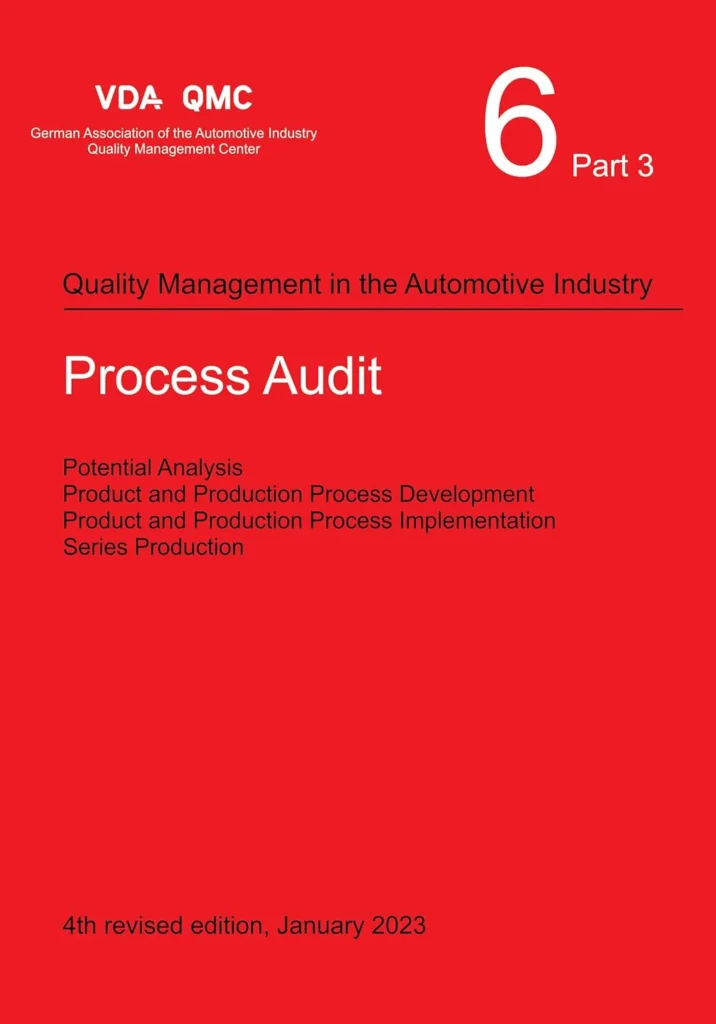
I strongly recommend the official VDA Volume 6 Part 3 : Process Audit, 4th Revised Edition for auditors working in automotive supplier quality.

How is VDA 6.3 potential analysis scored?

VDA 6.3 P1 Potential Analysis is typically evaluated using a traffic light system: Green, Yellow, and Red. Green indicates the supplier is suitable for nomination, Yellow indicates conditional approval with action plans, and Red indicates high risk with no approval recommendation.

The evaluation is based on supplier readiness, process maturity, technical capability, and project risk indicators.

Understanding the VDA 6.3 P1 Scoring System:

One of the most important things to understand is that P1 is not scored like P2 to P7 numeric process audits.

Instead, VDA 6.3 potential analysis checklist uses a risk-based traffic light approach.

The typical evaluation outcome is:

  • Green = approved / low risk
  • Yellow = conditionally approved / medium risk
  • Red = high risk / not recommended

This makes sense because the supplier may not yet be in serial production. At this stage, we are forecasting capability rather than measuring an already running stable process.

When I conduct a new supplier potential analysis, I usually classify the outcome based on four major pillars:

  • process maturity
  • technical competence
  • infrastructure readiness
  • project management control

A supplier may be technically strong but still receive Yellow if project planning is weak.

For example, if the supplier has capable CNC machines and trained engineers but no launch milestone tracking, I would never directly recommend Green.

Practical Green / Yellow / Red Criteria I Use:

Let me share the exact practical logic I personally follow.

Green Status – Fully Approved

A supplier receives Green when I see strong evidence that they can successfully support the project without major risk.

Typical indicators include:

  • proven experience with similar parts
  • stable process capability history
  • documented APQP structure
  • PFMEA and control plans available
  • trained engineering team
  • robust traceability
  • calibration compliance above 95%
  • preventive maintenance system active

For example, if historical Cp/Cpk values are consistently above 1.67 for critical dimensions, that is usually a strong positive signal.

This means nomination can proceed with normal launch controls.

Yellow Status – Conditionally Approved

This is the most common result I give in actual audits.

Yellow means the supplier has the potential to perform, but there are clear risks that must be closed before SOP.

Typical Yellow examples:

  • no finalized PFMEA
  • incomplete training matrix
  • weak capacity study
  • missing backup machine
  • limited automotive experience
  • calibration overdue for some gauges

This is where the supplier readiness assessment VDA becomes a powerful improvement tool.

Instead of rejecting the supplier immediately, we create a timed action plan.

For example:

  • PFMEA closure within 7 days
  • capacity validation within 14 days
  • gauge R&R within 10 days
  • maintenance schedule closure within 5 days

In my experience, nearly 45% to 55% of new supplier audits result in Yellow rather than Green.

Red Status – High Risk / Reject

Red is used when the risk is too high.

Examples include:

  • no quality management system
  • no traceability
  • poor housekeeping
  • no process ownership
  • no engineering competence
  • no capacity for customer volume
  • poor past performance history

I once audited a new fabrication supplier where there was no control over revision status drawings.

Operators were working with printed drawings from different revision levels.

That is an immediate Red finding.

Even if cost is attractive, this supplier should not be nominated.

Detailed Potential Analysis Checklist (Practical Template):

This is one of the most searched sections, so I am giving you a practical VDA potential analysis template structure that you can directly use.

1. Company and Infrastructure Review:

  • legal business status
  • certifications
  • manufacturing location
  • workforce size
  • engineering staff
  • utilities backup
  • maintenance workshop
  • lab capability

I always start here because infrastructure tells a lot about future stability.

For example, if the plant has unstable power backup, it directly impacts process repeatability.

2. Technical Capability Review:

This section focuses on process capability new suppliers.

Checklist includes:

  • similar product experience
  • technical feasibility review
  • drawing interpretation ability
  • GD&T understanding
  • critical characteristic control
  • process know-how
  • automation capability

For a machining supplier, I specifically check:

  • machine age
  • spindle capability
  • fixture repeatability
  • tool wear control

3. Quality System Review:

This is one of the most important checklist blocks.

My standard P1 audit questions include:

  • is there a quality manual?
  • who owns process quality?
  • how are NCRs managed?
  • how is traceability controlled?
  • how are customer complaints handled?
  • is 8D methodology used?

A supplier without structured problem-solving usually struggles during launch.

4. Capacity and Launch Readiness:

This section is directly linked to pre-series audit VDA readiness.

Checklist includes:

  • line capacity
  • takt time validation
  • shift plan
  • peak volume readiness
  • manpower backup
  • overtime plan
  • preventive maintenance downtime

For example, if customer annual demand is 1.2 million parts, I validate whether supplier OEE assumptions realistically support this.

Real Example: Yellow to Green Transition

Let me share a real case.

A new casting supplier was initially rated Yellow.

Major risks found:

  • incomplete PFMEA
  • no defined reaction plan
  • Cpk history unavailable
  • operator skill matrix incomplete

I created a 15-day closure plan.

Within two weeks, the supplier submitted:

  • updated PFMEA
  • process flow chart
  • skill matrix
  • pilot run data with Cpk = 1.74

After evidence verification, the rating was upgraded to Green.

This is exactly how VDA 6.3 P1 potential analysis should be used — not just as a pass/fail audit, but as a supplier development tool.

Common Red Flags Auditors Must Never Ignore:

These are the most serious warning signs I personally watch for.

  • mixed good and rejected parts
  • missing identification labels
  • no revision control
  • no calibration stickers
  • uncontrolled rework area
  • machine oil leakage near product
  • no skill matrix
  • no launch milestone review

Even a single one of these can create large customer risk.

A Reddit engineering discussion around supplier qualification strongly reinforces the same practical approach: plant visits, documentation checks, process controls, and trial runs are essential for supplier evaluation.

How to perform VDA 6.3 potential analysis?

Begin with supplier background verification, conduct an on-site readiness assessment, evaluate process maturity through a structured checklist, classify the supplier using Green/Yellow/Red risk logic, and close all open risks through a timed action plan before nomination.

In 2026, companies increasingly use P1 not only for supplier selection but also for new technology launches, new plant approvals, and pre-series readiness validation.

How do you complete a VDA 6.3 potential analysis report?

A VDA 6.3 potential analysis report should include supplier details, audit scope, process capability findings, infrastructure assessment, risk classification, traffic light result, evidence-based findings, action plan, responsible owners, and closure dates.

The report should support sourcing and nomination decisions with clear risk visibility.

How to Prepare the Final Audit Report?

A strong audit is only as good as its final documentation.

This is where many auditors make mistakes.

I always prepare the report in a management-friendly decision format.

The report should include:

  • supplier name
  • plant location
  • audit date
  • auditor name
  • customer project
  • part family
  • technology type
  • annual volume
  • audit scope
  • risk status

A clean VDA potential analysis template should also clearly mention whether the audit is for:

  • new supplier
  • new manufacturing location
  • new process technology
  • pre-series readiness

These report templates are commonly aligned with VDA-style reporting structures and are widely used across supplier quality teams.

My Recommended Audit Report Structure:

Here is the exact format I use in actual supplier audits.

1. Executive Summary:

This section should answer one question:

Can this supplier support the project successfully?

Example:

Supplier demonstrates strong machining capability and experienced engineering resources. However, process validation and traceability controls require immediate improvement before nomination.

This paragraph is very important for management review meetings.

Purchasing teams usually read this section first.

2. Key Findings Summary:

I recommend grouping findings into:

  • Major risks
  • Medium risks
  • Minor observations
  • Best practices observed

Example:

Major finding: No documented PFMEA for critical dimensions
Medium finding: Training matrix incomplete
Observation: Strong machine maintenance discipline

This format makes it easier for supplier development teams to work on closure.

3. Traffic Light Decision:

This must be clearly visible.

Example:

  • Green: Approved
  • Yellow: Conditional approval
  • Red: Not approved

This directly supports the sourcing decision.

The traffic light evaluation model is widely recognized in VDA 6.3 potential analysis reporting.

Best Practices for Tier 1 and Tier 2 Suppliers:

Now let me share the practical advice I personally give suppliers.

1. Build APQP Readiness Before Audit:

Many suppliers prepare only for the audit day.

This is a major mistake.

The best suppliers prepare:

  • APQP milestones
  • PFMEA
  • control plans
  • process flow charts
  • MSA plan
  • capability studies

before the audit is even scheduled.

In my experience, suppliers with structured APQP readiness score 30% to 40% better in supplier capability assessment.

2. Validate Process Capability with Real Data:

Never rely only on machine specifications.

Use actual pilot run data.

For example:

  • Cp = 1.82
  • Cpk = 1.71

for CTQ dimensions gives strong confidence.

This is especially important for process capability new suppliers.

I always ask for:

  • trial batch results
  • GRR study
  • capability trend
  • machine repeatability data

3. Focus on Traceability:

This is one of the most common risks I see.

A strong supplier readiness assessment VDA must verify:

  • raw material traceability
  • batch traceability
  • process traceability
  • operator traceability
  • tool traceability

Traceability gaps are considered serious risks in automotive supply chain audits.

Common Mistakes During Potential Analysis:

This section is extremely important for readers.

These are the most common mistakes I see auditors make.

Mistake 1: Focusing Only on Documents

Documents alone never tell the full story.

The shop floor reality is what matters.

I always spend at least 60% of audit time on the shop floor.

This includes:

  • line walk
  • material flow
  • storage controls
  • defect segregation
  • machine conditions

Mistake 2: Ignoring Launch Capacity

Many suppliers can produce samples.

That does not mean they can support volume production.

For example:

  • sample quantity = 100 parts
  • customer annual demand = 1.5 million parts

This requires a totally different capacity validation model.

Always validate:

  • OEE assumptions
  • manpower availability
  • maintenance downtime
  • tool life planning

Mistake 3: Weak Action Plan Closure

A Yellow rating without follow-up is useless.

Every finding must include:

  • owner
  • due date
  • evidence required
  • verification method

This is where many supplier development programs fail.

Practical Example from My Audit Experience:

Let me share one more real-world example.

A new aluminum die casting supplier was being evaluated for an EV battery housing bracket.

The supplier had excellent infrastructure.

However, during pre-series audit VDA review, I identified two major issues:

  • no leak test validation
  • no backup die maintenance plan

The supplier initially received Yellow.

After 10 working days, they submitted:

  • leak test validation report
  • PM schedule
  • backup tooling plan
  • skill certification matrix

The rating was upgraded to Green.

This allowed nomination without delaying SOP.

This is exactly how VDA 6.3 potential analysis how to perform should work in real life.

VDA 6.3 potential analysis what it is and how to perform it?

Start with supplier background validation, conduct an on-site readiness audit, assess process maturity using P1 audit questions, classify the supplier through Green / Yellow / Red logic, and close all findings before nomination.

In 2026, this method is widely used by OEMs and Tier 1 companies to reduce sourcing risk, improve supplier readiness, and strengthen launch success rates.

Final Conclusion:

To conclude, the VDA 6.3 P1 potential analysis is not just an audit checklist.

It is a business risk decision tool.

When done properly, it helps prevent:

  • supplier quality failures
  • launch delays
  • field issues
  • customer escalations
  • cost of poor quality

From my practical experience, the strongest results come when the audit is treated as supplier development, not just compliance.

A good potential analysis helps answer one simple but powerful question:

Can this supplier reliably support our customer and project requirements?

If you answer that honestly with evidence, the audit has done its job.

Frequently Asked Questions (FAQs)

1. What is VDA 6.3 potential analysis?

VDA 6.3 potential analysis is an early-stage supplier evaluation method used in the automotive industry to assess whether a new supplier, new plant, or new manufacturing technology has the capability to meet customer quality and production requirements before nomination. It is covered under the P1 element of VDA 6.3 and is mainly used during supplier sourcing, project launch, and pre-production stages.

The purpose is to identify risks related to process maturity, technical capability, infrastructure, and quality systems before serial production begins. In simple terms, it helps companies decide whether a supplier is ready to be awarded business.

2. How do you perform VDA 6.3 potential analysis?

To perform VDA 6.3 potential analysis, the first step is to review customer requirements, product drawings, and expected production volumes. After that, an on-site supplier capability assessment is carried out to evaluate process readiness, machine capability, manpower, quality systems, and infrastructure.

The auditor then uses a traffic light evaluation method such as Green, Yellow, or Red to classify supplier risk. A detailed action plan is prepared for any gaps found during the assessment.

Typical steps include:

  • supplier background review
  • plant visit and process audit
  • technical capability check
  • quality system evaluation
  • capacity validation
  • final risk grading

This is the most practical way to answer VDA 6.3 potential analysis how to perform.

3. What is the difference between VDA 6.3 P1 and other process elements?

The P1 potential analysis is different from other VDA 6.3 process elements because it is focused on future capability and supplier potential, rather than auditing a live production process. While P2 to P7 assess project management, product development, process implementation, and serial production controls, P1 is used before supplier nomination.

It helps determine whether the supplier has the potential to meet quality expectations. This makes it especially important for new supplier potential analysis and pre-series audit VDA activities.

4. When should a VDA 6.3 potential analysis be conducted?

A VDA 6.3 P1 potential analysis should ideally be conducted before supplier nomination, before tooling release, and before SOP planning. It is commonly performed during the RFQ stage, technical feasibility review, or supplier sourcing phase.

Companies also use it when an existing supplier opens a new plant location or introduces a new manufacturing process.

Conducting it early helps reduce launch risk and improves supplier readiness.

Common timing includes:

  • before business award
  • before project launch
  • before pre-series trials
  • before new plant approval

5. What are the main questions asked in a VDA 6.3 P1 audit?

The P1 audit questions mainly focus on supplier capability, process maturity, and infrastructure readiness. Auditors usually ask whether the supplier has experience with similar products, whether process controls are defined, and whether sufficient resources are available for launch.

Questions also cover traceability, calibration, maintenance, PFMEA, control plans, and operator competence. These questions help assess the supplier’s readiness to meet customer expectations.

Some common P1 audit questions are:

  • Does the supplier have similar product experience?
  • Are critical dimensions controlled?
  • Is machine capacity sufficient?
  • Is there a quality management system?
  • Is traceability available?

6. What is the scoring method in VDA 6.3 potential analysis?

Unlike the numerical scoring used in other VDA 6.3 sections, P1 potential analysis is generally evaluated using a traffic light system. This makes the result easier for sourcing and management teams to understand. The supplier is usually classified as Green, Yellow, or Red based on the level of risk and readiness.

  • Green: Approved supplier, low risk
  • Yellow: Conditional approval with action plan
  • Red: High risk, not recommended

This method is highly effective for supplier readiness assessment VDA.

7. Why is VDA 6.3 potential analysis important for new suppliers?

For new suppliers, this analysis is extremely important because it helps identify risks before production starts. Many supplier quality issues such as high PPM, launch delays, and customer complaints often originate from poor supplier selection.

A structured supplier capability assessment helps avoid these issues by verifying technical competence, process controls, and project planning at an early stage. In automotive supply chains, this significantly reduces the cost of poor quality and launch disruptions.

8. What documents should a supplier prepare for P1 potential analysis?

Before the audit, suppliers should prepare all documents related to quality systems, process planning, and launch readiness. Having these ready improves confidence during the audit and supports a better evaluation outcome.

Important documents include:

  • process flow chart
  • PFMEA
  • control plan
  • machine list
  • calibration records
  • training matrix
  • maintenance schedule
  • capacity study
  • sample inspection reports

These are commonly reviewed during pre-production audit automotive assessments.

9. Can an existing approved supplier still require P1 potential analysis?

Yes, absolutely. Even if a supplier is already approved, P1 potential analysis may still be required when there is a new plant location, new product family, new technology, or major capacity expansion.

Existing performance at one site does not automatically guarantee the same performance at another site.

This is why many OEMs and Tier 1 companies still conduct supplier readiness assessment VDA for new business expansions.

10. What are the common mistakes in VDA 6.3 potential analysis?

Some of the most common mistakes include focusing only on documentation, ignoring actual shop floor conditions, and not validating real production capacity. Another major mistake is giving a Yellow status without proper action plan follow-up.

In my experience, weak closure systems often lead to repeated launch risks later.

A strong audit must always combine documentation review with practical process observation and evidence-based risk closure.

Common mistakes include:

  • document-only audit
  • no shop floor verification
  • weak traceability review
  • no capacity validation
  • poor action plan closure
This Page uses Affiliate Links. When you Click an Affiliate Link, we get a small compensation at no cost to you. Our Affiliate Disclosure for more info.

Leave a comment