

VDA 6.3 Process Audit Checklist Complete Guide for Beginners [2026]

If you are searching for a VDA 6.3 process audit checklist complete guide, you are in the right place. As a Quality Manager and certified process auditor, I have seen many beginners struggle with understanding how VDA 6.3 works in real shop-floor conditions, especially when preparing for customer, supplier, or internal process audits.

In this guide, I will explain everything in simple words, practical examples, and easy checkpoints so that even a beginner can confidently understand and use this framework. My goal here is not just to explain the standard, but to help you apply it effectively in real manufacturing and supplier environments.

In 2026, process audits have become even more important because automotive manufacturers and Tier-1 suppliers are under stronger pressure to reduce defects, improve traceability, and strengthen supplier controls.

Recent manufacturing quality studies show that organizations using structured process audits can reduce repeat defects by 20% to 35% within the first year of implementation.

That is exactly why VDA 6.3 remains one of the most trusted audit methods across the automotive industry.

Whether you are a QA engineer, quality inspector, supplier auditor, production engineer, or quality manager, this article will help you understand the checklist, scoring system, audit questions, and process elements from P1 to P7 in a way that is easy to follow.

VDA-6.3-process-audit-checklist-complete-guide

VDA 6.3 is a process audit standard widely used in the automotive industry to assess manufacturing and supplier process capability.

It covers the full product lifecycle through P1 to P7 process elements, including project planning, supplier management, production control, and customer service.

A proper process audit checklist template helps organizations identify risks, improve quality performance, and meet customer-specific requirements. Companies that use VDA audits effectively often improve supplier ratings, reduce rework costs, and strengthen customer confidence.

What is VDA 6.3 and Why Does It Matter in 2026?

VDA 6.3 is a process audit standard developed by the German automotive industry association (VDA). Unlike system standards such as International Organization for Standardization 9001 or International Automotive Task Force 16949, this standard focuses deeply on how processes actually perform on the ground.

It checks whether the process is capable of consistently producing conforming products, not just whether documents exist.

For example, I often explain this to beginners in a simple way:
ISO checks whether your quality management system exists, but VDA 6.3 checks whether the process actually works every day.

This is why OEMs and Tier-1 companies strongly prefer this standard for supplier audit checklist evaluations.

A supplier may have all procedures documented, but if production still creates repeated defects, poor traceability, or delayed containment actions, the process will score poorly in VDA 6.3.

In 2026, the focus has shifted strongly toward:

  • process robustness
  • risk prevention
  • supplier maturity
  • traceability controls
  • customer complaint reduction
  • continuous improvement

This makes the automotive process checklist extremely important.

VDA 6.3 Process Audit Checklist Complete Guide:

A well-prepared checklist is the heart of every successful audit. I always tell new auditors that the checklist is not just a list of questions — it is your process investigation map.

A strong VDA 6.3 questionnaire download or checklist template should cover:

  • project planning
  • design controls
  • supplier controls
  • production readiness
  • process capability
  • customer complaint systems
  • improvement tracking

Most beginners make the mistake of using a generic checklist.

That rarely works.

A proper process audit checklist template must be linked to the actual process flow, PFMEA, control plan, work instructions, and customer-specific requirements.

For example, when I audit a machining line for automotive shafts, I align the checklist with:

  • raw material receipt
  • setup approval
  • first-off inspection
  • in-process SPC
  • final inspection
  • packing and dispatch

This makes the checklist practical rather than theoretical.

Understanding the P1 to P7 Process Elements:

The biggest question beginners ask is:

“What are P1 to P7 process elements?”

Let me simplify this from an auditor’s perspective.

These are the seven core stages of process evaluation.

P1 – Potential Analysis VDA 6.3:

This stage is mainly used before supplier nomination or project award. It checks whether a supplier is capable of taking up the business.

This includes:

  • manufacturing capability
  • infrastructure readiness
  • engineering strength
  • quality maturity
  • resource availability

For example, before giving a new casting component business to a supplier, I normally conduct potential analysis VDA 6.3 to check whether they can meet cycle time, process capability, and customer standards.

This step reduces supplier risk significantly.

P2 – Project Management:

This is where project control is checked.

Typical VDA 6.3 audit questions include:

  • Is project timing defined?
  • Are milestones monitored?
  • Are risks reviewed?
  • Is APQP followed?
  • Are customer changes tracked?

A practical example is launch timing.

If tooling readiness is delayed by 2 weeks but escalation is not triggered, this becomes a process weakness.

A good auditor always checks project escalation controls.

P3 – Product and Process Development:

This stage checks whether the process is being designed properly.

Typical checks include:

  • DFMEA / PFMEA
  • feasibility study
  • special characteristics
  • process flow diagram
  • control plan
  • trial run validation

In my experience, nearly 30% of supplier audit findings come from poor PFMEA linkage.

For example, if a critical bore diameter is marked in drawing but not controlled in PFMEA and control plan, it directly affects scoring.

Beginner-Friendly VDA 6.3 Checklist Example:

Here is a simple sample checklist beginners can use.

Project and Planning:

  • Is project timing approved?
  • Are responsibilities assigned?
  • Are risks reviewed weekly?
  • Is customer communication documented?

Development:

  • Is PFMEA updated?
  • Is control plan approved?
  • Are gauge studies completed?
  • Are process trials validated?

Supplier:

  • Is incoming inspection defined?
  • Is supplier rating reviewed monthly?
  • Are SCAR actions tracked?

Production:

  • Is setup approval recorded?
  • Is SPC active?
  • Are rejection trends monitored?
  • Is traceability maintained?

This is a practical supplier audit checklist starter format.

So, if you have questions: Such as,

- What is VDA 6.3 checklist?
- How to prepare for VDA 6.3 audit?

VDA 6.3 is a structured automotive process audit framework that uses process elements P1 to P7 to evaluate supplier and manufacturing process capability. It helps organizations reduce defects, improve supplier performance, and ensure customer requirements are consistently met.

A strong checklist should align with process flow, PFMEA, control plans, and measurable shop-floor evidence.

P4 – Carrying Out Product and Process Development:

P4 focuses on whether the planned development activities have actually been implemented on the ground. In simple words, this section asks:

“Did the team really do what they planned in P3?”

This includes production trials, pilot runs, operator training, inspection readiness, tooling approval, and process validation. Many suppliers lose marks here because the planning documents are strong, but the execution evidence is weak.

For example, during an audit of a plastic molding supplier, I once found that the PFMEA listed a risk for flash defects, but no validation trial was conducted at the actual cycle time used in serial production.

On paper, the process looked controlled.

On the machine, the defect rate during high-speed runs was above 4.8%, which is significantly above the usual acceptable launch threshold of 1% to 2% for many automotive components. This directly impacted the audit score.

Typical VDA 6.3 audit questions in P4 include:

  • Are pilot trials completed?
  • Are inspection methods validated?
  • Are work instructions released?
  • Are gauges approved?
  • Is operator training completed?
  • Is process release documented?

This section is extremely important for new product launch audits.

Practical Beginner Checklist for P4:

A simple process audit checklist template for P4 should include:

  • trial run report
  • capacity verification
  • first-off approval
  • capability study
  • setup sheet validation
  • training matrix review
  • customer PPAP readiness

A good example is checking Cp/Cpk values.

For critical dimensions, I usually expect:

  • Cp ≥ 1.33
  • Cpk ≥ 1.33

For special characteristics, many OEMs expect 1.67 or above at SOP stage.

These statistics should be directly reviewed in the audit checklist.

P5 – Supplier Management:

This is one of the most critical areas in 2026 because supplier quality issues continue to be a major cause of production disruption.

Industry quality reports show that supplier-related defects contribute to nearly 25%–30% of customer complaints in automotive manufacturing. That is why supplier audit checklist controls under P5 are heavily emphasized.

P5 checks how well your organization controls sub-suppliers, raw material vendors, outsourced processes, and incoming quality risks.

Typical checks include:

  • supplier approval
  • performance scorecards
  • supplier development plans
  • SCAR tracking
  • re-audit schedules
  • incoming inspection controls

For example, if a stamping supplier receives steel coils from an external vendor, the audit should verify:

  • material certificate review
  • batch traceability
  • incoming thickness checks
  • hardness verification
  • supplier complaint closure

This is a strong automotive process checklist control point.

Example Audit Scenario – Supplier Risk:

Let me give you a practical example.

Suppose a supplier’s on-time delivery dropped from 98% to 89% over three months. At the same time, customer ppm increased from 120 to 540 ppm.

In a VDA audit, I would immediately review:

  • supplier escalation meeting minutes
  • containment actions
  • SCAR closure evidence
  • supplier visit reports
  • effectiveness verification

This makes the checklist more evidence-based and helps improve scoring.

P6 – Process Analysis / Production:

This is usually the most detailed section of the entire VDA 6.3 process audit checklist complete guide because it directly audits the live manufacturing process. For most production audits, this section carries the highest weight in practical scoring because it verifies whether the process is stable, repeatable, and capable.

This section includes:

  • process input
  • machine control
  • operator control
  • inspection methods
  • traceability
  • packaging
  • process results

I always tell beginners:
P6 is where the shop floor speaks the truth.

Documents may say one thing, but production evidence tells the real story.

P6 Checklist Example for Production Audit:

A strong process audit checklist template should cover:

  • machine parameter lock
  • setup verification
  • SPC chart review
  • poka-yoke validation
  • tool wear control
  • rejection trend
  • traceability labels
  • packing verification

Example:

For a CNC machining line, I check:

  • tool offset control
  • coolant concentration
  • spindle vibration trend
  • first-piece inspection
  • hourly SPC results

Companies that use SPC actively often reduce in-process defects by 15%–25% in six months.

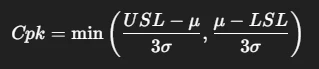
Statistical Example for Beginners:

Let’s say the tolerance for shaft diameter is:

20.00 ± 0.05 mm

Measured sample mean = 20.01 mm
Standard deviation = 0.01

Then process capability can be reviewed as:

Cpk-formula

This is a common metric reviewed during VDA audits for process efficiency and process result.

P7 – Customer Care and Service:

P7 focuses on what happens after the product reaches the customer. Many beginners assume production ends the audit, but VDA 6.3 also checks field performance and complaint management.

This includes:

  • complaint handling
  • field returns
  • warranty claims
  • root cause analysis
  • corrective actions
  • service response time

For example, if customer complaints increased by 18% quarter-over-quarter, the auditor should review:

  • 8D reports
  • CAPA actions
  • repeat complaint trend
  • effectiveness checks

A weak complaint closure system can heavily impact the score.

Understanding the VDA Audit Scoring System:

The VDA audit scoring system is one of the most searched topics by beginners.

Each question is scored based on compliance level.

Typical scoring values include:

  • 10 = fully compliant
  • 8 = minor deviation
  • 6 = significant deviation
  • 4 = major weakness
  • 0 = not fulfilled

These scores are then converted into percentage ratings.

Typical rating bands:

  • A = 90% and above
  • B = 80% to 89%
  • C = below 80%

A score below 80% often triggers corrective action plans and re-audit.

How is VDA 6.3 scored?

VDA 6.3 uses a weighted scoring system where each process element is evaluated using question-based scores such as 0, 4, 6, 8, and 10. The final percentage determines whether the process receives an A, B, or C rating. Most organizations target A grade (90%+) for customer and supplier audits.

Recommended References and Learning Resources:

For beginners, I strongly recommend reviewing the following authoritative references:

How to Use the Checklist Effectively on the Shop Floor?

A checklist should never be used as a simple “tick mark sheet.” I always advise new auditors to treat it as a process validation tool that helps them verify whether the process is stable, repeatable, and risk-controlled.

Every question in the checklist should be supported by evidence from the shop floor, records, operators, and actual production results. If the evidence does not match the documented process, that becomes an audit finding.

For example, if the control plan says that a critical dimension is checked every hour, the auditor should verify:

  • SPC records
  • actual time stamps
  • gauge calibration status
  • operator understanding
  • recent rejection trends

This approach helps the VDA 6.3 audit questions become more practical and useful.

A common mistake beginners make is reviewing only documents in the meeting room. The real strength of a process audit checklist template comes when it is walked through directly on the line, machine, warehouse, or supplier facility.

Best Audit Preparation Tips for Beginners:

A strong VDA audit preparation guide should always begin before the audit day.

I generally recommend this sequence:

  • review process flow
  • review PFMEA
  • review control plan
  • review customer complaints
  • review supplier ppm trend
  • review previous audit findings
  • review CAPA closure

This gives the auditor context before asking questions.

For example, if customer complaints increased from 90 ppm to 320 ppm in the last quarter, this should immediately influence the focus areas in P6 and P7. Statistics like these help make the audit risk-based rather than generic.

Recent process quality studies suggest that companies using structured pre-audit planning reduce repeat audit findings by up to 30%.

Common Mistakes to Avoid During VDA 6.3 Audits:

This is one of the most important sections for beginners.

Here are the most common mistakes I have seen:

  • using an outdated checklist
  • asking closed-ended questions only
  • checking documents but not process evidence
  • ignoring operator interviews
  • missing traceability checks
  • weak root cause verification
  • not validating corrective action effectiveness

For example, I once audited a machining supplier where the 8D report showed “training completed” as corrective action. However, when I asked the operator about the defect containment process, the response was inconsistent.

This immediately indicated that the CAPA was not effective.

The lesson is simple:

Always verify effectiveness, not just closure.

Example: Real Audit Finding and Corrective Action

Let us take a practical example for readers.

Audit Finding:

During P6 production audit, hourly bore inspection records were missing for 3 out of 8 production hours.

Risk:

Potential escape of nonconforming parts to customer.

Root Cause:

Operator checklist was revised, but line supervisor was not trained.

Corrective Action:

  • revise checklist control
  • retrain supervisor
  • add shift handover verification
  • add digital SPC alert

Effectiveness Check:

No missing hourly inspection records for 30 consecutive production days

This is how a real supplier audit checklist finding should be documented.

Download and Reference Resources:

For readers looking for VDA 6.3 questionnaire download and templates, these references are useful:

Final Conclusion:

If I had to explain this as simply as possible, VDA 6.3 is one of the most practical audit tools available for automotive quality and supplier process evaluation. It goes beyond documents and checks whether the process truly performs in a stable and capable way.

A well-prepared automotive process checklist can help reduce defects, improve supplier ratings, strengthen customer confidence, and support long-term certification readiness.

From my professional experience, the companies that use this checklist actively as a process improvement tool — not just as an audit formality — usually see significant improvement in:

  • defect reduction
  • customer complaints
  • process capability
  • supplier performance
  • audit scores

That is what makes this guide valuable for both beginners and experienced professionals.

Frequently Asked Questions (FAQs)

1. What is VDA 6.3 process audit checklist?

The VDA 6.3 process audit checklist is a structured audit tool used mainly in the automotive industry to evaluate how effectively a manufacturing or supplier process is working.

It helps auditors review the entire process lifecycle, from project planning and supplier management to production control and customer complaint handling.

The checklist follows the P1 to P7 process elements, making it easier to identify risks, process gaps, and improvement opportunities. For beginners, it acts as a step-by-step guide to verify whether the process is capable of consistently meeting customer and quality requirements.

2. What are the P1 to P7 process elements in VDA 6.3?

The P1 to P7 process elements are the core sections of the VDA 6.3 audit framework. These elements help auditors assess each stage of the product and process lifecycle in a structured way.

They include:

  • P1: Potential analysis
  • P2: Project management
  • P3: Product and process development planning
  • P4: Implementation of development
  • P5: Supplier management
  • P6: Process analysis / production
  • P7: Customer care and service

Each section focuses on specific controls and risks, helping organizations improve process quality and supplier performance.

3. How is the VDA 6.3 audit scoring system calculated?

The VDA audit scoring system uses question-based ratings to measure how well a process meets the audit requirements. Each audit question is usually scored as 0, 4, 6, 8, or 10, depending on the level of compliance and effectiveness.

For example:

  • 10 = fully compliant
  • 8 = minor deviation
  • 6 = moderate issue
  • 4 = major gap
  • 0 = requirement not met

The total score is then converted into a percentage, which typically results in an A, B, or C rating. Most companies aim for an A grade score of 90% or above.

4. Who should use a VDA 6.3 process audit checklist?

A VDA 6.3 process audit checklist is useful for professionals involved in quality, supplier management, manufacturing, and process control.

It is commonly used by Quality Managers, QA/QC engineers, internal auditors, supplier quality engineers, production engineers, and certification teams.

Even beginners who are new to automotive audits can use this checklist as a practical learning tool. It is especially helpful for supplier audits, customer audits, and internal process improvement reviews.

5. Why is VDA 6.3 important for automotive suppliers?

VDA 6.3 is extremely important for automotive suppliers because it helps ensure that manufacturing processes are stable, repeatable, and capable of meeting OEM requirements.

Many automotive customers use this audit standard to assess supplier readiness and long-term quality performance.

A strong audit score can improve supplier trust, customer confidence, and future business opportunities. It also helps reduce defects, warranty claims, and repeated customer complaints.

6. What documents are required for VDA 6.3 audit preparation?

Before conducting the audit, it is important to prepare all key process and quality documents. This helps the audit run smoothly and improves evidence-based scoring.

Common documents include:

  • PFMEA
  • Control Plan
  • Process Flow Diagram
  • Work Instructions
  • SPC Records
  • Calibration Records
  • Customer Complaint Reports
  • CAPA / 8D Reports
  • Supplier Performance Data

A good VDA audit preparation guide always starts with document readiness and shop-floor verification.

7. How often should VDA 6.3 audits be conducted?

The audit frequency depends on customer requirements, process risk, and supplier performance trends. In most cases, companies conduct annual internal process audits and more frequent audits for high-risk suppliers or poor-performing lines.

If customer complaints, rejection rates, or supplier ppm increase, an immediate special audit may be required. Many organizations also schedule quarterly supplier audits for critical parts and special characteristics.

8. What is the difference between VDA 6.3 and IATF 16949?

The main difference is that IATF 16949 focuses on the overall quality management system, while VDA 6.3 focuses specifically on process effectiveness and execution.

IATF checks whether the system requirements are established and maintained, whereas VDA 6.3 checks whether the actual process works effectively on the shop floor.

In simple terms, IATF is system-focused, and VDA 6.3 is process-focused. Both are highly important in automotive quality management.

9. Can beginners use a VDA 6.3 checklist template?

Yes, beginners can absolutely use a process audit checklist template to understand how process audits work. In fact, it is one of the best ways to learn the structure of process-based auditing.

A beginner-friendly checklist helps new auditors understand what questions to ask, what evidence to verify, and how to score findings.

Over time, they can customize the checklist based on process flow, PFMEA, and customer-specific requirements.

10. How does VDA 6.3 help reduce manufacturing defects?

VDA 6.3 helps reduce defects by identifying process weaknesses before they become customer complaints.

It focuses on preventive controls such as risk analysis, process capability, operator training, traceability, supplier control, and corrective action effectiveness. By auditing the process regularly, organizations can catch gaps early and implement improvements faster.

This often leads to lower rejection rates, better process capability, and improved customer satisfaction.

This Page uses Affiliate Links. When you Click an Affiliate Link, we get a small compensation at no cost to you. Our Affiliate Disclosure for more info.

Leave a comment