
The way people search for information is changing. Instead of visiting Google, opening multiple websites, and comparing different answers, many users now ask AI chatbots such as ChatGPT, Google Gemini, Perplexity, and Microsoft Copilot to find information, explain topics, and recommend products.
This change creates a new opportunity for website owners and content creators: learning how to write content for AI chatbots so their websites have a better chance of being discovered, referenced, and cited in AI-generated answers.
However, getting an AI chatbot to cite your website is not as simple as adding a few keywords or publishing more blog posts.
Your content needs to provide accurate information, answer questions clearly, offer something valuable that other websites do not, and make it easy for search engines and AI systems to understand.
In this guide, you will learn how AI chatbots discover website content, what makes a page worth citing, and how to create articles that improve your visibility across modern AI-powered search platforms.
Contents
- 1. What Does It Mean When an AI Chatbot Cites Your Content?
- 2. How AI Chatbots Discover, Select, and Cite Website Content?
- 3. Why Some Websites Get Cited More Often Than Others?
- 4. How to Write Content That AI Chatbots Actually Cite?
- 5. Direct Answer Formula
- 6. Build an Authoritative Content Structure
- 7. Example of an SEO-Friendly Article Structure
- 8. Use AI-Friendly Content Formatting
- 9. Strengthen Your Website’s Trustworthiness and Authority
- 10. Optimize Content for Different AI Search Platforms
- 11. Technical SEO Factors That Help AI Chatbots Discover Your Content
- 12. Common Mistakes That Prevent AI Chatbots From Citing Your Website
- 13. How to Measure AI Citations and Track Your Visibility
- 14. A Practical Checklist for Creating Content That AI Chatbots Can Cite
- 15. Conclusion:
- 16. References and Further Reading
What Does It Mean When an AI Chatbot Cites Your Content?
When an AI chatbot cites your content, it means the platform references your website as a source of information while generating an answer to a user’s question.
For example, imagine someone asks ChatGPT:
Which are the best ways to improve website loading speed?
ChatGPT may generate an answer covering image compression, browser caching, content delivery networks, and code optimization. Along with its explanation, it may provide links to websites that support the information.
If your article contains useful research about website speed, practical optimization methods, or original performance comparisons, it may be selected as one of those sources.
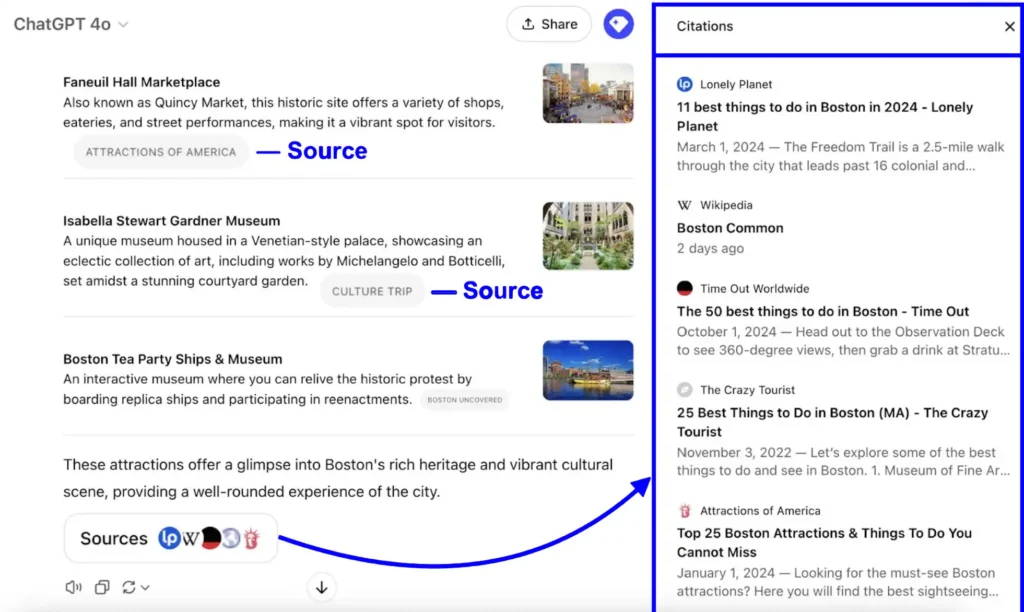
This is known as content citation by AI. Instead of competing only for traditional Google search positions, your website also has an opportunity to become a source that AI-powered platforms use when answering questions.
There are three important ways your website can benefit:
- Brand visibility: Your website or business may appear as a source in AI-generated answers.
- Referral traffic: Users may click the source links to read your complete article or explore your services.
- Brand credibility: Being referenced alongside useful information can help people recognize your website as a valuable resource.
However, there is an important difference between being mentioned and being cited.
AI visibility type | What it means |
Brand mention | An AI chatbot refers to your brand or website by name |
Website citation | An AI chatbot provides a link to your webpage as a source |
Content extraction | An AI-generated answer uses information from your content |
Product recommendation | An AI chatbot recommends a product or service from your website |
A website can receive brand mentions without receiving direct referral traffic. Similarly, an AI chatbot may use information from a webpage without displaying a clickable citation in every answer.
The real objective is to create content that deserves to be referenced, rather than simply trying to make content that appears attractive to AI systems.
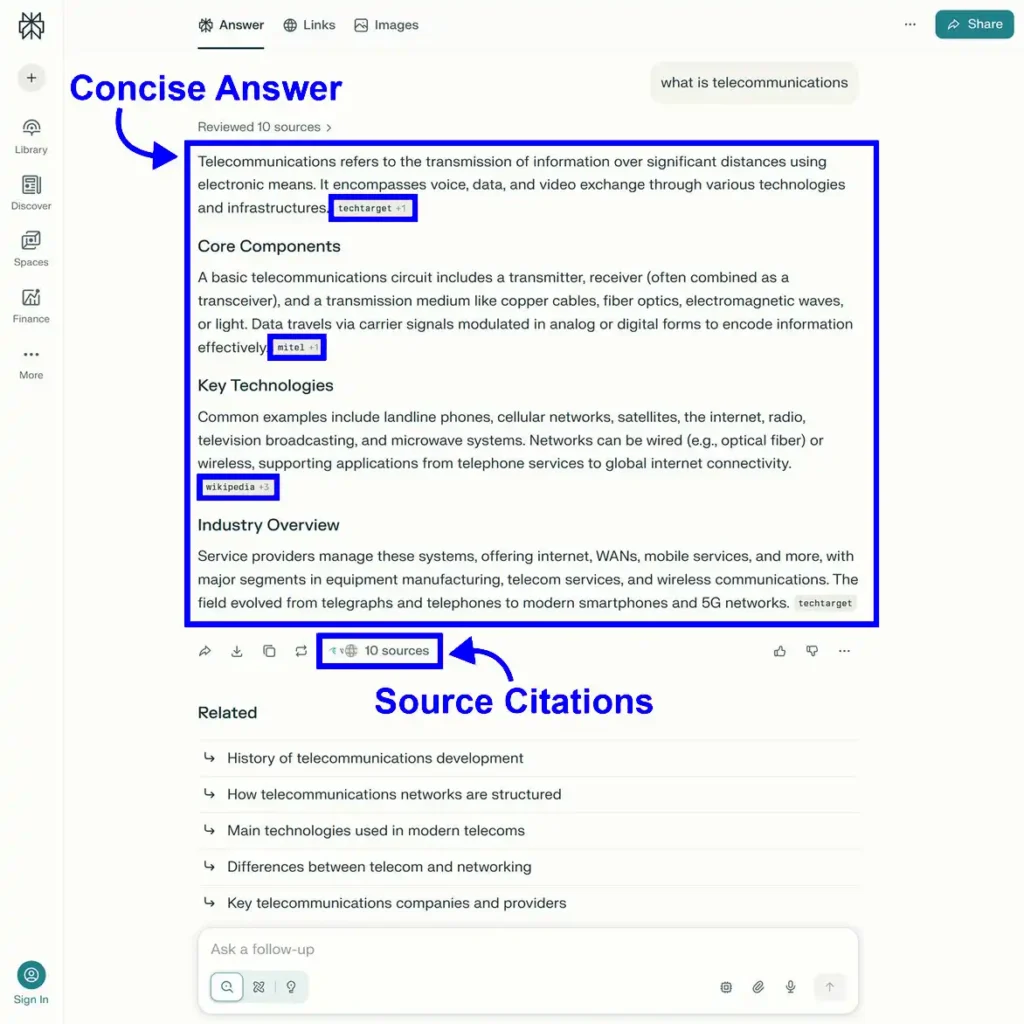
Why Are AI Citations Becoming Important for Bloggers and Website Owners?
Traditional SEO mainly focuses on helping webpages appear in search engine results. AEO (Answer Engine Optimization) and GEO (Generative Engine Optimization) expand this approach by focusing on how content can be discovered and used in AI-generated answers.
Consider two different situations.
In the first situation, a user searches Google for “What is email marketing?” and receives a list of websites. The user visits several pages to understand the topic.
In the second situation, the user asks an AI chatbot the same question. The chatbot provides a summarized explanation and references selected websites for additional information.
In both situations, useful website content plays an important role. However, the second situation creates another visibility opportunity: your article can become part of the answer itself.
This is why bloggers should not focus exclusively on ranking for individual keywords. They should also create resources that answer related questions, explain important concepts, provide original information, and support their claims with reliable evidence.
Google’s guidance confirms that its AI Overviews and AI Mode continue to use its existing Search systems. Google also explains that there are no additional technical requirements or special AI-specific optimizations required to appear in these features.
This means that good SEO practices remain important even as search experiences become more conversational.
How AI Chatbots Discover, Select, and Cite Website Content?
Before learning how to create content that AI chatbots cite, it is important to understand how these platforms discover information.
Many people assume that AI chatbots simply search through everything they have learned during training and generate answers from that information. That is not always how modern AI search works.
Some AI systems use Retrieval-Augmented Generation (RAG), a process in which the system retrieves relevant information from external sources and uses it to prepare an answer.
In simple terms, the process generally involves:
- A user asks a question.
- The AI system identifies the information needed to answer it.
- The system searches relevant information sources.
- It retrieves useful pages or passages.
- The AI model processes the retrieved information.
- It generates an answer and may provide citations to supporting sources.
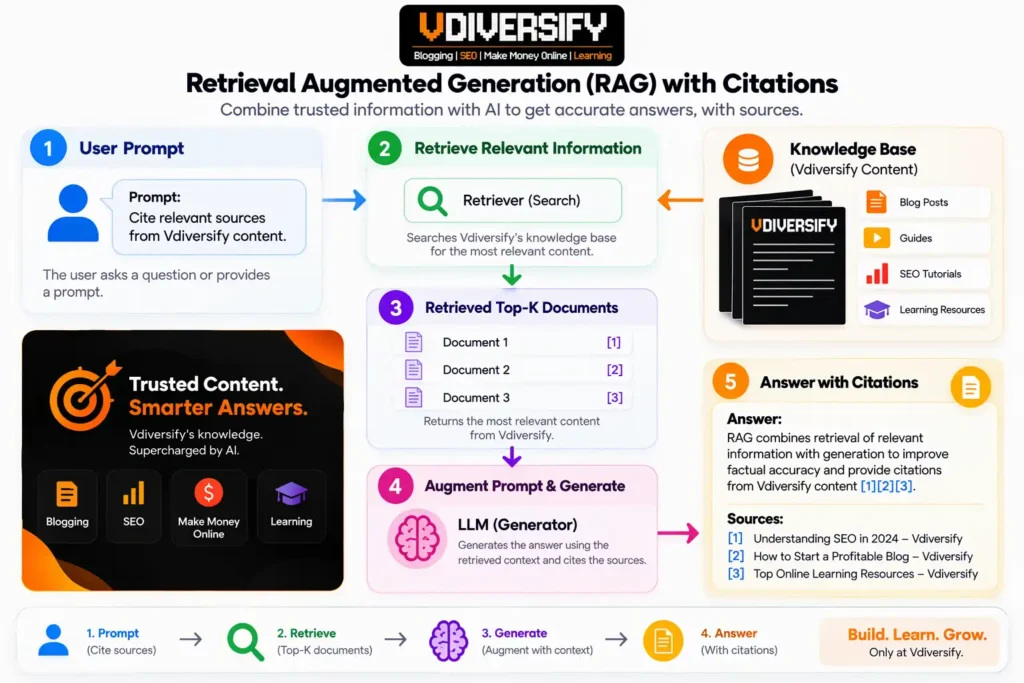
The exact process differs between platforms. Not every AI answer uses live web retrieval, and not every retrieved webpage becomes a visible citation.
Understanding these differences will help you create a better content strategy.
1. How ChatGPT Finds and References Website Content
ChatGPT
ChatGPT can answer questions using its underlying model knowledge and, when web search is used, information retrieved from online sources.
For example, a user may ask:
What are the most effective ways for small businesses to improve local SEO in 2026?
When ChatGPT searches the web, it can identify relevant webpages, examine information, and provide an answer with supporting source links.
This creates an opportunity for websites that publish:
- Detailed explanations of local SEO strategies.
- Original case studies involving small businesses.
- Updated information about Google Business Profile.
- Practical examples of local keyword research.
- Reliable statistics and industry research.
However, publishing a relevant article does not guarantee that ChatGPT will select it.
OpenAI explains that websites should allow its OAI-SearchBot to crawl their content if they want to be eligible for inclusion in ChatGPT search summaries and results. It also notes that search placement is not guaranteed. Explore the news about the ChatGPT Atlas retirement. And also learn how to search the web with ChatGPT?
One important distinction is that OpenAI operates different crawlers for different purposes.
Crawler | Primary purpose |
OAI-SearchBot | Discovering content for ChatGPT search |
GPTBot | Crawling content that may be used to train AI models |
ChatGPT-User | Accessing webpages in response to certain user-initiated actions |
These controls are independent. For example, a website owner can allow OAI-SearchBot while disallowing GPTBot.
This means that being eligible for ChatGPT search citations and allowing content for AI model training are two different decisions.
For bloggers, checking crawler access is an important technical step, but it should come after creating useful, reliable content.
Reference: OpenAI – Overview of OpenAI Crawlers.
2. How Google AI Overviews and AI Mode Select Sources
Google Search
Google’s AI Overviews and AI Mode are changing how people discover information through search.
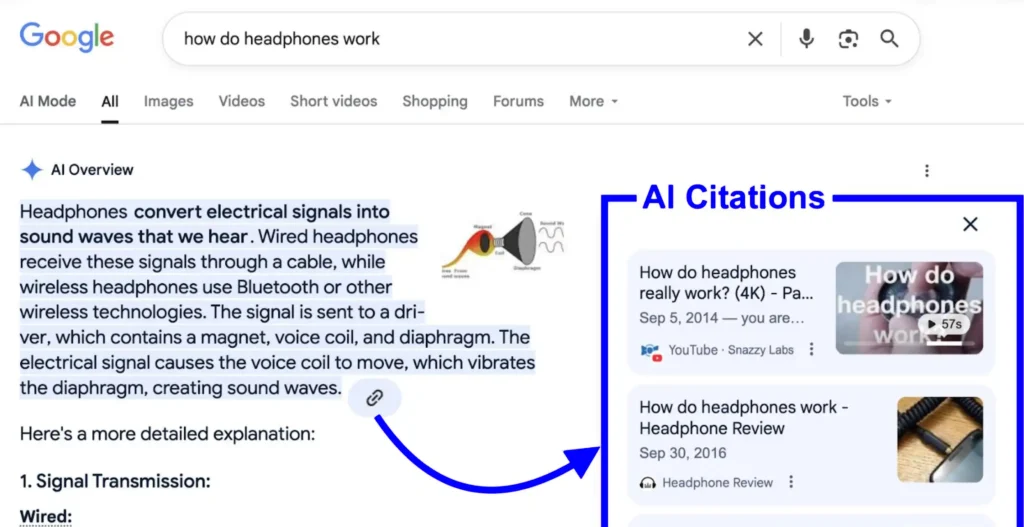
Instead of displaying only traditional blue links, Google can generate AI-powered responses that combine information from multiple sources and provide links to relevant webpages.
For example, consider someone searching:
How much does it cost to build a website for a small business in the United States?
Google may generate an overview covering website development costs, domain registration, hosting, website design, maintenance, and other expenses.
Your website may have an opportunity to appear as a supporting source if it provides relevant and useful information.
Google explains that AI Overviews and AI Mode can use a technique called query fan-out. This involves searching across multiple related queries and subtopics to develop a more complete response.
For example, the original question about website development costs could lead to related searches such as:
- How much does a small business website cost?
- What is the average website design price?
- How much does website hosting cost annually?
- Should a business hire a web designer?
- What is the difference between custom and template-based websites?
This creates an opportunity to publish content that answers the main question and its closely related questions.
However, avoid creating multiple pages that repeat almost identical information. A comprehensive resource with genuinely useful sections is often more valuable than several thin articles.
Google also makes it clear that there are no special AI-specific schema requirements for appearing in AI Overviews or AI Mode. Pages must meet normal Search eligibility requirements and follow established SEO practices.
Reference: Google Search Central – AI Features and Your Website.
3. How Perplexity and Other AI Answer Engines Source Content
Perplexity
Perplexity is an AI-powered answer engine that searches the web and provides responses with references to supporting sources.
Unlike a traditional search engine results page, where users generally receive a list of webpages, Perplexity focuses on presenting a direct answer supported by source links.
For example, someone may ask:
Which website builders are best for restaurants in the United States?
The platform may consider articles discussing website builders, pricing, restaurant-specific features, online ordering, booking integrations, and customer reviews.
Websites with detailed comparisons, original testing, updated pricing information, and clear explanations may offer useful source material.
The same general principle applies to other AI-powered assistants: relevant information must be discoverable, useful, and sufficiently reliable for the question being answered.
This is where chatbot answer sourcing becomes important.
Your content should not simply mention a topic. It should provide information that helps an AI system understand the topic, identify supporting facts, and connect those facts to the user’s question.
For instance, instead of writing:
“Several website builders offer good features for small businesses.”
Write:
“Small businesses should compare website builders based on monthly pricing, mobile design options, payment integrations, website hosting, and the availability of customer support.”
The second statement gives readers more useful information and clearly identifies the factors involved in the decision.
Why Some Websites Get Cited More Often Than Others?
Have you ever noticed that certain websites repeatedly appear in AI-generated answers while other websites covering the same topic rarely receive citations?
The difference is not always website size, domain age, or article length.
A website may have thousands of blog posts but still offer little original information. Another website may publish fewer articles but provide detailed research, first-hand experience, useful comparisons, and accurate information.
AI platforms need sources that help them answer questions. Therefore, content quality, relevance, discoverability, and the usefulness of individual passages all matter.
Let’s examine the major reasons some websites have a better chance of receiving citations.
1. They Publish Original Information Instead of Rewriting Other Articles
Originality is one of the most important elements of useful content.
Imagine that ten websites publish articles about the benefits of email marketing. Most of them mention the same points:
- Email marketing is cost-effective.
- Businesses can communicate directly with customers.
- Email campaigns can promote products.
- Businesses can measure campaign performance.
Although these points are useful, simply repeating them does not make an article stand out.
Now imagine another website publishes an experiment comparing the performance of three email campaign formats across 20 campaigns, explaining the testing method and sharing the results.
That article offers something different.
It provides original information that readers cannot find simply by visiting another generic blog post.
Google’s people-first content guidance specifically encourages original reporting, research, analysis, and substantial additional value instead of merely rewriting existing sources.
Consider adding the following to your articles:
- Original surveys and research.
- Personal experiments.
- Real-world case studies.
- Before-and-after comparisons.
- Expert interviews.
- First-hand product testing.
- Industry-specific examples.
- Your own analysis of existing statistics.
For example, a blogger writing about website speed could test five popular WordPress themes and publish the results, including hosting conditions, image sizes, page performance, and testing tools.
This creates a resource with genuine informational value.
The goal is to become a source of information, not another website repeating information.
2. They Provide Accurate and Verifiable Facts
AI systems need reliable information to generate useful answers.
Suppose your article says:
“Most small businesses can build a website for $500.”
This statement is too broad. Does it include hosting, domain registration, professional design, website development, maintenance, or ongoing support?
A more useful explanation would be:
“A small business using a website builder may be able to launch a basic website with a relatively small initial budget. However, the total cost depends on the platform, design requirements, domain registration, hosting, paid features, and whether professional development services are required.”
The second explanation is more accurate because it identifies the factors that influence the final cost.
This is an example of content accuracy for AI. It involves presenting information in a way that is specific, consistent, understandable, and supported by reliable evidence.
Whenever you include a statistic, explain:
- Where the information came from.
- When the data was published.
- What the statistic actually measures.
- Whether the figure applies to a particular country or industry.
- Whether there are limitations to the data.
For example, do not write that “80% of businesses use AI” unless you have a credible source that supports that exact statement and clearly explains the survey population and methodology.
A statistic without context can easily mislead readers.
3. They Demonstrate Experience and Subject Knowledge
A website does not become authoritative simply because it publishes long articles or uses professional language.
Readers want to know whether the publisher understands the subject.
Google’s guidance discusses the importance of experience, expertise, authoritativeness, and trustworthiness (E-E-A-T). It also explains that trust is the most important aspect of this concept and that E-E-A-T itself is not a single specific ranking factor.
For example, consider two articles about choosing a WordPress hosting provider.
Article A:
The writer lists ten hosting providers, copies their advertised features, and explains why each one is popular.
Article B:
The writer tests three hosting providers, compares loading speeds, examines customer support, checks renewal prices, and explains which type of website each provider suits.
Article B offers first-hand information that readers can evaluate.
This is especially important for:
- Product reviews.
- Software comparisons.
- Tutorials.
- Technical guides.
- Travel recommendations.
- Business advice.
- Financial and health-related information.
When publishing experience-based content, explain what you actually did. Include screenshots, test conditions, photographs, results, and limitations where appropriate.
Never invent personal experiences, customer reviews, expert qualifications, or product tests to make an article appear more trustworthy.
4. They Have Clear Authors and Reliable Sources
A useful article should make it easy for readers to understand who created it and where its information comes from.
This is particularly important when discussing topics involving money, health, legal matters, business decisions, or technical advice.
Your website should ideally include:
- An accurate author name.
- A relevant author biography.
- Links to trustworthy sources.
- Publication and update dates where useful.
- An About Us page.
- Contact information.
- Editorial or review policies where appropriate.
For example, if you publish an article about US tax deductions, readers should be able to identify the author or reviewer and find links to relevant IRS guidance.
Similarly, an article about Google’s search policies should link to official Google documentation instead of relying entirely on third-party interpretations.
These elements help establish trustworthy content signals for readers and provide useful context about the information being published.
Google recommends making authorship clear and providing information about the experience or expertise behind content where appropriate.
5. They Keep Their Information Updated
Outdated information can reduce the usefulness of an otherwise good article.
This is especially important in areas where products, prices, regulations, software features, and industry practices change frequently.
For example, an article published in 2023 about the best SEO tools may contain outdated pricing, discontinued features, or incorrect product information in 2026.
A website owner should periodically review important articles and check:
- Whether statistics are still relevant.
- Whether external links are working.
- Whether product features have changed.
- Whether pricing information is correct.
- Whether screenshots match the current interface.
- Whether recommendations still make sense.
- Whether new developments should be included.
Do not change the publication date simply to make an old article look new. Update it when meaningful changes have actually been made.
Freshness should improve the accuracy and usefulness of your content, not become a cosmetic SEO technique.
How to Write Content That AI Chatbots Actually Cite?
Now that you understand how AI chatbots discover information and what makes websites useful sources, the next step is to apply these principles when creating your articles.
The most effective approach is to write content that answers the reader’s question directly while providing enough supporting information to explain why the answer is correct.
Remember that AI systems do not need unnecessary paragraphs, repeated keywords, or complicated sentences to understand a topic.
They need useful information.
Here are the practical writing techniques you should follow.
1. Answer the Main Question Directly
One of the most important writing practices is to provide a direct answer near the beginning of the relevant section.
Do not make readers go through five paragraphs of background information before explaining the answer.
For example, imagine your H2 heading is:
What Is Answer Engine Optimization?
A weak opening might be:
“Search engines have changed considerably over the last few years. Businesses are now using different digital marketing techniques to improve their visibility and reach their target audiences.”
This opening does not answer the question.
A stronger opening would be:
“Answer Engine Optimization (AEO) is the process of improving digital content so that answer engines can understand, retrieve, and present it when responding to users’ questions. It focuses on clear answers, relevant information, content accuracy, and reliable sources.”
The second explanation immediately addresses the question.
You can then expand the section by explaining how AEO works, why it matters, and how businesses can use it.
This approach supports both traditional search optimization and AI-friendly writing.
A useful writing formula is:
Direct Answer Formula
- Give the answer
Explain the main concept in one or two clear sentences. - Add supporting details
Explain why the answer is correct and how it works. - Include evidence
Add statistics, research, examples, or authoritative references. - Provide practical context
Explain how readers can apply the information.
For example, if you are writing about website hosting, begin by explaining what hosting does. Then discuss server resources, uptime, security, pricing, and the factors readers should compare.
This makes each section more useful and easier to understand.
2. Include Original Research, Statistics, and Useful Insights
AI chatbots frequently answer questions that require specific information.
For example:
- What percentage of businesses use email marketing?
- How much does website hosting cost?
- Which content management systems are popular?
- What is the average conversion rate for an online store?
- How does website loading speed affect user experience?
If your content includes reliable statistics and original research, it can provide useful evidence for these answers.
However, statistics should support your explanation, not simply decorate your article.
Consider the difference:
Weak statement:
“Website speed is very important for SEO and user experience.”
Stronger statement:
“Website speed affects how quickly visitors can interact with a webpage. Google’s Core Web Vitals include three key measurements: Largest Contentful Paint (LCP), Interaction to Next Paint (INP), and Cumulative Layout Shift (CLS). Google identifies good performance thresholds of 2.5 seconds or less for LCP, 200 milliseconds or less for INP, and 0.1 or less for CLS.”
The second explanation provides measurable information that readers can verify through Google’s documentation.
You can strengthen articles further by adding your own findings.
For instance, if you are writing about website design, test several website templates and compare:
Comparison factor | What to measure |
Loading speed | LCP and page loading performance |
Mobile usability | Layout and navigation |
Accessibility | Keyboard and screen-reader usability |
Design flexibility | Customization options |
SEO features | Metadata and indexing controls |
Pricing | Initial and recurring costs |
A table like this makes your research easier to understand.
For original research, clearly explain your methodology. If you tested five products, say which five products you tested, how you tested them, and what conditions were used.
This is more useful than publishing a ranking without explaining how you reached your conclusions.
3. Use Clear Factual Writing Instead of Complicated Language
AI-friendly writing does not mean writing for machines at the expense of human readers.
Your content should be easy to understand, even when the subject is technical.
Use clear factual writing to explain one important idea at a time.
For example:
Difficult to understand:
“An effective content optimization framework facilitates enhanced semantic accessibility through the strategic organization of informational elements.”
Easier to understand:
“A well-organized article helps readers and search systems understand the information more easily. Use descriptive headings, clear explanations, and relevant examples to organize each section.”
The second version is more direct.
Here are some practical ways to improve your writing:
- Use familiar words wherever possible.
- Avoid unnecessarily long sentences.
- Explain technical terms when introducing them.
- Support important statements with evidence.
- Avoid vague claims such as “the best,” “the fastest,” or “the most effective” without proof.
- Use examples to explain complicated ideas.
- Remove sentences that repeat information without adding value.
For example, if you introduce the term “retrieval-augmented generation,” explain it in simple language before discussing its technical details.
A reader should not need an advanced understanding of machine learning to follow your article.
4. Support Important Claims With Reliable External Sources
External references help readers verify information and explore topics in greater detail.
They also demonstrate that your content is based on research rather than unsupported opinions.
For example, when writing about Google’s AI search features, link to Google Search Central.
When discussing ChatGPT’s search crawler, refer to OpenAI’s official documentation.
When explaining website security, use documentation from established security organizations or the relevant software providers.
Useful source categories include:
Topic | Recommended source |
Google SEO guidelines | Google Search Central |
ChatGPT search | OpenAI Help Center |
AI crawlers | OpenAI Developers |
Search indexing | Bing Webmaster Guidelines |
Web performance | Google web.dev |
US business statistics | US Census Bureau |
Economic information | US Bureau of Labor Statistics |
Cybersecurity | CISA and NIST |
For example, if your article discusses how Google evaluates helpful content, link directly to its official documentation:
Google Search Central – Creating Helpful, Reliable, People-First Content.
If you explain ChatGPT website discovery, reference:
OpenAI – Publishers and Developers FAQ.
A few useful references are better than dozens of unrelated links.
Never add external links only to make an article look authoritative. Every reference should support a claim, provide additional information, or help readers understand the subject.
5. Add Real-World Examples and First-Hand Experience
Examples help turn general information into something readers can understand and apply.
They also make your content more useful than a basic definition or generic explanation.
Imagine writing an article about email marketing.
Instead of simply stating that personalization can improve campaign relevance, show an example.
Example: Generic email vs personalized email
Generic
Subject: Check out our latest products!
Hello,
We have added new products to our store. Visit our website to explore them.
More relevant
Subject: New running shoes for your next workout
Hello,
Since you recently explored our running collection, we wanted to share some new running shoe options that may interest you.
Illustrative example only. It does not represent measured campaign performance.
The example makes the difference immediately clear.
You can also include:
- Screenshots from actual experiments.
- Photographs of products you tested.
- Examples of successful projects.
- Before-and-after results.
- Case studies with measurable outcomes.
- Expert opinions supported by real credentials.
For instance, a blogger writing about WordPress SEO can demonstrate how to configure a title tag, add internal links, improve image alt text, and submit a sitemap.
That practical explanation gives readers something they can use.
Google’s content guidance also highlights first-hand expertise and original work as important considerations when evaluating the usefulness of content.
6. Make Every Important Fact Specific and Verifiable
A common content-writing mistake is using broad statements that sound convincing but provide very little useful information.
For example:
“Most websites need good hosting to perform well.”
This statement is true, but it does not explain what makes hosting suitable.
A more useful version would be:
“Before choosing a hosting provider, compare server resources, uptime commitments, backup options, security features, customer support, and renewal pricing. A website receiving substantial traffic may also need more resources than a small informational website.”
The second statement gives readers specific factors to evaluate.
This is where structured facts writing becomes useful.
Whenever possible, organize information using the following pattern:
Information element | Example |
Subject | WordPress hosting |
Fact | Hosting stores and serves website files |
Measurement | Monthly price and available storage |
Condition | Depends on the hosting plan |
Evidence | Official provider documentation |
Practical meaning | Helps users compare suitable plans |
Avoid presenting estimates as fixed facts.
For example, if you discuss the average cost of website development, clarify whether you are referring to DIY website builders, freelance developers, or professional agencies.
Similarly, when writing about a software product, distinguish between features included in the free plan and those available only through paid subscriptions.
The more specific your information is, the easier it is for readers to understand and verify.
Build an Authoritative Content Structure
Writing useful information is only one part of creating content that AI chatbots can reference. The way you organize that information also matters.
Imagine an article containing 3,000 words about website security. It discusses SSL certificates, malware protection, firewalls, backups, password security, and website monitoring. However, all the information is placed under just two headings, with long paragraphs and very few examples.
Even if the article contains valuable information, readers may find it difficult to locate specific answers.
Now imagine the same article organized into descriptive headings, smaller sections, comparison tables, step-by-step explanations, and relevant examples.
The second article offers a much better reading experience.
An authoritative content structure helps readers understand the topic, find important information, and identify the relationship between different concepts.
It also makes the information easier for search systems to process and retrieve.
1. Organize Your Article Using Descriptive H2 and H3 Headings
Headings should explain exactly what readers can expect to find in each section.
Avoid using vague headings such as:
- Introduction to SEO
- Important Things
- More Information
- Other Benefits
- Final Thoughts
Instead, use descriptive headings such as:
- What Is Technical SEO?
- How Does Website Indexing Work?
- Why Is Internal Linking Important?
- How to Improve Website Loading Speed
- What Are the Benefits of Structured Data?
These headings provide clear context about the information that follows.
For example, if your article discusses email marketing, you could organize it as follows:
Example of an SEO-Friendly Article Structure
H1
Complete Guide to Email Marketing for Small Businesses
H2
What Is Email Marketing?
H3
What Are the Different Types of Email Marketing?
H3
How Does Email Marketing Work?
H2
How to Build an Email Marketing List
H3
Create Website Signup Forms
H3
Offer Useful Resources
H2
Best Email Marketing Practices
H3
Write Relevant Subject Lines
H3
Personalize Email Campaigns
This organization creates a logical relationship between the main topic and its supporting subtopics.
Google also recommends using descriptive headings and organizing content naturally to help users navigate webpages.
Google for Developers
2. Write Self-Contained Paragraphs
A self-contained paragraph explains one idea without requiring readers to search through several unrelated sections to understand it.
This is particularly useful when creating content that may be retrieved as a passage in response to a specific question.
For example, consider the following paragraph:
“Website hosting is important for every website. There are different hosting plans available. Some businesses prefer shared hosting, while others choose VPS or dedicated hosting. These plans have different features and prices.”
Although the information is relevant, it does not explain the differences clearly.
A better version would be:
“Shared hosting allows multiple websites to use resources from the same server, making it a common starting option for smaller websites. VPS hosting provides a more isolated allocation of server resources, while dedicated hosting gives a customer access to an entire physical server. The right option depends on website traffic, performance requirements, budget, and technical needs.”
The second paragraph explains the subject more completely.
Try to make each paragraph answer a specific question or explain a particular concept.
For example:
- What does the term mean?
- How does the process work?
- Why is it important?
- What are its advantages?
- What limitations should readers know?
However, do not force every paragraph into an identical format. Natural writing should take priority over mechanical formatting.
3. Use Tables to Organize Comparisons and Facts
Tables are useful when you need to explain differences between products, services, methods, statistics, or technical concepts.
For example, an article about website hosting can include the following comparison:
Hosting type | Suitable for | Main consideration |
Shared hosting | Small websites and beginners | Shared server resources |
VPS hosting | Growing websites | Allocated virtual resources |
Dedicated hosting | Resource-intensive websites | Higher cost and management needs |
Cloud hosting | Websites needing flexible resources | Pricing and infrastructure vary |
This format makes comparisons easier to understand.
You can also use tables for:
- Product specifications.
- Software pricing.
- Feature comparisons.
- Step-by-step processes.
- Advantages and disadvantages.
- Research findings.
- Frequently asked questions.
However, avoid putting every piece of information into a table. Use paragraphs for explanations and tables when information genuinely benefits from comparison.
Make sure important information is available as readable webpage text rather than existing only inside an image.
4. Use Lists for Steps, Benefits, and Practical Recommendations
Lists help readers identify important information without reading long paragraphs.
For example, an article about improving website security could include:
Ways to improve website security:
- Install an SSL/TLS certificate.
- Keep website software updated.
- Use strong administrator passwords.
- Enable multi-factor authentication.
- Create regular backups.
- Monitor suspicious website activity.
- Use appropriate security tools.
This is easier to scan than placing every recommendation in one long paragraph.
You can also use numbered lists when explaining processes that readers should follow in a particular order.
For example:
How to publish an SEO-friendly blog post:
- Research the main topic.
- Identify the reader’s search intent.
- Create a logical article outline.
- Write the main explanation.
- Add examples and supporting evidence.
- Optimize headings and internal links.
- Review the article for accuracy.
- Publish and monitor its performance.
The key is to use formatting that makes the information easier to understand, not simply to increase the number of bullet points.
5. Keep Important Information Close to the Relevant Heading
Do not make readers scroll through several unrelated paragraphs to find an answer.
If your heading is “What Is a Sitemap?”, explain what a sitemap is immediately below that heading.
You can then discuss its types, benefits, and submission process.
This approach also helps avoid mixing unrelated information into the same section.
For example:
What Is an XML Sitemap?
An XML sitemap is a file that lists important URLs on a website to help search engines discover and understand its content. It can include additional information about individual URLs, such as their last modification dates.
Why Is It Important?
A sitemap can help search engines discover important webpages, particularly on large websites or websites with complex internal linking structures.
How Can You Create One?
Website owners using WordPress can use SEO plugins or other sitemap generation tools to create and manage XML sitemaps.
Notice how each paragraph provides a direct explanation.
This is the type of organization that supports AI-friendly content formatting while keeping the article useful for human readers.
The next stage is to move beyond writing and structure. Even an excellent article may struggle to appear in AI-generated answers if search systems cannot access its pages, its information is difficult to verify, or its website lacks the technical foundations needed for discovery.
Use AI-Friendly Content Formatting
Once your content is well-organized, the next step is to make the information easy to read, understand, and retrieve.
AI-friendly content formatting is not about using a secret layout or writing every sentence in a particular way. It is about presenting information in a clear format so that readers and search systems can understand the relationship between different facts, explanations, and examples.
For example, if you are writing an article about the best CRM software for small businesses, you should not simply mention ten software products in different paragraphs. Explain what each product does, who it is suitable for, its important features, pricing considerations, and limitations.
This gives readers enough information to compare their options.
Here are some practical formatting techniques.
1. Use Question-Based Headings Where They Make Sense
People often use conversational questions when interacting with AI chatbots.
For example:
- What is content marketing?
- How does content marketing work?
- Why is content marketing important?
- How much does content marketing cost?
- Which content marketing tools should beginners use?
These questions can help you identify the topics your article needs to cover.
You can use them as H2 or H3 headings when they fit naturally into your article structure.
For example, an article about WordPress hosting could include:
What Is WordPress Hosting?
Explain the service and how it works.
Is WordPress Hosting Different From Regular Web Hosting?
Explain the differences between managed WordPress hosting and general hosting plans.
How Much Does WordPress Hosting Cost?
Discuss introductory pricing, renewal costs, and additional expenses.
Which WordPress Hosting Is Best for Beginners?
Explain the factors beginners should consider before choosing a provider.
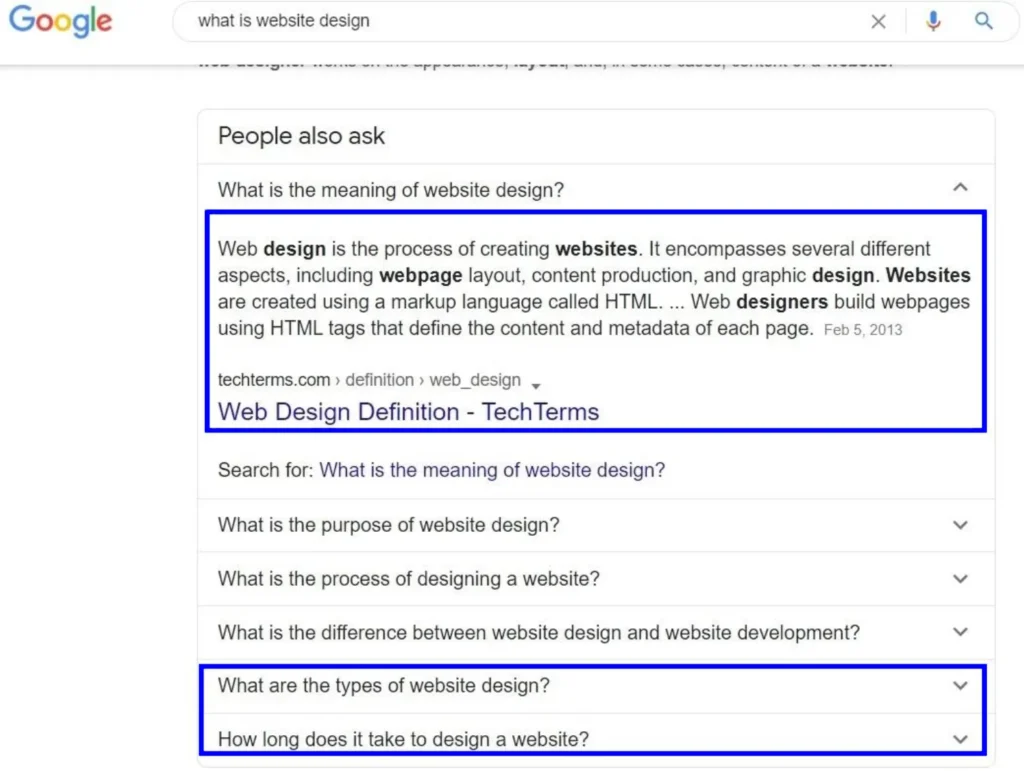
Question-based headings are particularly useful when they reflect actual reader needs.
However, do not turn every sentence into a question. A natural mixture of descriptive and question-based headings creates a better reading experience.
2. Include Short Definitions for Important Terms
When introducing an important technical term, explain its meaning before going into the details.
For example:
What Is a Content Delivery Network (CDN)?
A Content Delivery Network (CDN) is a network of servers distributed across different locations that helps deliver website content to users from a geographically suitable server.
You can then explain how a CDN works, why it is useful, and when a website might need one.
This approach is especially useful for:
- SEO terminology.
- Web development concepts.
- Digital marketing terms.
- AI and machine learning concepts.
- Software features.
- Financial terminology.
- Technical tutorials.
Definitions should be accurate and complete enough to prevent misunderstandings.
If a term has different meanings in different industries, explain which meaning you are using.
3. Use Comparison Tables for Products and Services
Product comparison articles are particularly useful for people researching software, tools, hosting services, and other business products.
For example, a blogger writing about email marketing software could create a comparison table like this:
Tool | Best suited for | Important features |
Mailchimp | Small businesses | Email campaigns and automation |
Brevo | Businesses needing multiple communication channels | Email, SMS, and automation |
MailerLite | Creators and smaller businesses | Newsletters and landing pages |
ActiveCampaign | Businesses with advanced automation needs | Marketing automation and CRM features |
Illustrative comparison. Features, plans, and pricing should be checked against current vendor documentation before publication.
A useful comparison should also explain the limitations of each product.
For example, a tool may offer advanced automation but have a higher starting price. Another may be affordable but lack certain reporting features.
Avoid declaring a product the best without explaining the criteria used to reach that conclusion.
4. Add Images, Screenshots, and Visual Examples
Images can make complex information easier to understand.
For example, an article about configuring Google Search Console can include screenshots showing:
- How to add a website property.
- How to verify website ownership.
- Where to find the indexing report.
- How to inspect a URL.
- How to submit an XML sitemap.
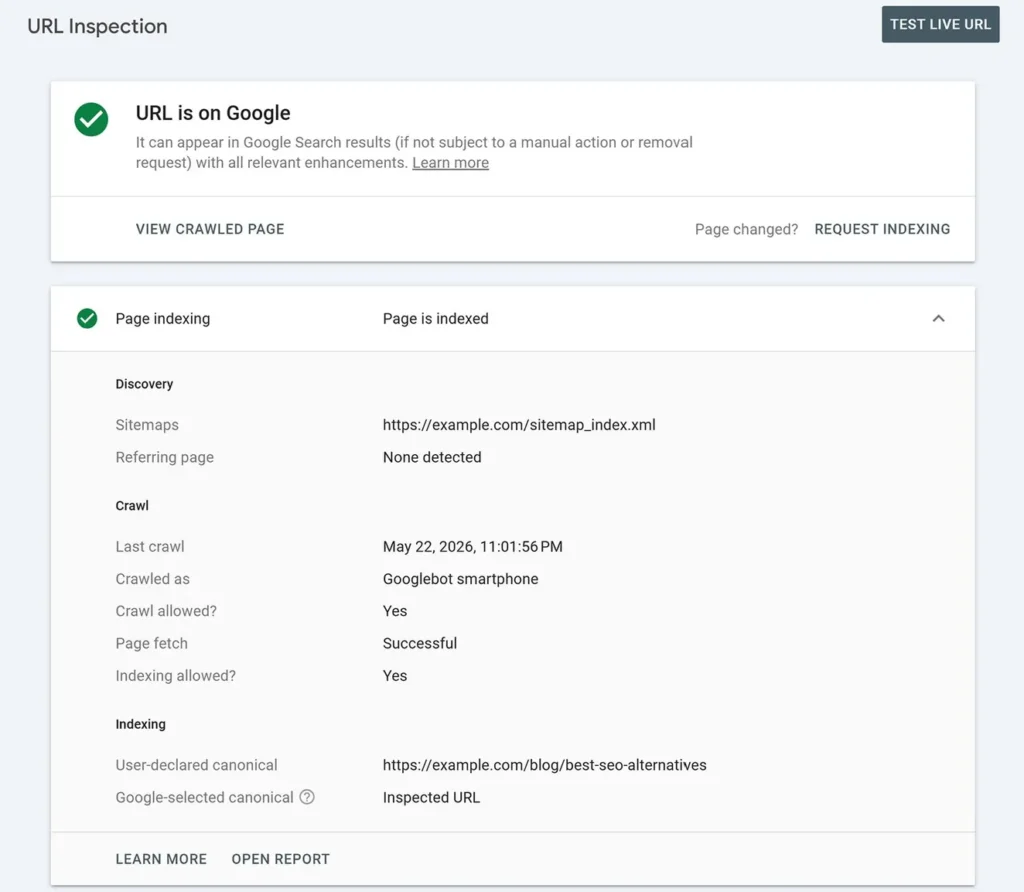
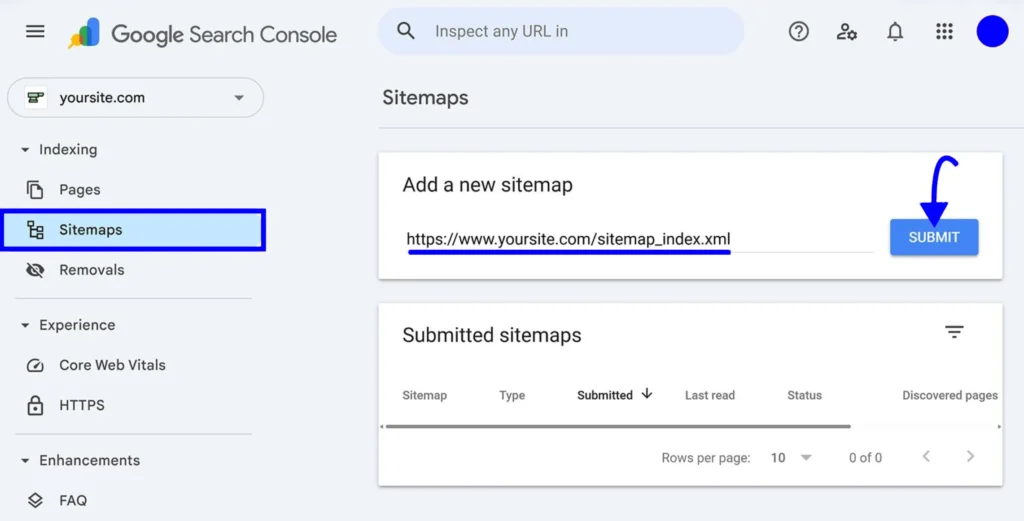
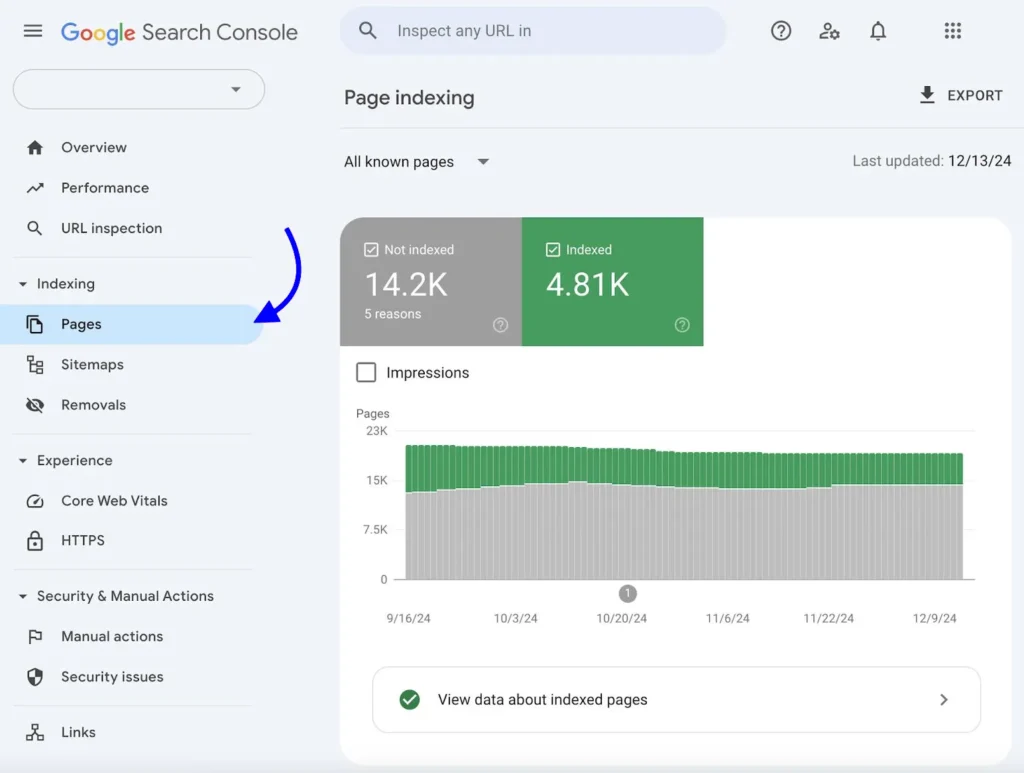
Visual information is particularly useful for tutorials, product reviews, software comparisons, and step-by-step guides.
However, images should support your written explanation rather than replace it.
Follow these practices:
- Use descriptive image filenames.
- Add meaningful alt text.
- Compress images appropriately.
- Use relevant image formats.
- Include captions when they add context.
- Make important information available as text.
- Ensure screenshots reflect the current software interface.
For example, instead of using an image filename such as IMG_2026_01.jpg, use something descriptive like google-search-console-url-inspection.jpg.
A useful alt text description would be:
“Google Search Console URL inspection report showing the indexing status of a webpage.”
Do not fill alt text with repeated keywords. Describe what the image actually shows.
Google recommends using relevant images and videos alongside textual content when they help explain a page’s subject.
5. Add an FAQ Section When It Answers Additional Questions
A frequently asked questions section can help cover important questions that are not fully addressed in the main article.
For example, an article about AI search optimization could include:
Can AI chatbots cite newly published articles?
Yes, newly published articles can become eligible for discovery and citation once they are accessible and discovered by relevant systems. However, the time required for discovery varies, and publication does not guarantee citation.
Does adding FAQ schema guarantee AI citations?
No. Structured data can help search engines understand supported information, but it does not guarantee that a page will appear in AI-generated answers.
Does content length affect AI citations?
There is no established minimum word count that guarantees citations. Content should be long enough to answer the user’s question properly without unnecessary repetition.
Can a new website appear in ChatGPT search results?
Yes. A new public website can potentially appear in ChatGPT search if its pages are discoverable and relevant. However, visibility is not guaranteed.
The important point is to answer genuine reader questions.
Do not create dozens of repetitive FAQs simply to include additional keywords. Also, do not assume that FAQ schema automatically generates special search features or AI citations.
Google’s structured data guidelines require markup to accurately represent visible page content.
Strengthen Your Website’s Trustworthiness and Authority
A well-written article is important, but readers also need reasons to trust the website publishing it.
Imagine two websites discussing financial planning.
The first website has no author information, no references, no contact details, and several outdated articles.
The second website identifies its authors, provides relevant professional backgrounds, references official financial information, and maintains an editorial review process.
Readers are more likely to have confidence in the second website.
This is why website trust and content quality should be considered together.
Google uses multiple signals to identify helpful and reliable information. Its E-E-A-T framework covers Experience, Expertise, Authoritativeness, and Trustworthiness. Google also clarifies that E-E-A-T is not itself a single ranking factor.
1. Create Detailed Author Profiles
Every important article should have clear and accurate authorship information where appropriate.
An author profile helps readers understand who created the content and why that person may be qualified to discuss the subject.
A useful author biography can include:
- Full author name.
- Professional background.
- Relevant work experience.
- Subject knowledge.
- Professional qualifications, where applicable.
- Links to relevant professional profiles.
- Links to other published articles.
For example, an article about website development may benefit from being written or reviewed by someone with practical experience in web design and development.
Similarly, an article about personal finance should have appropriate financial expertise behind its recommendations.
Do not create fake author profiles or claim qualifications that the author does not possess.
Authenticity matters more than impressive-looking biographies.
2. Publish Original Case Studies
Case studies can help establish subject knowledge because they demonstrate how an idea works in a real situation.
For example, suppose you run a digital marketing blog and want to write about improving organic traffic.
Instead of publishing only general recommendations, document an actual content improvement project.
Your case study could include:
Measurement | Before | After |
Organic clicks | 1,200 | 1,850 |
Published articles | 30 | 30 |
Articles updated | 0 | 12 |
Internal links reviewed | 0 | 45 |
Illustrative figures only, not an actual case study or measured result.
Explain what changes were made, how long the project lasted, what tools were used, and what other factors may have influenced the results.
For example, traffic improvements might also be affected by seasonal demand, external links, algorithm changes, and changes in search behavior.
A transparent case study is more useful than simply claiming that a particular SEO technique increased traffic by 50%.
3. Build Topic Authority Through Related Content
Publishing one article about a subject does not necessarily establish deep knowledge of that subject.
A better approach is to create a connected collection of useful resources.
For example, if your website focuses on blogging and SEO, you could build a topic cluster around Answer Engine Optimization.
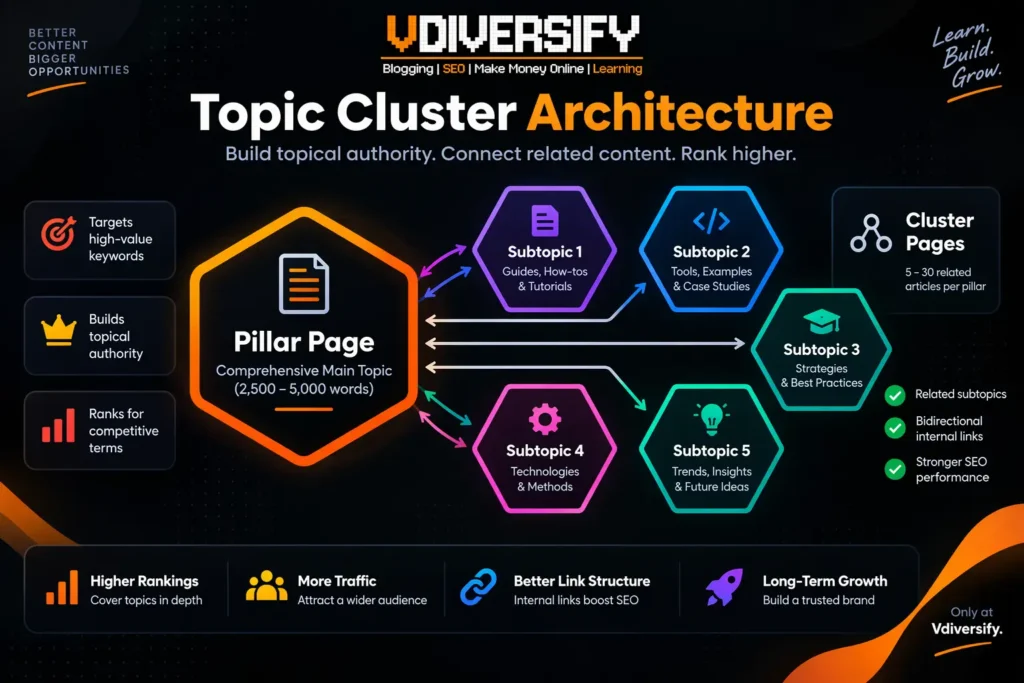
Your content cluster could include:
Main pillar article:
– What Is Answer Engine Optimization (AEO) and Why It Matters
Supporting articles:
- How to Optimize Content for Google Featured Snippets
- AEO vs SEO: Key Differences Every Marketer Should Know
- How to Write Content That AI Chatbots Actually Cite
- How to Optimize Your Website for Google AI Overviews
- How to Build Topical Authority Through Content Clusters
- How to Measure AI Search Visibility
Link these articles naturally whenever one resource helps readers understand another.
This creates a clear relationship between related topics and helps visitors explore your website.
However, topical authority should not be treated as a simple score that increases automatically when you publish a certain number of articles.
The objective is to provide meaningful coverage of a subject and demonstrate real knowledge.
4. Earn Relevant Backlinks and Brand Mentions
Backlinks remain an important part of traditional SEO.
When reputable websites link to your content, those links can help search engines discover your pages and understand how other websites reference your information.
For example, imagine you publish an original study about website performance.
A web development publication may reference your findings in an article about improving website speed.
That reference can provide:
- Referral visitors.
- Greater brand exposure.
- A relevant backlink.
- Additional opportunities for your research to be discovered.
Focus on earning links through:
- Original research.
- Useful industry reports.
- Expert contributions.
- Guest articles on relevant publications.
- Digital PR campaigns.
- Helpful tools and resources.
- Genuine relationships with industry websites.
Avoid buying large numbers of irrelevant backlinks or participating in link schemes.
Also, remember that there is no guarantee that a backlink or brand mention will produce an AI citation. These activities support your broader online presence; they are not guaranteed shortcuts to AI visibility.
5. Make Your Website Information Consistent
Your website should communicate consistent information about your brand, products, services, and authors.
For example, if your company provides web design services in the United States, your website should clearly explain:
- What services you provide.
- Which customers you serve.
- Where your business operates.
- How customers can contact you.
- What makes your services different.
If your website lists one business address while your business profile displays another, readers may become confused.
The same principle applies to product information.
If an article describes a product as having a particular feature, check that the feature is actually available in the product’s current version.
Consistency makes your content easier to understand and helps prevent conflicting information across different pages.
Optimize Content for Different AI Search Platforms
Although many AI-powered search platforms use similar concepts, their discovery systems and user experiences are not identical.
A content strategy that supports Google Search may also help your website become discoverable through other AI platforms. However, you should not assume that every platform uses the same crawler, ranking system, or citation selection process.
The best approach is to maintain strong SEO fundamentals while understanding the specific requirements of each platform.
1. Optimize Your Website for ChatGPT Search
ChatGPT
ChatGPT search provides an opportunity for websites to appear as sources when users ask questions that require online information.
To improve your website’s eligibility for discovery and citations, consider the following steps.
Allow OAI-SearchBot to access your website.
OpenAI identifies OAI-SearchBot as the crawler used to discover content for ChatGPT search.
Check your website’s robots.txt file and make sure you are not unintentionally blocking this crawler.
For example, a robots.txt configuration that allows the crawler may look like this:
User-agent: OAI-SearchBot
Allow: /
Sitemap: https://www.example.com/sitemap.xml
Replace the example domain with your actual website domain.
This configuration is only an illustration. Your existing robots.txt rules, CDN settings, and hosting restrictions should also be reviewed.
Publish content that answers real questions.
Create useful resources covering the questions your target audience asks.
For example, a website about WordPress could publish articles about:
- How to install WordPress.
- How to improve WordPress website speed.
- How to secure a WordPress website.
- How to choose a WordPress hosting provider.
- How to troubleshoot common WordPress errors.
Keep your website accessible.
Check that important articles are publicly accessible and not unintentionally blocked by login requirements, crawling restrictions, or technical errors.
Track ChatGPT referral traffic.
OpenAI explains that ChatGPT search referral URLs can include the utm_source=chatgpt.com parameter, which can help publishers identify incoming traffic in their analytics tools.
For additional information, read the official OpenAI Publishers and Developers FAQ.
2. Optimize Your Website for Google AI Overviews and AI Mode
Google’s AI search experiences are built on its existing Search infrastructure and quality systems.
This is why your traditional SEO strategy should remain a priority.
Here are the important areas to focus on:
Make sure Google can crawl and index your pages.
Check your robots.txt file, indexing directives, canonical tags, XML sitemap, and internal links.
A webpage that cannot be indexed and shown in Google Search is not eligible to appear as a supporting link in AI Overviews or AI Mode.
Create helpful, people-first content.
Focus on articles that provide original information, answer questions completely, and demonstrate genuine experience or expertise.
Use structured data correctly.
Implement relevant structured data when it accurately describes the visible information on your webpage.
For example:
- Article schema for suitable articles.
- Organization schema for business information.
- Product schema for eligible product pages.
- BreadcrumbList schema for website navigation.
- LocalBusiness schema for eligible local businesses.
Remember that structured data does not guarantee AI citations or special search appearances.
Improve the user experience.
Make your website mobile-friendly, improve loading performance, organize navigation, and ensure that visitors can easily find the information they need.
Google’s official documentation explains that existing SEO best practices continue to apply to AI Overviews and AI Mode. There is no special AI schema or separate AI ranking optimization that guarantees inclusion.
Useful references:
- Google Search Central – AI Features and Your Website
- Google – Optimizing Your Website for Generative AI Search
3. Optimize Your Website for Perplexity
Perplexity
Perplexity focuses on answering questions using retrieved information and providing references to supporting sources.
To improve your website’s discoverability, concentrate on the following:
- Publish well-researched articles.
- Use descriptive titles and headings.
- Include original data and useful examples.
- Keep important information publicly accessible.
- Avoid thin content that offers little additional value.
- Support factual statements with reliable references.
- Review your robots.txt rules for unintended crawler restrictions.
Perplexity also operates its own crawler, PerplexityBot, for discovering and indexing webpages.
If you want to understand its crawler settings, consult the official Perplexity crawler documentation.
Do not assume that allowing one AI crawler automatically allows all other AI crawlers. Each platform may have different crawler identities and access requirements.
4. Optimize Your Website for Microsoft Copilot
Microsoft Copilot
Microsoft Copilot provides another opportunity for websites to be discovered and referenced through AI-generated answers.
Because Bing is an important part of Microsoft’s search ecosystem, website owners should pay attention to Bing’s crawling, indexing, and webmaster tools.
Start with these actions:
- Register your website with Bing Webmaster Tools.
- Submit your XML sitemap.
- Review crawling and indexing information.
- Check for technical errors.
- Publish accurate and useful content.
- Monitor available AI citation information.
One particularly useful development is Microsoft’s AI Performance report in Bing Webmaster Tools.
Introduced in February 2026, this report provides publishers with visibility into how their website content is cited across Microsoft Copilot, AI-generated summaries in Bing, and selected partner experiences.
It provides information such as:
- Total citations.
- Pages cited in AI-generated answers.
- Average cited pages.
- Grounding queries associated with your content.
- Changes in citation activity over time.
This gives website owners a more practical way to understand their visibility in supported AI experiences.
Reference: Bing Webmaster Tools – AI Performance.
Technical SEO Factors That Help AI Chatbots Discover Your Content
Content quality is important, but technical accessibility should not be ignored.
Even an excellent article may fail to reach its intended audience if search systems cannot discover, crawl, or process the webpage.
For example, imagine publishing a detailed guide about website security. The article is accurate, well-researched, and contains original examples. However, the webpage has an accidental noindex directive.
Search engines may exclude the page from their index.
This means your content strategy must combine useful writing with sound technical SEO.
1. Make Sure Your Website Can Be Crawled
Crawling is the process through which search engine bots discover and access webpages.
Your website should allow the relevant search crawlers to access the pages you want them to discover.
Check the following:
- robots.txt rules.
- Server response codes.
- CDN and firewall restrictions.
- Website login requirements.
- Accidental crawler blocking.
- Internal navigation links.
For example, if you want Google to discover your articles, make sure Googlebot is not unintentionally blocked.
If you want your website to be considered for ChatGPT search, review the OAI-SearchBot rules separately.
Different AI systems use different crawlers, so you should understand which bots are relevant to your publishing goals.
2. Create and Submit an XML Sitemap
An XML sitemap helps search engines discover important URLs on your website.
For example, a blog sitemap might include:
<?xml version="1.0" encoding="UTF-8"?>
<urlset xmlns="http://www.sitemaps.org/schemas/sitemap/0.9">
  <url>
    <loc>https://www.example.com/what-is-seo/</loc>
  </url>
  <url>
    <loc>https://www.example.com/what-is-aeo/</loc>
  </url>
  <url>
    <loc>https://www.example.com/ai-content-strategy/</loc>
  </url>
</urlset>
This is a simplified example. Your actual sitemap should follow the XML sitemap protocol and contain valid URLs from your website.
You can create a sitemap using:
- WordPress SEO plugins.
- Website platform features.
- Sitemap generator tools.
- Custom website development solutions.
After creating your sitemap, submit it through Google Search Console and Bing Webmaster Tools.
Remember that submitting a sitemap does not guarantee that every URL will be crawled or indexed.
3. Use Internal Linking Strategically
Internal links connect related pages within your website.
They help readers discover additional information and help search engines find other pages through your website’s navigation structure.
For example, if you publish an article about AEO, you can link to supporting articles about:
- Featured snippets.
- Google AI Overviews.
- Content optimization.
- Technical SEO.
- Structured data.
- Keyword research.
Use descriptive anchor text instead of generic phrases such as “click here.”
For example:
Weak anchor text:
Read more about SEO here.
Better anchor text:
Learn how to optimize your website for Google Featured Snippets.
The second link explains what the destination page is about.
Do not add internal links randomly. Each link should provide additional value to the reader.
4. Implement Relevant Structured Data
Structured data is a standardized way to describe information on a webpage.
It can help search engines understand entities, products, articles, organizations, and other content types.
For example, Article schema can describe information such as:
- Article headline.
- Author.
- Publication date.
- Modification date.
- Publisher.
- Main image.
A simplified JSON-LD example is shown below:
<script type="application/ld+json">
{
  "@context": "https://schema.org",
  "@type": "Article",
  "headline": "How to Write Content That AI Chatbots Actually Cite",
  "author": {
    "@type": "Person",
    "name": "Author Name"
  },
  "datePublished": "2026-11-18",
  "dateModified": "2026-11-18"
}
</script>
Replace the example author information and dates with accurate details from your actual article.
The structured data must match the information visitors can see on the webpage.
Google does not require special AI-specific schema to appear in AI Overviews or AI Mode. Structured data should be used to describe content accurately, not as a shortcut to AI citations.
5. Improve Website Loading Speed and Mobile Experience
Website performance affects how visitors interact with your content.
A slow website can create a poor experience, particularly for mobile visitors.
Google’s Core Web Vitals provide three useful measurements:
Metric | What it measures | Good performance |
LCP | Loading performance | 2.5 seconds or less |
INP | Responsiveness | 200 milliseconds or less |
CLS | Visual stability | 0.1 or less |
These are Google’s recommended good-performance thresholds, measured at the 75th percentile of page loads.
Google for Developers
You can use tools such as:
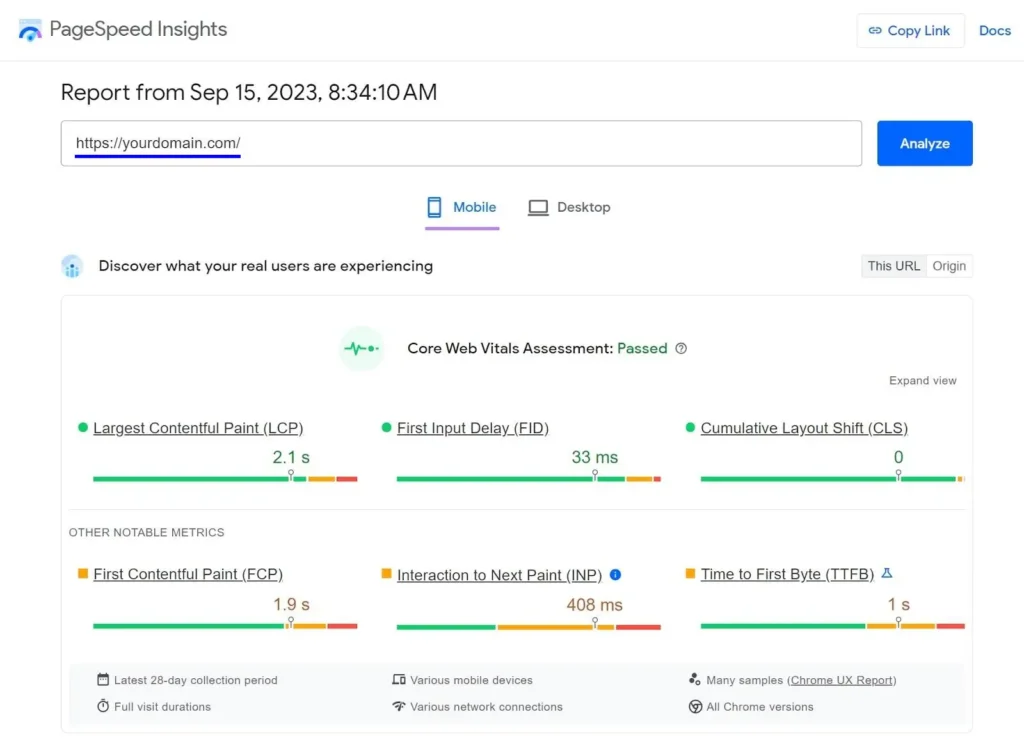
Some practical improvements include:
- Compressing large images.
- Using modern image formats.
- Reducing unnecessary JavaScript.
- Enabling browser caching.
- Using a suitable hosting provider.
- Implementing a CDN when appropriate.
- Removing unnecessary plugins.
- Improving mobile navigation.
These improvements support website usability and technical quality. They do not independently guarantee AI citations.
6. Make Important Content Available as Readable Text
Some websites depend heavily on images, videos, JavaScript-based interfaces, or interactive elements to present important information.
Although modern search engines can process many types of content, you should make important information available in accessible text wherever possible.
For example, if you publish a comparison of five hosting providers, do not display all the prices and features only inside an image.
Include the comparison as actual webpage text or a readable HTML table.
Similarly:
- Add captions or transcripts to important videos.
- Use descriptive headings.
- Include text explanations alongside charts.
- Make essential product details visible.
- Avoid hiding important information behind inaccessible interfaces.
This helps people and search systems understand what your page contains.
Common Mistakes That Prevent AI Chatbots From Citing Your Website
Many website owners are trying to improve their visibility in AI-generated answers. However, some optimization techniques can waste time or even reduce the overall quality of their websites.
The biggest mistake is treating AI citation optimization as a collection of shortcuts.
There is no guaranteed formula that forces ChatGPT, Google, Perplexity, or Copilot to cite a particular webpage. Your focus should be on creating genuinely useful content and making sure that it is accessible to relevant search systems.
Here are some common mistakes to avoid.
1. Publishing Generic AI-Generated Articles Without Human Review
AI writing tools can help with research, outlining, brainstorming, and editing.
However, publishing large numbers of automatically generated articles without reviewing their accuracy, originality, and usefulness can create problems.
For example, imagine publishing 50 articles about different SEO topics in a single week.
Most of the articles contain similar explanations, generic examples, and information that is already available on hundreds of websites.
Even if the articles are grammatically correct, they may offer very little additional value.
Google’s guidance does not prohibit content simply because AI was used to create it. However, using automation primarily to manipulate search rankings or generating large amounts of low-value content can violate its spam policies.
A better approach is to use AI as an assistant rather than a replacement for editorial judgment.
For example:
- Use AI to develop article outlines.
- Conduct independent research.
- Verify important facts.
- Add original examples.
- Include first-hand experience.
- Review the final article manually.
- Remove repetitive explanations.
The final article should offer real value regardless of which tools were used to create it.
2. Stuffing Keywords Into Every Paragraph
Keyword optimization remains relevant, but excessive repetition can make articles difficult to read.
For example, consider this sentence:
“AI content optimization helps businesses improve AI content optimization by using AI content optimization strategies for better AI content optimization.”
This is unnatural and provides no useful explanation.
Instead, use relevant terms naturally.
If you are writing about AI search optimization, discuss related concepts such as:
- Search intent.
- Content relevance.
- Website authority.
- Information accuracy.
- Search indexing.
- Source citations.
- Original research.
- Content structure.
Use a keyword when it genuinely helps explain the subject.
The objective is to cover the topic completely, not to repeat the same phrase as many times as possible.
3. Writing Long Articles Without Providing Additional Value
Long-form content can be useful when a subject requires detailed explanations.
However, word count alone does not make an article authoritative.
Imagine two articles about technical SEO.
The first article contains 6,000 words but repeats the same information in different sections.
The second article contains 2,500 words and provides clear explanations, practical examples, technical instructions, and reliable references.
The second article may offer a much better experience.
Do not add unnecessary paragraphs simply to reach a particular word count.
Instead, ask yourself:
- Does this section answer a relevant question?
- Does it introduce new information?
- Does it provide an example?
- Does it explain an important limitation?
- Does it help readers make a decision?
If the answer is no, consider removing or improving the section.
4. Publishing Unsupported Statistics and Claims
Statistics can make an article more informative, but incorrect statistics can damage its credibility.
For example, writing “AI chatbots cite websites with more than 2,000 words” is misleading unless you have reliable research supporting that specific claim.
Similarly, avoid claiming that:
- Every AI chatbot prefers FAQ content.
- Adding schema guarantees citations.
- Publishing every day improves AI visibility.
- Backlinks automatically produce ChatGPT citations.
- A particular word count guarantees inclusion in AI Overviews.
These claims should not be presented as established facts.
Whenever you include statistics, verify the original research and explain what the numbers represent.
5. Blocking Important AI Search Crawlers Accidentally
Your website may have valuable information, but the relevant AI search crawler might not be able to access it.
For example, a robots.txt rule that blocks an entire group of crawlers could unintentionally prevent OAI-SearchBot from discovering your pages.
Similarly, firewall settings, CDN restrictions, or website security tools may interfere with legitimate crawling.
Review your crawler settings before assuming that your content quality is the problem.
Also remember that allowing an AI search crawler is a publishing decision. Website owners should understand the difference between search discovery, AI model training, and other forms of automated access.
6. Copying Information From Other Websites
Rewriting another website’s article without adding anything useful does not create a strong resource.
For example, if five websites explain the same ten SEO techniques, publishing a sixth article with nearly identical explanations adds little value.
Instead, consider what you can contribute:
- A new example.
- A different comparison.
- Original research.
- An updated explanation.
- A practical tutorial.
- An expert perspective.
- A more useful solution to a common problem.
Google specifically recommends providing original information and substantial additional value when using other sources.
Google for Developers
7. Assuming AI Citations Guarantee Website Traffic
An AI chatbot may cite your website without generating a click.
A user might read the answer, understand the information, and leave without visiting the source.
Therefore, citations and referral traffic should be measured separately.
If your website receives AI citations but very few visitors, consider improving:
- Page titles.
- Descriptions.
- Brand recognition.
- The usefulness of the linked resource.
- The additional information available on the page.
The objective should be to turn visibility into meaningful engagement where possible, not simply to collect citation counts.
How to Measure AI Citations and Track Your Visibility
Creating content is only one part of the process. You should also measure whether your publishing strategy is improving your website’s visibility.
Traditional SEO tools provide useful information about impressions, clicks, rankings, and organic traffic.
However, AI search visibility introduces additional measurements, such as how frequently your webpages appear as sources in AI-generated answers.
The good news is that several tools can help you monitor different parts of this process.
1. Use Google Search Console
Google Search Console
Google Search Console is one of the most useful free tools for website owners.
It helps you understand how your website performs in Google Search and identify technical issues that may affect indexing.
You can use it to monitor:
- Search impressions.
- Organic clicks.
- Average search position.
- Search queries.
- Page indexing.
- Sitemap status.
- Mobile usability and relevant page experience information.
- Core Web Vitals reports.
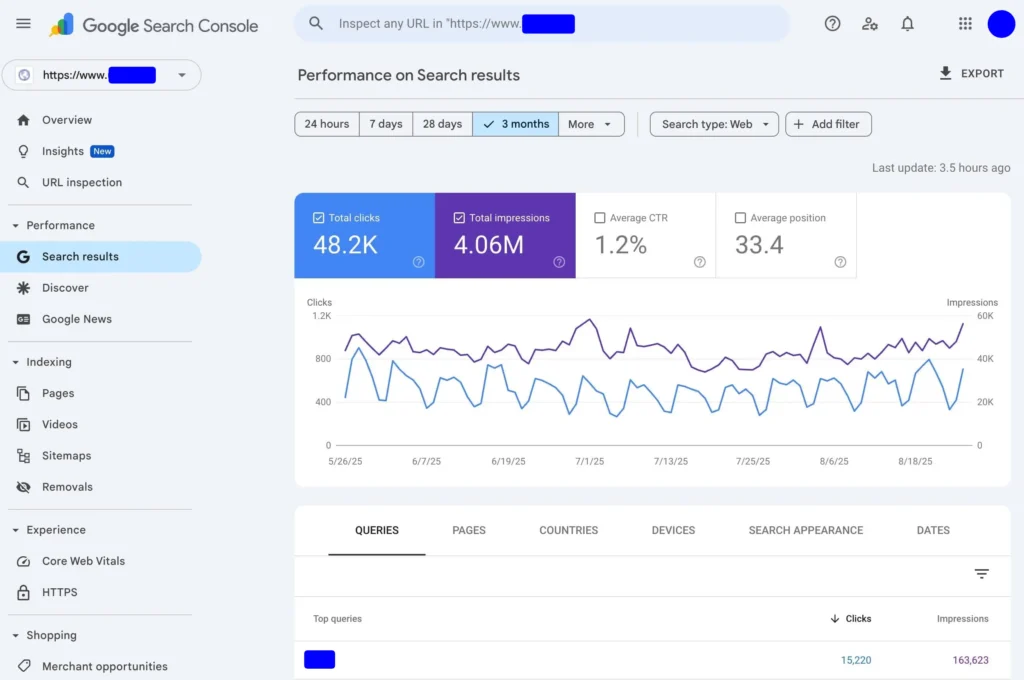
For example, if you publish an article about AEO, monitor the queries that bring visitors to the page.
You may discover that your article receives impressions for questions you did not originally target.
These queries can help you identify additional topics worth explaining.
One important distinction: Google Search Console does not provide a complete, dedicated report of citations in Google AI Overviews or AI Mode. Do not treat normal search impressions as confirmed AI citations.
Official website: Google Search Console.
2. Use Bing Webmaster Tools AI Performance
Bing Webmaster Tools
Bing Webmaster Tools is particularly relevant because it now provides an AI Performance report for supported AI experiences.
This report helps website owners understand how their content is referenced in AI-generated answers across Microsoft Copilot, Bing AI summaries, and selected partner integrations.
It provides several useful measurements:
Metric | What it tells you |
Total citations | How often your content was visibly referenced |
Cited pages | Which website URLs appeared as sources |
Average cited pages | Average number of unique cited pages per day |
Grounding queries | Phrases associated with your content’s retrieval |
Citation trends | How citation activity changes over time |
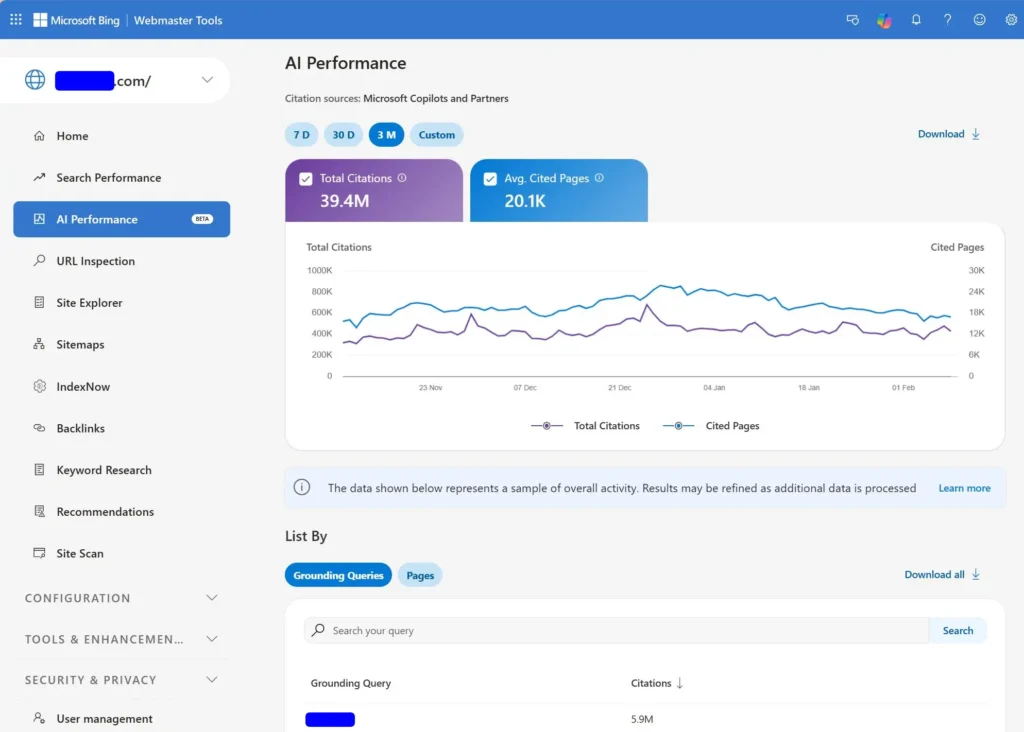
For example, imagine that one of your articles about website speed starts receiving citations for several related grounding queries.
This may indicate that your content is being used across different AI-generated answers associated with that subject.
You can then review the page to understand what makes it useful and apply similar quality principles to other relevant articles.
There are limitations.
Microsoft explains that its AI Performance data is aggregated and does not show every individual AI answer, exact user prompt, or the reason a particular webpage was selected. Citation counts also do not represent clicks or website traffic.
Official website: Bing Webmaster Tools.
3. Monitor ChatGPT Referral Traffic in Google Analytics
Google Analytics 4
Google Analytics 4 (GA4) can help you understand whether people are visiting your website from AI platforms.
For example, when ChatGPT search sends visitors to your website, referral URLs may include the parameter utm_source=chatgpt.com.
You can examine acquisition reports to identify relevant referral sources.
Useful measurements include:
- Sessions from AI platforms.
- Engaged sessions.
- Engagement rate.
- Landing pages.
- Conversions.
- Purchases or leads.
- Returning visitors.
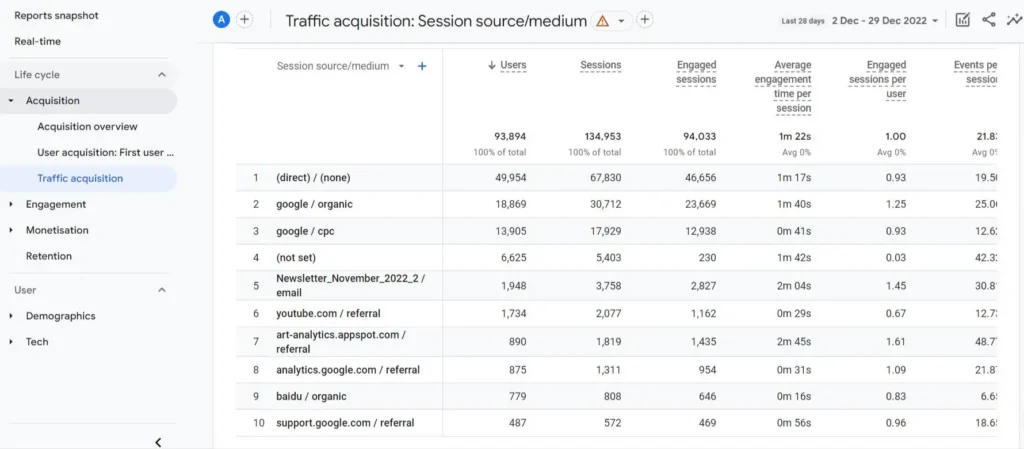
For example, imagine your website receives 500 visitors from ChatGPT over a month.
Of these visitors, 200 explore additional pages, 40 sign up for your newsletter, and 10 contact your business.
These figures would help you understand the business value of that referral traffic.
Illustrative example, not actual website analytics data.
You can also create custom channel groupings to organize traffic from different AI platforms.
Be aware that not every AI referral will be identifiable. Some visits may appear as direct traffic or be attributed differently depending on how the user reaches your website.
Official website: Google Analytics.
4. Use SEO Research Tools to Identify Content Opportunities
SEO research tools can help you discover relevant questions, evaluate competing content, and identify gaps in your existing articles.
Some useful platforms include:
Ahrefs
Useful for keyword research, competitor analysis, backlink research, content gap analysis, and organic search performance.
Check out: Visit Ahrefs
Semrush
Useful for keyword research, site audits, competitor research, and content optimization.
Check out: Visit Semrush
Screaming Frog SEO Spider
Useful for finding broken links, reviewing page titles, analyzing internal links, and identifying technical SEO problems.
Check out: Visit Screaming Frog
Google Trends
Useful for understanding changing search interest and comparing the popularity of related topics.
Check Out: Visit Google Trends
These tools do not all measure AI citations directly. Use them to strengthen your research and traditional SEO strategy, and use dedicated AI visibility reporting where available.
5. Manually Test Your Website Across AI Chatbots
You should also perform manual checks to understand how different AI platforms respond to questions related to your website’s subject.
For example, if you run a website about blogging, you could test questions such as:
- What are the best blogging practices for beginners?
- How can bloggers improve their organic search traffic?
- Which SEO tools are useful for new bloggers?
- How does Answer Engine Optimization work?
- What are the best ways to structure blog articles?
Run these questions on different platforms, using web search where available.
Record the results:
Platform | What to check |
ChatGPT | Whether your website appears as a source |
Google AI Overviews | Whether your pages are linked in the answer |
Perplexity | Whether your articles appear in citations |
Microsoft Copilot | Whether your website is referenced |
Google Search | Whether your pages rank for related queries |
Do not rely on one test.
AI-generated answers can change depending on the wording, location, timing, search context, and platform updates.
A single missing citation does not prove that your website has lost visibility.
The purpose of manual testing is to identify patterns and opportunities, not to treat individual answers as a reliable measurement of overall performance.
6. Create a Monthly AI Visibility Tracking Report
A simple monthly report can help you evaluate whether your content strategy is moving in the right direction.
You can track the following information:
Measurement | Month 1 | Month 2 |
Published articles | 4 | 5 |
Updated articles | 2 | 4 |
AI citations | 12 | 19 |
AI referral sessions | 80 | 125 |
Organic clicks | 1,200 | 1,380 |
New referring domains | 3 | 5 |
Illustrative reporting data only. These figures do not represent expected results or industry averages.
Review the numbers to identify:
- Which pages receive the most citations.
- Which topics generate AI referral traffic.
- Which articles need updating.
- Which questions are not adequately answered.
- Which content clusters deserve further development.
Keep citation counts and traffic metrics separate. More citations do not necessarily mean more visitors or better business results.
A Practical Checklist for Creating Content That AI Chatbots Can Cite
Understanding the strategies is important, but applying them consistently is what makes the difference.
Before publishing your next article, use the following checklist to review its content quality, structure, technical accessibility, and search visibility.
Content publishing checklist
Content quality
- Answer the main question clearly near the beginning of the article.
- Provide original information, useful insights, and practical examples.
- Verify statistics, facts, and important claims.
- Include first-hand experience or original research where possible.
- Avoid unnecessary repetition and keyword stuffing.
- Support important claims with reliable external references.
Content structure
- Use descriptive H1, H2, and H3 headings.
- Organize information into relevant sections.
- Write clear, self-contained paragraphs.
- Use tables for useful comparisons.
- Include numbered lists for step-by-step instructions.
- Add relevant FAQs when they provide additional value.
- Include descriptive image filenames and alt text.
Website authority
- Display accurate author information.
- Maintain a useful About Us and Contact page.
- Link to relevant supporting articles.
- Build topic coverage through related resources.
- Earn relevant backlinks through original research and useful content.
- Keep important information accurate and updated.
Technical SEO and AI discovery
- Check Google indexing and crawling accessibility.
- Review robots.txt and relevant AI crawler permissions.
- Create and submit an XML sitemap.
- Check canonical tags and noindex directives.
- Implement relevant structured data accurately.
- Improve mobile usability and Core Web Vitals.
- Ensure important information is available as readable text.
Performance tracking
- Monitor organic search performance in Google Search Console.
- Review AI Performance in Bing Webmaster Tools.
- Track AI referral traffic in Google Analytics 4.
- Test relevant questions across different AI platforms.
- Review citation trends and update underperforming articles.
You do not need to complete every item for every article. Some recommendations will depend on your industry, website type, and the subject you are discussing.
For example, a product review should include genuine product experience, while an article explaining a technical concept may benefit more from accurate definitions, diagrams, and supporting documentation.
The important thing is to make every publishing decision with the reader’s needs in mind.
Conclusion:
The future of content marketing is not just about getting your website to appear in traditional search results. It is also about making your content useful enough to be discovered, referenced, and cited by AI-powered search platforms.
ChatGPT, Google AI Overviews, Perplexity, and Microsoft Copilot are changing how people discover information. Instead of visiting several websites to find answers, users can now receive summarized responses supported by references to relevant online sources.
This creates new opportunities for bloggers, website owners, content creators, and businesses.
However, getting cited by AI chatbots is not about following a secret SEO formula. It requires creating information that genuinely helps people and can be understood, verified, and retrieved by search systems.
Start by answering questions directly. Add original research, accurate statistics, practical examples, and reliable external references. Organize your articles with descriptive headings, clear paragraphs, useful tables, and relevant images. Strengthen your website’s credibility through genuine expertise, accurate authorship, useful internal links, and consistent publishing practices.
Do not ignore technical SEO. Make sure your important webpages can be discovered and indexed, review your crawler permissions, maintain your XML sitemap, and use structured data correctly.
Most importantly, do not create articles solely to satisfy AI systems. Create resources that people would genuinely want to read, bookmark, share, and recommend.
A website that consistently publishes original, accurate, and helpful information has a stronger foundation for long-term visibility across both traditional search engines and AI-powered answer platforms.
The goal is not simply to get your website mentioned by an AI chatbot. It is to build a website that deserves to be used as a trusted source of information.
References and Further Reading
The following resources provide additional information about Google’s search guidelines, AI crawler access, content quality, website indexing, and AI citation measurement.
Official Google Resources
- Google Search Central – AI Features and Your Website — Understand how Google AI Overviews and AI Mode work and what website owners should do.
- Google – Optimizing Your Website for Generative AI Search — Learn about generative AI search and existing SEO best practices.
- Google – Creating Helpful, Reliable, People-First Content — Understand content quality, experience, expertise, and trustworthiness.
- Google Search Essentials — Review Google’s fundamental technical and content guidelines.
- Google – General Structured Data Guidelines — Learn how to implement structured data correctly.
Official OpenAI Resources
- OpenAI – Publishers and Developers FAQ — Understand website discovery and ChatGPT search visibility.
- OpenAI – Overview of OpenAI Crawlers — Learn about OAI-SearchBot, GPTBot, and other crawlers.
Microsoft and Bing Resources
- Bing Webmaster Tools – AI Performance — Understand AI citations, grounding queries, and page-level citation activity.
- Microsoft Bing – Introducing AI Performance in Bing Webmaster Tools — Learn about Microsoft’s AI visibility reporting.
SEO Research and Industry Resources
- Ahrefs Blog — SEO research, keyword research, content marketing, and backlink strategies.
- Semrush Blog — SEO, digital marketing, and content optimization.
- Search Engine Journal — Search industry developments and SEO strategies.
- Search Engine Land — Search marketing news and analysis.
- Google Search Central Documentation — Official technical SEO and search documentation.

“Hey, I am Sachin Ramdurg, the founder of VDiversify.com.
I am QA/QC Manager, Certified Lead Auditor and Quality Champion. I am an Engineer and Passionate Blogger with a mindset of Entrepreneurship. I have been experienced in Blogging for more than 15+ years and following as a youtuber along with blogging, online business ideas, affiliate marketing, and make money online ideas since 2012.