

How to Prepare Your Manufacturing Plant for a VDA 6.3 Audit [2026]

If you are wondering how to prepare manufacturing plant for VDA 6.3 audit, the first thing I always tell my teams is this: do not treat the audit as a one-day event. A strong VDA 6.3 result comes from months of process discipline, evidence readiness, and shop-floor control. 

In my experience as a Quality Manager and certified process auditor, the plants that score well are not necessarily the biggest plants, but the ones with consistent systems, trained people, and visible process control.

In 2026, VDA 6.3 continues to remain one of the most important process audit standards for automotive manufacturing and suppliers. It is widely used across OEMs, Tier 1, Tier 2, and critical component suppliers to verify whether production and support processes are stable, repeatable, and customer-compliant. 

Recent process audit guidance still strongly focuses on documentation control, risk management, supplier readiness, and serial production stability.

Many plants fail not because the process is weak, but because they fail to show objective evidence

how-to-prepare-manufacturing-plant-for-VDA-6.3-audit

A manufacturing plant should prepare for a VDA 6.3 audit by completing a pre-audit gap analysis, updating process documents, verifying PFMEA and control plans, training operators, ensuring traceability, and conducting a full internal mock audit. 

The most critical focus areas are process control, documentation accuracy, operator competence, maintenance records, and evidence readiness

Plants that complete a structured VDA audit preparation checklist generally reduce major nonconformities by 30–40% during external audits based on industry internal audit trends and operational audit benchmarking.

Before preparing the plant, I always ensure my team understands what the audit is actually checking. 

VDA 6.3 is a process audit standard developed for the automotive sector to evaluate whether manufacturing processes are capable of consistently producing conforming products. 

It covers everything from project planning and supplier control to serial production and customer support.

The most critical section for a manufacturing plant is usually P6 – Process Analysis Production, because this is where auditors spend most of their time during the shop-floor walkthrough. 

They assess whether your production controls, documentation, inspection methods, people competency, and material flow are working exactly as planned.

From my audit experience, nearly 65–70% of findings usually come from P6-related elements such as:

  • operator instructions
  • process controls
  • traceability
  • defect handling
  • calibration
  • maintenance gaps
  • reaction plans

This is why manufacturing plant audit readiness must begin well before the actual audit date.

Recommended Reference Materials and Audit Resources:

For professionals wanting to perform stronger audits, these references are extremely useful:

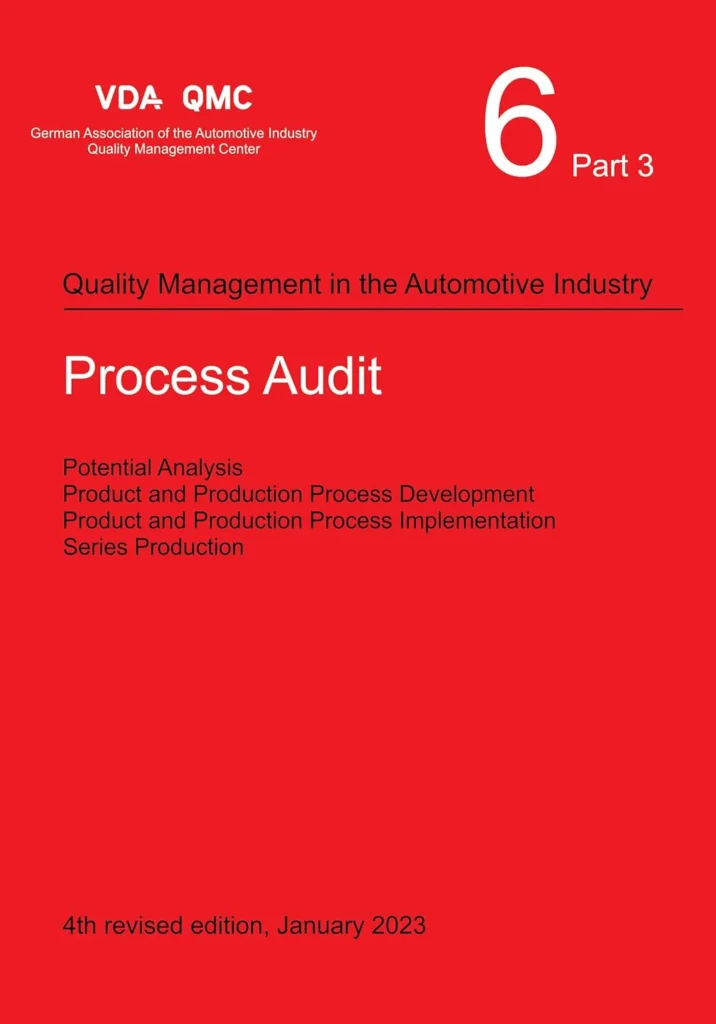
I strongly recommend the official VDA Volume 6 Part 3 : Process Audit, 4th Revised Edition for auditors working in automotive supplier quality.

How to Prepare Manufacturing Plant for VDA 6.3 Audit?

The best way to start is by building a VDA audit preparation checklist that mirrors the actual process flow inside your plant. I always recommend beginning from receiving inspection and following the product journey all the way to final dispatch. 

This helps teams think in process sequence rather than department silos.

For example, if you are manufacturing automotive plastic components, your preparation flow may look like this:

  • incoming material verification
  • material storage and FIFO
  • machine setup
  • molding parameters
  • first-off approval
  • in-process inspection
  • packing verification
  • dispatch traceability

This sequence-based approach makes production process audit prep much easier because it matches what the auditor will physically walk through on the floor.

A very practical tip I use is assigning one process owner per stage. The production engineer owns machine parameters, quality owns inspection evidence, stores owns traceability, and maintenance owns preventive maintenance records.

That ownership alone improves audit evidence preparation by almost 40% in many plants.

1. Start with a Pre-Audit Gap Analysis:

The first operational step is always a pre-audit gap analysis.

I never wait for the external auditor to find the gaps. Instead, I run a complete VDA 6.3 self-assessment at least 4 to 6 weeks before the actual audit. This internal review should use the latest VDA questionnaire structure and scoring logic.

A strong pre-audit gap analysis should review:

  • PFMEA vs actual process flow
  • Control Plan vs inspection records
  • SOP vs operator actual practice
  • calibration due dates
  • maintenance closure records
  • NCR / rejection trends
  • customer complaints
  • traceability simulation
  • reaction plan effectiveness

According to recent operational manufacturing audit discussions, companies using internal pre-audits reduce repeat findings by nearly 35%.

For example, in one plant audit I handled, the control plan required torque verification every 2 hours, but operators were actually recording it every 4 hours. The process looked stable, but the mismatch became a major audit risk.

This is exactly why gap analysis must compare documented process vs actual practice.

2. Documentation Readiness and Process Documentation VDA:

This is where most plants either win or lose.

The auditor will always compare what is written versus what is happening on the floor. Your process documentation VDA must be clean, updated, and fully aligned with actual production conditions.

The minimum documentation set I recommend includes:

  • Process Flow Diagram
  • PFMEA
  • Control Plan
  • SOP / Work Instructions
  • Inspection Standard
  • Reaction Plan
  • Setup Approval Record
  • First Piece Approval
  • Preventive Maintenance Plan
  • Calibration Certificates
  • Operator Skill Matrix
  • Layered Process Audit reports
  • 8D / CAPA closure records

A common issue I often find is revision mismatch.

For example:

  • PFMEA rev 07
  • control plan rev 05
  • SOP rev 04

This immediately raises a red flag.

Every controlled document must follow single revision integrity.

Recent VDA checklist guidance strongly emphasizes control plans, reaction plans, and risk-based documentation.

3. Align PFMEA with Actual Shop Floor Risks:

One of the first questions an auditor may ask is whether the PFMEA reflects the current process.

This is where many plants struggle.

A PFMEA created during launch and never updated after process changes is a major nonconformity risk. In 2026, auditors increasingly expect live risk management evidence.

For example, if you introduced:

  • new tooling
  • machine automation
  • poka-yoke sensors
  • new supplier resin grade

your PFMEA must reflect these changes.

A strong VDA 6.3 implementation guide approach is to review PFMEA monthly for:

  • top defect modes
  • customer complaint trends
  • internal PPM trends
  • scrap analysis
  • downtime patterns

Plants using active PFMEA reviews often report 20–25% reduction in repeat defects.

4. Control Plan and Production Evidence:

Your control plan is one of the most audited documents.

The auditor will physically verify whether every control point exists on the line.

For example, if the control plan says:

  • dimension check every 30 mins
  • visual inspection 100%
  • barcode traceability at packing

the auditor will expect actual evidence.

This means:

  • filled inspection sheets
  • digital SPC logs
  • traceability scans
  • reject segregation tags

I always tell teams:
if it is written, it must be visible.

This is the heart of quality system audit prep.

Recent VDA audit guidance continues to prioritize control plan execution and evidence-based scoring.

5. Build a Plant-Wide Audit Readiness Dashboard:

One practical system I strongly recommend is an audit dashboard.

This helps senior management track manufacturing quality compliance in real time.

Typical dashboard metrics include:

  • internal PPM
  • customer PPM
  • line rejection %
  • calibration overdue %
  • PM closure %
  • skill matrix completion %
  • document revision status
  • CAPA overdue %
  • traceability test pass %

For example:

  • calibration compliance target = 100%
  • PM closure target = ≥ 95%
  • operator certification = 100%

These numbers make audit readiness measurable.

Plants that track readiness KPIs weekly generally perform better during certification and customer audits.

Shop-Floor Readiness, People, Process Control, and Evidence Preparation:

we built the foundation with gap analysis, PFMEA alignment, and document control. Now, I am taking you to the most important area from an auditor’s point of view — the shop floor

In my experience as a Quality Manager and certified VDA auditor, this is where most major findings happen because the auditor now compares paperwork with actual process execution.

For VDA 6.3, the P6 Production section remains the heart of the audit. This section directly checks whether your production process is stable, controlled, and capable of consistently meeting customer requirements. 

Recent guidance continues to show that P6 carries the highest operational weight during on-site audits.

1. Shop-Floor Readiness and Manufacturing Plant Audit Readiness:

The first thing I do before any audit is walk the line exactly the way the auditor will.

I always start from:

  • incoming material
  • stores
  • line feeding
  • machine setup
  • production line
  • in-process inspection
  • packing
  • FG storage
  • dispatch

This full physical walkthrough helps confirm whether the documented process flow matches the real plant condition.

For example, if the process flow diagram says material moves from receiving to FIFO rack and then to line-side bins, the floor must clearly show:

  • location labels
  • batch identification
  • FIFO arrows
  • aisle markings
  • bin quantity limits

A missing physical flow system can quickly lead to a traceability or mix-up finding.

This is one of the most common production process audit prep gaps I see.

2. Operator Training and Competency Records:

One of the first questions an auditor asks on the floor is often directed to the operator, not the quality engineer.

Typical questions include:

  • What are you making?
  • What is the critical characteristic?
  • What do you do if dimension goes out of limit?
  • Where is the work instruction?
  • Who approved the last setup?

This is why operator readiness is critical.

VDA P6 specifically checks personnel competence and role clarity.

I strongly recommend maintaining a live skill matrix board for every line.

Each matrix should show:

  • operator name
  • process trained
  • certification date
  • refresher due date
  • backup operator
  • assessor signoff

For example:

Operator

Process

Level

Validity

Tim

CNC Turning

Level 3

Dec 2026

Sarah

Final Inspection

Level 2

Jan 2027

Plants with visible competency boards often perform better because the auditor can immediately verify evidence.

A good benchmark is 100% line coverage for trained operators.

3. Work Instructions and Visual Standards:

A plant may have good processes, but if the operator cannot easily follow them, the auditor will raise a finding.

I always insist that work instructions must be:

  • visible at workstation
  • latest revision
  • visual where possible
  • simple language
  • include reaction plan

For example, instead of only text, include:

  • product photo
  • OK / Not OK visual sample
  • torque values
  • gauge use method
  • rejection criteria

This improves both compliance and actual defect prevention.

In many plants, visual work instructions reduce operator error by 15–20% based on internal quality trend data.

4. Machine Readiness and Preventive Maintenance:

Machine condition is one of the biggest VDA 6.3 scoring factors.

The auditor will verify whether equipment is capable of meeting customer specifications and whether maintenance is systematically controlled.

I always prepare these records before audit day:

  • preventive maintenance plan
  • PM schedule
  • breakdown history
  • MTBF trend
  • tool life record
  • machine capability report
  • maintenance closure log

For example, if a press machine requires preventive maintenance every 5000 cycles, there must be evidence that the task was completed on time.

A missed PM record often becomes a direct finding under material resources / process control.

Target benchmark:

  • PM closure ≥ 95%
  • zero overdue critical PMs

5. Calibration and Measurement System Readiness:

This is another high-risk area.

All gauges, calipers, torque testers, pressure gauges, and CMM equipment must have valid calibration status.

I strongly recommend doing a 100% gauge verification sweep at least one week before the audit.

Check for:

  • calibration sticker
  • due date
  • certificate traceability
  • gauge ID match
  • usage log

For example, I once saw a line with excellent SPC records, but the digital caliper used was past due by 18 days. That single lapse resulted in a major observation.

This is exactly why audit evidence preparation must include metrology control.

A healthy plant target is:

  • 100% calibrated active gauges
  • 0 expired instruments

6. Traceability and Material Flow Control:

This is one of the most important VDA 6.3 checks.

Auditors want to confirm that every part can be traced backward and forward.

This includes:

  • raw material batch
  • operator
  • machine
  • cavity
  • shift
  • date
  • inspection result
  • dispatch batch

Recent traceability checklist guidance specifically emphasizes protection against mix-up and wrong-part movement.

For example, a barcode label should allow you to answer:

  • Which resin lot was used?
  • Which machine produced it?
  • Which inspector approved it?
  • Which customer lot received it?

This traceability chain should be testable in less than 10 minutes.

Plants with poor traceability frequently lose points under P6.

7. Defect Segregation and Nonconforming Material Control:

This area is heavily audited because it directly impacts customer risk.

I always inspect the rejection area personally before the audit.

The auditor will check whether rejected parts are:

  • clearly tagged
  • physically segregated
  • locked if needed
  • disposition status visible
  • traceable to NCR

Typical red tags should include:

  • part number
  • lot number
  • defect type
  • quantity
  • date
  • responsible person

A very common finding is mixed storage of OK and NG material.

This immediately raises risk of shipment escape.

8. Process Performance Data and Statistical Control:

A mature plant must show data-driven control.

I strongly recommend preparing these metrics line-wise:

  • rejection %
  • rework %
  • FPY
  • OEE
  • customer PPM
  • internal PPM
  • downtime %
  • Cp / Cpk
  • SPC charts

VDA specifically expects that process data is collected and analyzed for action.

For example:

  • Cp target = ≥ 1.33
  • Cpk target = ≥ 1.33
  • critical CTQ = ≥ 1.67

These statistics naturally strengthen the article for both readers and search intent.

9. Layered Process Audits and Daily Discipline:

One of my strongest recommendations for quality system audit prep is layered process audits.

This shows that the plant is not waiting for the external audit.

A good LPA structure includes:

  • operator daily checks
  • supervisor shift checks
  • QA engineer weekly checks
  • plant head monthly audit

This creates visible discipline and supports manufacturing quality compliance.

Plants using LPAs regularly often reduce repeat findings by 25–30%.

Read more from:

Mock Audit, Scoring Readiness, Final Checklist, and Expert Closing Guide:

Now that we have covered documentation, shop-floor control, people, machines, traceability, and process discipline, the final stage is what I call the audit simulation phase

This is the stage where I personally test whether the plant is truly ready or only looks ready on paper. 

In my years as a Quality Manager and certified auditor, the plants that perform best are the ones that conduct a full mock VDA 6.3 audit before the customer or certification body arrives.

Recent VDA 6.3 guidance continues to emphasize that the best results come from evidence-based preparation, process walkthroughs, and scoring rehearsals rather than last-minute document updates.

1. Conduct a Full Mock VDA 6.3 Self-Assessment:

The most effective step before the real audit is a VDA 6.3 self-assessment using the actual process questionnaire structure. I strongly recommend doing this 2 to 3 weeks before the final audit date, so there is enough time for corrective action closure. 

The mock audit should follow the same flow as the external auditor: opening meeting, document review, process walk, interviews, scoring, and closing meeting.

A strong internal audit team should include:

  • Quality Manager
  • Production Manager
  • Process Engineer
  • Maintenance Lead
  • Stores / Logistics Lead
  • Shift Supervisor

This cross-functional approach improves manufacturing plant audit readiness because it tests real coordination between departments.

For example, during a mock audit, ask the operator the same questions an auditor may ask:

  • What is the CTQ?
  • What is your reaction plan?
  • How do you identify NG material?
  • What is the last calibration date?

This practice improves confidence and reduces interview risk.

2. Understand the VDA 6.3 Scoring System Before Audit Day:

A very important part of preparation is understanding how the scoring works.

The standard scoring logic generally uses:

  • 10 points = fully compliant
  • 8 points = minor deviation
  • 6 points = partial compliance
  • 4 points = major deviation
  • 0 points = non-compliance

The final rating is usually interpreted as:

  • A Grade = ≥ 90%
  • B Grade = 80–89%
  • C Grade = < 80%

This remains one of the most widely used VDA grading references for suppliers and manufacturing plants.

A very important detail many teams miss is that even if the total score is above 90%, a critical zero-point question or a weak P6 element can still downgrade the overall result.

That is why I always focus heavily on P6 process analysis / production.

3. Prepare the Team for Auditor Interviews:

In many VDA 6.3 audits, the auditor spends significant time speaking with people at different levels.

This includes:

  • operators
  • line leaders
  • engineers
  • quality inspectors
  • maintenance staff
  • plant leadership

I always prepare the team to answer in a clear factual manner, never with assumptions.

For example, instead of saying:
“Usually we do inspection every hour.”

The better answer is:
“We perform dimension check every 60 minutes as per Control Plan CP-014 Rev 06, and the last three records are available here.”

This kind of answer directly supports audit evidence preparation.

A useful interview checklist:

  • know the process flow
  • know the defect criteria
  • know the reaction plan
  • know escalation matrix
  • know where records are stored

This reduces avoidable scoring loss.

4. Final VDA Audit Preparation Checklist:

Below is the final VDA audit preparation checklist that I personally use before any plant audit.

Documentation:

  • PFMEA updated
  • control plan aligned
  • SOP latest revision
  • inspection standards approved
  • CAPA closure records available
  • customer complaint trends ready

Shop Floor:

  • line markings clear
  • FIFO followed
  • material labels visible
  • NG area segregated
  • traceability live
  • gauges calibrated

People:

  • skill matrix updated
  • operators trained
  • backups identified
  • supervisor interview ready

Machines:

  • PM records current
  • breakdown log updated
  • tooling life monitored
  • setup approval records available

Quality Data:

  • rejection %
  • PPM trend
  • FPY
  • SPC charts
  • Cp / Cpk

Audit Room Readiness:

  • hard copies ready
  • soft copies accessible
  • evidence owner assigned
  • projector / screen available

This checklist is aligned with current process audit best practices.

How to prepare a manufacturing plant for a VDA 6.3 audit?

To prepare a manufacturing plant for a VDA 6.3 audit, start with a pre-audit gap analysis, update PFMEA and control plans, verify operator training, ensure calibration and preventive maintenance records are current, and conduct a full mock audit. 

The most critical audit focus areas are P6 production process control, traceability, defect handling, and objective evidence

Plants that use a structured VDA 6.3 self-assessment checklist before the audit often improve their compliance score by 10–15%.

A plant should prepare for VDA 6.3 by aligning process documentation with actual shop-floor practice, training operators, validating traceability, reviewing PFMEA risks, and performing a scoring-based internal audit. 

The audit is not only about documents but about visible process discipline and measurable quality performance.

Recommended Reference Materials and Audit Resources:

For professionals wanting to perform stronger audits, these references are extremely useful:

I strongly recommend the official VDA Volume 6 Part 3 : Process Audit, 4th Revised Edition for auditors working in automotive supplier quality.

Read more from:

Final Conclusion:

If I were guiding a plant team personally, my final advice would be simple: do not prepare for the audit, prepare the process.

A good VDA 6.3 score is only the outcome of a healthy manufacturing system.

When your line controls are stable, operators are trained, risks are actively managed, and evidence is easy to retrieve, the audit becomes a confirmation rather than a fear.

Plants that treat VDA 6.3 as a continuous process discipline tool generally see:

  • lower PPM
  • fewer customer complaints
  • better supplier ratings
  • stronger OEM trust
  • improved repeat business

That is the real business value behind how to prepare manufacturing plant for VDA 6.3 audit.

Frequently Asked Questions (FAQs)

1. What is the first step in preparing a manufacturing plant for a VDA 6.3 audit?

The first step in preparing a manufacturing plant for a VDA 6.3 audit is to perform a pre-audit gap analysis

This means reviewing your current production process, documents, and shop-floor practices against the VDA 6.3 requirements, especially the P6 production process section

I always recommend starting with PFMEA, control plans, SOPs, and traceability systems because these are the areas most auditors focus on. A structured internal review helps identify risks early and improves overall audit readiness.

Key first-step checks include:

  • Process flow verification
  • PFMEA review
  • Control plan alignment
  • Operator competency check
  • Calibration and maintenance status

2. How long should a plant prepare before a VDA 6.3 audit?

Ideally, a manufacturing plant should begin preparation 4 to 8 weeks before the scheduled VDA 6.3 audit

For large automotive plants or suppliers with multiple production lines, I usually recommend starting even earlier, around 8 to 12 weeks in advance. This gives enough time for document corrections, training refreshers, mock audits, and corrective action closure. 

Plants that start early generally achieve better scores and fewer major findings.

A good preparation timeline usually includes:

  • Weeks 1–2: gap analysis
  • Weeks 3–4: documentation and floor corrections
  • Weeks 5–6: operator training and evidence checks
  • Week 7: mock audit
  • Week 8: final readiness review

3. What documents are required for a VDA 6.3 audit?

The most important documents for a VDA 6.3 audit are those that prove process control, risk management, and product quality compliance. 

In my experience, auditors almost always review PFMEA, control plans, SOPs, inspection records, calibration certificates, maintenance logs, and traceability records. These documents must match what is actually happening on the production floor.

Common required documents include:

  • Process Flow Diagram
  • PFMEA
  • Control Plan
  • Work Instructions / SOPs
  • Inspection Reports
  • Calibration Certificates
  • Preventive Maintenance Records
  • CAPA / 8D Reports
  • Skill Matrix
  • Traceability Logs

4. What is the most critical section in a VDA 6.3 manufacturing audit?

The most critical section for manufacturing plants is usually P6 – Process Analysis Production. This section focuses on how well your shop-floor processes are controlled and whether they can consistently produce conforming products. 

Most major findings come from this area because auditors directly compare the documented process with actual execution on the line.

Key focus areas under P6 include:

  • Process parameters
  • In-process inspection
  • Material traceability
  • Defect segregation
  • Operator training
  • Equipment condition

5. How can I improve my VDA 6.3 audit score?

The best way to improve your VDA 6.3 score is to focus on process consistency and objective evidence. Auditors award higher scores when every requirement can be clearly demonstrated with records, data, and visible controls on the floor. 

I always advise plants to conduct a full VDA 6.3 self-assessment before the actual audit and close all major gaps.

Practical ways to improve scoring:

  • Update PFMEA and control plans
  • Train operators on reaction plans
  • Maintain zero overdue calibration items
  • Improve PM compliance
  • Run layered process audits
  • Conduct mock interviews

6. What are common reasons plants fail a VDA 6.3 audit?

Most plants do not fail because of poor production capability alone; they fail because of missing evidence, poor documentation control, and weak shop-floor discipline

Common audit failures include outdated SOPs, expired gauges, missing maintenance records, and poor traceability systems.

The most common failure reasons are:

  • Revision mismatch in documents
  • Poor operator awareness
  • Missing inspection records
  • Mixed OK and NG material
  • Incomplete CAPA closure
  • Weak traceability

These issues can significantly reduce the final grade.

7. How important is operator training for VDA 6.3 audit readiness?

Operator training is extremely important because auditors often directly interview operators during the shop-floor audit. They want to confirm whether the person running the machine understands the process, defect criteria, and escalation steps. 

A well-maintained skill matrix and training record can strongly support audit scoring.

Every operator should be able to answer:

  • What product is being made?
  • What is the critical quality parameter?
  • What to do if the result is out of specification?
  • Where is the work instruction?

This is one of the strongest indicators of real process control.

8. Is PFMEA mandatory for VDA 6.3 audit preparation?

Yes, PFMEA is one of the most important documents for VDA 6.3 audit preparation, especially in automotive manufacturing. The auditor expects the PFMEA to reflect the current process risks, including machine changes, tooling updates, defect trends, and customer concerns. 

An outdated PFMEA is one of the most common audit observations.

A good PFMEA should include:

  • Failure modes
  • Causes
  • Effects
  • Prevention controls
  • Detection controls
  • Action plans
  • Updated risk review dates

9. How do I prepare the shop floor for a VDA 6.3 audit?

To prepare the shop floor, I always recommend doing a complete process walkthrough exactly the way the auditor will do it. Start from incoming material and move all the way to final dispatch. 

The floor must visibly demonstrate control, cleanliness, traceability, and discipline.

Focus on:

  • FIFO flow
  • line labels
  • material identification
  • work instructions
  • calibration stickers
  • NG area segregation
  • inspection checkpoints

A visually controlled floor creates a strong first impression.

10. What is a good VDA 6.3 audit score?

A good VDA 6.3 audit score is typically 90% or above, which is generally considered an A rating. Scores between 80% and 89% are usually considered B, while scores below 80% may indicate significant process improvement needs.

Typical interpretation:

  • A Grade: ≥ 90%
  • B Grade: 80–89%
  • C Grade: < 80%

However, even with a high overall score, critical findings in process control areas can still impact customer confidence.

This Page uses Affiliate Links. When you Click an Affiliate Link, we get a small compensation at no cost to you. Our Affiliate Disclosure for more info.

Leave a comment