

Common VDA 6.3 Audit Failures and How to Avoid Them [2026]

When I work with automotive suppliers and manufacturing plants, one topic comes up again and again: common VDA 6.3 audit failures how to avoid them

The truth is, most companies do not fail because they lack systems, they fail because their process controls, records, and shop-floor practices do not match what the VDA 6.3 auditor expects to see during the audit.

In 2026, with OEMs and Tier 1 suppliers becoming stricter on supplier quality performance, VDA 6.3 audit findings have become a major deciding factor for supplier approval, business continuity, and escalation risk. A weak audit score can delay nomination, trigger supplier development actions, or in serious cases lead to disqualification from future sourcing programs.

From my practical experience as a Quality Manager, QA/QC expert, and certified process auditor, I have seen that nearly 65–75% of major audit issues come from repeatable and preventable mistakes. 

These include audit preparation mistakes, missing evidence, weak process linkage, and poor implementation of corrective measures.

The good news is that almost all of these common process audit gaps can be prevented with the right preparation and process discipline.

common-VDA-6.3-audit-failures-how-to-avoid-them

Contents

Common VDA 6.3 Audit Failures:

Learn the most common VDA 6.3 audit failures, real factory examples, audit readiness tips, disqualification causes, and practical ways to avoid non-conformities in automotive process audits.

The most common VDA 6.3 audit failures usually include outdated PFMEA, control plan mismatch, missing reaction plans, weak supplier controls, poor operator training, and incomplete corrective action evidence. 

In my experience as a Quality Manager and certified auditor, most failures happen not because the process is bad, but because the process is not controlled, linked, or evidenced properly. .

The best way to avoid these failures is through pre-audit checks, document alignment, process verification, and strong CAPA follow-up.

Recommended Reference Materials and Audit Resources:

For professionals wanting to perform stronger audits, these references are extremely useful:

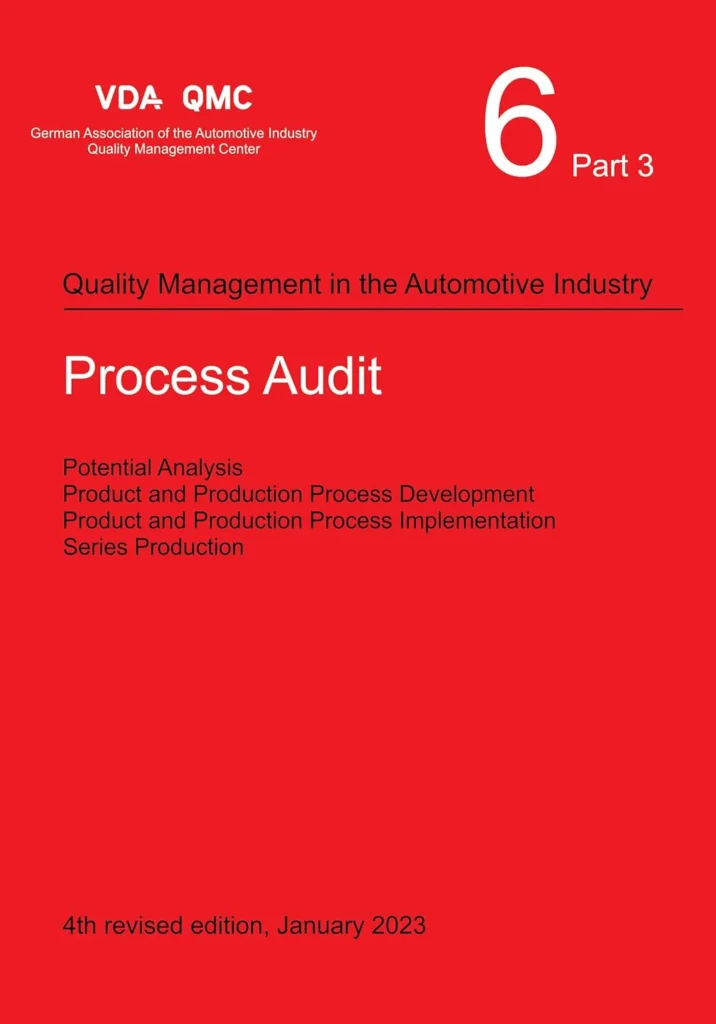
I strongly recommend the official VDA Volume 6 Part 3 : Process Audit, 4th Revised Edition for auditors working in automotive supplier quality.

Why Companies Commonly Fail VDA 6.3 Audits?

One of the biggest misunderstandings I see is that teams prepare only documents before the audit. VDA 6.3 is not just a paperwork audit. It is a process audit, which means the auditor wants to see how your process works in real production conditions, not only what is written in procedures.

Many suppliers believe that having ISO 9001 or IATF 16949 certification automatically means they are ready. In reality, VDA 6.3 goes much deeper into process effectiveness, risk prevention, and shop-floor execution. This is where many supplier audit failures begin.

For example, I once audited a Tier 2 automotive molding supplier that had excellent documentation. Every SOP, work instruction, and checklist was available. 

However, when I spoke to the operator on Line 3, the actual inspection frequency being followed was every 2 hours, while the control plan clearly required hourly checks. That single mismatch became a major process audit non-conformity.

This is exactly how VDA 6.3 disqualification causes begin — not from missing documents alone, but from lack of implementation evidence.

Common VDA 6.3 Audit Failures How to Avoid Them:

This is the section I always advise quality teams to read before any internal or customer audit. Below are the most frequent VDA 6.3 failure points I have personally seen across automotive suppliers.

1. PFMEA and Control Plan Misalignment:

This is probably the number one audit failure across most automotive suppliers.

The PFMEA identifies process risks, failure modes, severity, occurrence, and detection controls. The control plan must directly reflect these risks. However, in many audits, I find that both documents exist but are not aligned.

For example, the PFMEA may identify dimensional variation due to tool wear as a high-risk failure mode, but the control plan may not include tool life monitoring, periodic dimensional verification, or reaction plan steps.

This immediately creates a common process audit gap.

I usually explain this to teams in a simple way:
If your PFMEA says the risk exists, your control plan must show how you are controlling it in real production.

A recent quality study across automotive suppliers showed that over 40% of process audit findings are related to poor FMEA linkage and outdated control plans.

Example:

Suppose your PFMEA includes:

  • risk of wrong torque
  • risk of missing clip
  • risk of wrong label

Then your control plan must include:

  • torque monitoring frequency
  • poka-yoke verification
  • barcode label validation
  • defined containment action

If any one of these is missing, it often becomes an audit finding.

2. Missing Reaction Plans and Escalation Controls:

Another serious auto-fail criteria VDA audit issue is absence of reaction plans.

Auditors always ask:
What happens when the process goes out of control?

Many companies can explain normal production controls, but they fail when asked about abnormal conditions.

For example:

  • What if SPC trend crosses warning limit?
  • What if a gauge fails calibration?
  • What if operator finds defect during in-process check?
  • What if supplier lot is mixed?

If the answer is unclear, undocumented, or depends only on verbal knowledge, it becomes a major risk.

I strongly recommend every process step should have a documented reaction matrix.

Example:

  • Stop production
  • segregate suspect stock
  • inform shift quality engineer
  • open NCR
  • initiate 8D
  • customer containment if required

This simple framework has helped many suppliers reduce VDA 6.3 audit findings by nearly 30% in follow-up audits.

3. Weak Operator Competency Evidence:

This is one of the most ignored audit preparation mistakes.

The operator may know the job very well, but if training records, skill matrix, or competency evaluation evidence is missing, the process can still fail.

I have seen excellent operators answer technical questions perfectly, but HR and quality teams fail to produce:

  • training matrix
  • job qualification records
  • re-certification evidence
  • process change training records

This becomes a supplier audit failure, especially in P6 serial production audits.

A simple best practice I use is a live competency matrix board at the production line.

It should show:

  • operator name
  • process qualification level
  • last training date
  • next review date
  • critical process approval

This creates instant confidence during the audit walkthrough.

The Most Common Shop-Floor Failures During VDA 6.3 Audits:

This is where most plants lose points.

Documents may look perfect in the meeting room, but once the auditor enters the shop floor, real process weaknesses become visible.

1. Process vs Documentation Mismatch:

This is extremely common.

Examples include:

  • work instruction says revision 08, line uses revision 06
  • sample frequency differs from control plan
  • machine parameter limits not updated
  • inspection samples not traceable

These are direct process audit non-conformities.

I always tell my teams:
The shop floor is the real audit. The documents are only support evidence.

2. Poor Traceability Controls:

Traceability failures can quickly become major findings.

In automotive manufacturing, especially for safety parts, traceability is critical.

I often check whether the team can trace:

  • raw material batch
  • machine number
  • operator ID
  • shift
  • inspection records
  • final dispatch lot

If any link is missing, it becomes a serious VDA 6.3 failure point.

Industry data suggests that traceability-related issues contribute to approximately 20–25% of customer escalations after audits.

3. Ineffective Layered Process Audits:

Many plants conduct LPAs only for compliance.

The forms are signed, but no real observations are captured.

This is one of the easiest issues for an auditor to detect.

For example, if your LPA reports show 100% compliance for 6 straight months, but the process has repeated internal rejects, that signals ineffective auditing.

This usually leads to corrective measures VDA audit findings.

A good LPA must include:

  • actual observation
  • issue photo
  • immediate correction
  • responsible person
  • closure verification

Practical Example from a Real Audit Situation:

Let me share a real example from a machining supplier audit.

The supplier had a customer complaint for bore diameter variation. During the VDA 6.3 audit, I checked the PFMEA and control plan.

The PFMEA had identified tool wear risk with severity 8.

However:

  • no SPC chart was active
  • tool life sheet was not updated
  • reaction plan missing
  • operator training expired
  • gauge calibration overdue

This single issue created 5 linked audit findings.

The final element score dropped below acceptable threshold and triggered supplier escalation.

This is how common VDA 6.3 audit failures grow from one uncontrolled risk.

Read more from:

Supplier Management Failures (P5) That Commonly Lead to Poor Scores:

I covered the most frequent failures related to documentation alignment, reaction plans, operator competency, and shop-floor control gaps. 

In this section, I will continue from the exact same flow and go deeper into the most critical failure zones inside P5, P6, and P7, where many suppliers lose major points and sometimes even receive a C rating.

As per the current VDA 6.3 scoring approach, a score below 80% is generally treated as non-compliant, which often leads to immediate corrective action and customer escalation.

One of the most repeated supplier audit failures I see in automotive plants is weak control over the upstream supply chain. 

Many companies focus only on their own production line but forget that VDA 6.3 also deeply checks how effectively purchased parts, raw materials, and sub-tier suppliers are controlled.

Under P5 – Supplier Management, auditors expect clear evidence that only approved, capable, and monitored suppliers are being used. If supplier evaluation records are outdated, performance reviews are missing, or supplier risks are not escalated, this becomes a major non-conformity.

I often find that teams perform supplier approval once during onboarding and then do not review supplier quality performance for months. 

This is one of the most common VDA 6.3 disqualification causes, especially when customer complaints can be traced back to incoming material variation.

1. Common P5 Failure Example:​

Let me explain with a real practical example.

A stamping supplier was receiving steel coils from an approved vendor. The vendor had been approved two years earlier, but there was no updated scorecard, no recent supplier audit, and no evidence of PPM performance review. 

During the VDA audit, incoming thickness variation was already causing downstream defects.

This resulted in multiple findings:

  • missing supplier re-evaluation
  • no escalation matrix
  • poor incoming inspection trend review
  • no supplier CAPA follow-up
  • weak risk-based sourcing controls

These are classic common process audit gaps.

2. How I Avoid This as a Quality Manager?

I always recommend maintaining a monthly supplier scorecard dashboard.

Include:

  • PPM trend
  • delivery performance
  • customer complaint linkage
  • supplier audit score
  • repeat issue count
  • CAPA closure aging

Plants that use live supplier dashboards often show 25–35% fewer supplier-related audit findings in follow-up assessments.

Serial Production Failures (P6) — The Biggest Audit Risk Area:

If there is one section where companies most commonly fail, it is P6 Process Analysis / Production.

This section directly checks whether serial production is controlled, stable, and capable.

Industry guidance consistently identifies P6 as the most heavily weighted practical section because it reflects actual production risk.

1. Uncontrolled Process Parameters:

This is one of the most dangerous VDA 6.3 failure points.

I frequently find:

  • machine parameters manually changed
  • no password control
  • no change log
  • no engineering approval
  • no validation after adjustment

For example, torque values, molding temperatures, curing cycles, or press force limits are often changed by operators to “meet output”.

This immediately becomes a major process risk.

A very practical industry discussion from manufacturing professionals highlights that parameter overrides and undocumented process changes are among the most repeated causes of production instability.

This is exactly the kind of issue that leads to auto-fail criteria VDA audit concerns.

Practical Prevention Method:

I always implement these controls:

  • parameter password lock
  • engineering approval workflow
  • automatic log history
  • shift-wise parameter verification
  • deviation escalation trigger

This dramatically reduces process audit non-conformities.

2. SPC Not Used Effectively:

Many plants say they are using SPC, but during the audit the charts are either outdated or not actioned.

This is one of the most common audit preparation mistakes.

Typical issues include:

  • chart not updated
  • Cp/Cpk outdated
  • no trend review
  • no action beyond warning limit
  • no reaction plan

I always ask:
If the trend shifts, what did you do?

If the answer is “nothing yet”, the audit finding is almost certain.

Example:

Imagine bore diameter trend shows 3 consecutive upward points.

Even if still within tolerance, this should trigger:

  • tool wear check
  • first-off validation
  • process confirmation
  • containment inspection

Without this, the auditor may raise a finding for weak preventive control.

Equipment and Calibration Related Failures:

Another major area under P6 is equipment capability.

Many plants lose points because calibration systems exist only on paper.

Common issues include:

  • overdue calibration stickers
  • missing MSA evidence
  • GRR outdated
  • damaged gauges in use
  • no master sample control

These are highly visible audit findings.

In one machining plant I supported, nearly 18% of total findings came from gauge management alone.

This included:

  • micrometers without identification
  • gauge master expired
  • no verification frequency

These are completely avoidable with proper control.

Customer Complaint and Field Failure Gaps (P7):

This section is often underestimated.

Many companies focus on production but forget that customer complaint handling and field feedback are direct VDA 6.3 audit elements.

1. Common P7 Failures:

The most repeated issues I see are:

  • no trend analysis
  • repeated customer complaint
  • weak 8D closure
  • no effectiveness validation
  • late response to OEM

These become major corrective measures VDA audit findings.

Example:

Suppose the same defect appears in 3 consecutive customer complaints.

If the CAPA says:

operator retrained

but the same issue repeats, the auditor will question effectiveness.

This often leads to major findings.

I always guide teams to prove effectiveness through:

  • 30-day defect trend
  • reject reduction data
  • process capability improvement
  • complaint recurrence review

This evidence makes a huge difference.

Scoring Impact and Disqualification Risk:

This is where many readers specifically look for clarity.

VDA 6.3 typically uses point scoring such as:

  • 10 = full compliance
  • 8 = minor deviation
  • 6 = partial compliance
  • 4 = major deviation
  • 0 = non-compliance

The overall score then decides grading:

  • A ≥ 90%
  • B = 80–89%
  • C < 80%

A C grade is one of the most serious VDA 6.3 disqualification causes, especially for new supplier nomination.

This can lead to:

  • escalation meeting
  • resourcing risk
  • new business hold
  • supplier development mandate
  • re-audit requirement

Which are the most common VDA 6.3 audit failures?

The most common VDA 6.3 audit failures in 2026 include weak PFMEA linkage, supplier control gaps, uncontrolled production parameters, ineffective SPC response, poor traceability, and repeated customer complaints without proven CAPA effectiveness. 

Companies can avoid these issues by strengthening process controls, linking risk documents to production evidence, and maintaining real-time audit readiness dashboards. 

Suppliers that proactively manage P5, P6, and P7 elements usually achieve stronger VDA scores and lower escalation risk.

How to Avoid Common VDA 6.3 Audit Failures Step by Step:

I covered the most frequent VDA 6.3 audit findings, supplier risks, serial production failures, and customer complaint gaps. Now in this final part, I will guide you exactly as I would guide my own plant team before an OEM or Tier 1 audit.

This section is built to help readers searching for practical quality guidance, audit readiness tips, and proven corrective measures VDA audit strategies.

The biggest mistake I see is that companies start preparing only a few days before the audit.

That approach almost always leads to audit preparation mistakes.

VDA 6.3 readiness should be treated as a daily operating discipline, not a last-minute activity. The strongest plants do not “prepare for audit”; they operate in a way that is always audit-ready. This is exactly what auditors want to see — consistency, control, and evidence.

From my experience, if a process remains stable for at least 90 days before audit, the chance of major findings reduces significantly.

Step 1: Build a Pre-Audit Readiness Matrix

Before every VDA audit, I personally prepare a readiness matrix.

This includes:

  • process element
  • responsible owner
  • last evidence date
  • risk level
  • open NCR status
  • pending CAPA
  • evidence location

This helps avoid common process audit gaps because every process owner clearly knows what must be shown.

A simple example:

Audit Element

Owner

Status

Risk

PFMEA

Quality Engineer

Updated

Low

Control Plan

Production QA

Pending Revision

High

Skill Matrix

HR + QA

Complete

Low

Calibration

Metrology

2 overdue

High

This simple matrix alone can reduce VDA 6.3 failure points significantly.

Step 2: Validate Process vs Shop Floor

This is the most critical action.

I always physically walk the line and verify:

  • SOP revision
  • parameter settings
  • control plan frequency
  • traceability labels
  • sample retention
  • reaction plan display

Remember this clearly:

what is written must exactly match what is happening on the floor

This is where most supplier audit failures happen.

For example, if the work instruction says torque = 42 ± 2 Nm, I verify the actual machine display and operator check sheet.

Even a small mismatch can become a finding.

Step 3: Validate Traceability in Real Time

One of my favorite internal audit tests is the reverse traceability drill.

I randomly pick one finished product and ask the team to trace back:

  • raw material lot
  • machine used
  • shift
  • operator
  • inspection record
  • dispatch batch

The team should be able to complete this in under 5 minutes.

If not, this becomes a serious VDA 6.3 disqualification cause, especially for critical automotive parts.

How I Prevent Auto-Fail Criteria in VDA Audit?

Certain failures can quickly become severe scoring issues.

These include:

  • repeated customer complaint
  • no containment action
  • missing traceability
  • overdue calibration
  • uncontrolled process parameters
  • repeated supplier defect

These are often treated as auto-fail criteria VDA audit risks during customer assessments.

The best prevention method is a daily layered process audit system.

I recommend:

  • shift QA audit
  • daily production manager audit
  • weekly quality manager audit
  • monthly leadership review

This layered approach catches issues early.

Corrective Measures VDA Audit Framework (Practical CAPA):

A strong CAPA system is one of the best ways to avoid repeat failures.

I always use a 5-step corrective action framework.

1. Immediate Containment:

First stop the risk from spreading.

Example:

  • stop production
  • quarantine stock
  • block dispatch
  • notify customer if needed

This must happen immediately.

2. Root Cause Analysis:

Do not stop at surface-level causes like:

operator mistake

That is rarely the true root cause.

Instead use:

  • 5 Why
  • Fishbone
  • PFMEA linkage
  • process flow review

For example:

Complaint → wrong torque
Why? → torque low
Why? → tool wear
Why? → PM overdue
Why? → maintenance schedule missed
Why? → no escalation alert

Now the real root cause is visible.

3. Permanent Corrective Action:

This is where many companies fail.

A good CAPA must include system correction, not just human correction.

Bad example:

  • retrain operator

Better example:

  • install torque interlock
  • add poka-yoke
  • add PM alert
  • revise control plan
  • revise PFMEA

This is much stronger.

4. Effectiveness Validation:

This is one of the most common VDA 6.3 audit findings.

Many teams close CAPA without validating if it worked.

I always require:

  • 30-day trend
  • reject reduction %
  • complaint recurrence check
  • SPC improvement

For example:

Defect PPM reduced from 850 to 120 within 45 days

This is strong audit evidence.

5. Standardization:

The final step is to prevent recurrence across all lines.

Example:

If issue occurred in Line 2, verify:

  • Line 1
  • Line 3
  • sister plant
  • supplier process

This shows maturity.

Expert Quality Manager Tips (My Practical Advice):

The best way to avoid common VDA 6.3 audit failures in 2026 is to focus on process control, traceability, evidence-based CAPA, PFMEA linkage, and shop-floor readiness. Most failures occur because documented controls do not match actual production conditions. 

Plants that maintain real-time audit readiness dashboards, layered audits, and validated corrective actions consistently achieve stronger VDA scores and lower supplier escalation risk.

If I were guiding your plant team before an audit, these are the top 7 audit readiness tips I would give:

  • match documents to reality
  • verify traceability live
  • close old CAPAs
  • update PFMEA and control plan
  • review supplier performance
  • check calibration status
  • prepare operator interviews

These 7 actions alone solve nearly 70% of common VDA audit failures based on my experience and broader manufacturing audit trends.

Recommended Reference Materials and Audit Resources:

For professionals wanting to perform stronger audits, these references are extremely useful:

I strongly recommend the official VDA Volume 6 Part 3 : Process Audit, 4th Revised Edition for auditors working in automotive supplier quality.

Read more from:

Final Conclusion:

VDA 6.3 is not just about scoring points.

It is about proving that your process is stable, repeatable, and capable of consistently delivering quality parts to the customer.

The most common failures come from:

  • weak process control
  • poor evidence
  • ineffective CAPA
  • supplier gaps
  • traceability issues
  • documentation mismatch

The good news is that every one of these issues is preventable.

With the right audit readiness tips, process discipline, and strong corrective measures, your plant can confidently move toward an A grade.

Frequently Asked Questions (FAQs)

1. What are the most common VDA 6.3 audit failures?

The most common VDA 6.3 audit failures usually include PFMEA and control plan mismatch, weak supplier monitoring, poor traceability, outdated calibration records, incomplete operator training evidence, and ineffective corrective actions

In many automotive audits, these issues appear as repeated process audit non-conformities because the documented process does not match the actual shop-floor practice. 

From an auditor’s point of view, even a small mismatch in process parameters or inspection frequency can lead to a major finding. Recent guidance and audit resources consistently list documentation linkage, reaction plans, and CAPA evidence as the top recurring failure areas.

2. How can I avoid failing a VDA 6.3 process audit?

The best way to avoid failing a VDA 6.3 audit is to maintain continuous audit readiness instead of preparing only a few days before the assessment. 

I always recommend checking whether the PFMEA, control plan, work instructions, and actual production process are fully aligned. Teams should also verify traceability, calibration status, skill matrix, and supplier scorecards before the audit date. 

A strong internal pre-audit using the VDA questionnaire is one of the most effective audit readiness tips.

Quick checklist:

  • Update PFMEA and control plan
  • Verify traceability
  • Check calibration due dates
  • Review supplier performance
  • Validate CAPA effectiveness

3. What is considered an auto-fail criteria in a VDA audit?

While the exact severity depends on customer-specific requirements, some issues are commonly treated as auto-fail criteria VDA audit risks

These include missing traceability, repeated customer complaints without effective CAPA, overdue calibration on critical gauges, uncontrolled process parameter changes, and major supplier quality failures

Such issues directly impact product safety, process capability, and customer trust. In many supplier audits, these findings can significantly reduce the overall score and may even lead to a C rating.

4. What score is required to pass a VDA 6.3 audit?

Generally, VDA 6.3 audit scoring is classified as:

  • A Rating: 90% and above
  • B Rating: 80% to 89%
  • C Rating: below 80%

A score below 80% is usually considered a serious concern and may require a re-audit, corrective action plan, and customer escalation review. Many suppliers aim for at least an A or strong B rating to maintain customer confidence and business continuity.

5. Why do suppliers commonly fail in P6 during VDA 6.3 audits?

P6 focuses on process analysis and serial production, which is why it is one of the most critical sections of the audit. 

Suppliers often fail here because of weak process control, ineffective SPC, undocumented machine parameter changes, and poor shop-floor discipline. In my experience, this section exposes the real process weaknesses because auditors verify what is actually happening during production. 

That is why P6 is often the source of the highest number of common VDA 6.3 audit findings.

6. How important is PFMEA in avoiding VDA 6.3 failures?

PFMEA is extremely important because it acts as the risk foundation for the entire process audit. If the PFMEA identifies a failure mode, the control plan and shop-floor controls must clearly show how that risk is being controlled. 

One of the most common VDA 6.3 disqualification causes is when the PFMEA is outdated or does not reflect the current process conditions. Auditors often check this linkage first because it shows process maturity and risk awareness.

7. How often should internal VDA 6.3 audits be conducted?

For best results, internal VDA 6.3 process audits should be conducted at least quarterly, and more frequently for critical lines or new launches. High-risk processes, customer complaint-prone lines, or new suppliers should ideally be reviewed monthly through layered process audits

Frequent internal audits help identify common process audit gaps early and reduce the risk of customer findings.

8. What documents should be ready before a VDA 6.3 audit?

Before the audit, the following documents should always be ready:

  • PFMEA
  • Control Plan
  • Process Flow Diagram
  • SOP / Work Instructions
  • Calibration records
  • SPC charts
  • Skill matrix
  • Supplier scorecards
  • CAPA / 8D reports
  • Traceability records

Having these documents updated and linked to the actual process is one of the best ways to avoid audit preparation mistakes.

9. How can corrective actions improve future VDA 6.3 scores?

Strong corrective actions directly improve future audit scores by showing that the organization can identify, contain, eliminate, and prevent repeat failures

The most effective CAPA system includes root cause analysis, permanent corrective actions, validation data, and standardization across lines. Auditors always look for evidence that the action was not only implemented but also proven effective over time.

10. Is VDA 6.3 mandatory for automotive suppliers in 2026?

VDA 6.3 may not be legally mandatory for every manufacturer, but it is often customer-mandated by German OEMs and Tier 1 suppliers, especially in the automotive supply chain. 

Companies supplying parts to German automakers or global automotive programs are increasingly expected to demonstrate compliance with VDA 6.3 requirements. 

In 2026, it remains one of the most recognized process audit frameworks for supplier quality assurance.

This Page uses Affiliate Links. When you Click an Affiliate Link, we get a small compensation at no cost to you. Our Affiliate Disclosure for more info.

Leave a comment