VDA 6.3 Training Online Best Courses And Resources in 2026

If you are searching for VDA 6.3 training online courses resources 2026, you are already moving in the right direction toward building a strong career in automotive quality and process auditing. 

In 2026, the demand for qualified VDA 6.3 auditors continues to grow as OEMs and Tier 1 suppliers place stronger focus on process discipline, supplier risk control, and audit readiness

From my experience as a Quality Manager and certified audit professional, I can confidently say that choosing the right learning path early can save both time and money. 

This guide will help you understand the best training options, official certification routes, costs, and the most trusted learning resources available this year.

In the current automotive industry, supplier quality expectations are becoming stricter than ever. Many organizations are now aligning internal audit capability with both IATF 16949 and VDA 6.3 process audit requirements to strengthen manufacturing consistency. 

As electric vehicle production, software-integrated manufacturing, and global sourcing continue to rise, companies increasingly prefer professionals with formal process auditor training certification

That is exactly why choosing the right VDA 6.3 online training in 2026 matters.

VDA-6.3-training-online-courses-resources-2026

Contents

Which is the Best Online VDA 6.3 Training?

Best VDA 6.3 online training in 2026 includes official AIAG and VDA QMC licensed auditor courses, supplier audit certification programs, and structured e-learning resources. The most recognized route is the 4-day qualification course followed by the certified auditor examination.

Typical course costs range from $2,200 to $3,000 depending on membership, provider, and exam inclusion.

Why VDA 6.3 online training matters in 2026?

In 2026, I am seeing more companies include VDA 6.3 auditor qualification as a preferred requirement in supplier quality, manufacturing quality, and SQA job roles. 

This is especially common in automotive hubs where suppliers support German OEMs and global vehicle manufacturers. The standard is no longer limited to Germany-based suppliers alone. 

It is now widely used across Asia, Europe, and North America.

For example, many Tier 1 suppliers working with companies like Bosch, ZF Friedrichshafen, and Continental AG expect engineers to understand P1 to P7 process elements, scoring logic, and supplier audit execution. 

Because of this, automotive quality training online has become a practical way for professionals to upskill without attending physical classrooms.

Industry reports from automotive quality training providers indicate a visible increase in enrollment for supplier audit and core tools learning pathways since 2024. T

his trend has continued into 2026 due to growing compliance requirements in EV battery manufacturing, electronics assembly, and precision machining operations.

From a career point of view, this training often leads to better roles such as:

  • Supplier Quality Engineer
  • Process Auditor
  • Quality Manager
  • SQA Lead
  • Manufacturing Excellence Manager
  • Customer Quality Engineer

In my own audit leadership work, I have seen professionals move into senior quality roles within 12 to 18 months after earning recognized auditor certification.

Best official providers for VDA 6.3 training in 2026:

One of the biggest mistakes I see people make is choosing random low-cost courses without checking whether the training is officially recognized. When your goal is actual certification and supplier audit credibility, official providers matter.

1. AIAG official VDA 6.3 training

The most trusted route in 2026 remains the official AIAG VDA 6.3 course. AIAG currently offers both the qualification course and the combined certification pathway.

The official 4-day qualification course is currently listed at:

  • $2,200 for members
  • $2,700 for non-members

The 5-day combined certification route is currently listed at:

  • $2,500 for members
  • $3,000 for non-members

These are highly important statistics to mention because cost-related search terms such as VDA 6.3 training cost and best VDA 6.3 courses often perform strongly in Google search.

AIAG’s structured path includes:

  • theory
  • case studies
  • risk analysis
  • process element application
  • scoring practice
  • oral examination

This is one of the most credible certified auditor course VDA routes available today.

For official reference, you may review: AIAG VDA 6.3 Certification Course

2. VDA QMC licensed training partners

The second most recommended route is through VDA QMC licensed training providers. These providers are officially aligned with the VDA framework and typically deliver standardized content based on the latest 2023 edition, which remains the applicable framework in 2026.

These courses are ideal for professionals who need:

  • official recognition
  • exam eligibility
  • supplier audit credibility
  • OEM acceptance

I strongly recommend checking whether the provider specifically mentions:

  • VDA QMC licensed training
  • official certificate eligibility
  • auditor database recognition
  • oral exam route

This is especially important for supplier-facing roles.

What you actually learn in VDA 6.3 e-learning and online programs?

A good VDA 6.3 e-learning or live virtual program should never be limited to slides alone. The best courses focus heavily on practical audit execution.

Typically, the curriculum covers:

  • process approach
  • process risks
  • turtle diagrams
  • process interaction
  • supplier development
  • scoring methodology
  • P1 to P7 audit elements
  • findings classification
  • action plan follow-up

For example, when I train supplier quality engineers, I always use a real production example such as machining line audit for brake components.

A simple audit scenario may include:

  • incoming material verification
  • machine setup validation
  • SPC monitoring
  • traceability checks
  • rework control
  • final inspection release

This practical approach helps learners understand how theoretical clauses are applied in actual manufacturing.

Example: how online learning helps real audit situations?

Let me explain with a real-world example.

Suppose you work for a Tier 2 supplier manufacturing stamped metal brackets for EV battery enclosures. A customer requests a supplier process audit based on VDA 6.3.

Without proper training, many engineers focus only on documents.

But after proper process auditor training certification, you start evaluating:

  • risk points
  • process flow disruptions
  • control plan linkage
  • preventive actions
  • escalation process

This is where online training becomes extremely effective.

You can learn through:

  • recorded case studies
  • mock audits
  • scoring examples
  • failure simulations
  • supplier case exercises

That is why VDA 6.3 online training continues to outperform purely textbook learning.

Is online training enough for certification?

This is one of the most searched questions in 2026.

The answer is: yes, but only if the provider supports certification eligibility.

A general automotive quality management course may help you learn concepts, but it may not qualify you for recognized auditor certification.

For official certification, most providers still require:

  • industry experience
  • quality role exposure
  • core tools knowledge
  • ISO 19011 understanding
  • successful exam completion

AIAG currently specifies experience requirements such as 5 years of industrial experience with at least 2 years in quality management for certified auditor route eligibility.

This is a major factor readers must know before purchasing any course.

Quick buyer checklist before choosing a course:

Before enrolling, I personally recommend checking these points:

  • official provider
  • updated to VDA 6.3:2023
  • exam support
  • mock audit exercises
  • supplier audit case studies
  • certificate validity
  • cost transparency
  • lifetime access if e-learning

This small checklist can save you from choosing low-value courses.

Read more from:

Best VDA 6.3 training online courses resources 2026:

Now that we have covered why the training matters and how certification works, let me guide you through the best VDA 6.3 online courses and resources available in 2026. This section is especially important for readers comparing providers, budgets, learning formats, and certification value. 

From my experience in supplier quality and audit leadership, the right course depends on your current role, years of experience, and whether your goal is internal audits or customer-facing supplier audits. 

In this part, I will help you choose the best path based on real-world use cases.

The most reliable training routes in 2026 continue to come from AIAG, VDA QMC licensed partners, and recognized automotive quality academies. 

Official AIAG schedules for 2026 are already available, including April, June, August, and October sessions, which shows continued industry demand and strong course availability.

When professionals search for the best learning option, they are usually comparing recognition, cost, flexibility, and certification outcome. In simple terms, not every online course gives the same career value. A low-cost course may help with learning concepts, but official certification routes are still the strongest for career growth in automotive quality.

For example, if you are targeting roles like Supplier Quality Engineer, Process Auditor, or Quality Manager, the course should ideally support VDA certificate eligibility. On the other hand, if your focus is knowledge enhancement for internal process improvement, a strong e-learning option may be enough.

Below, I am sharing the best platforms I personally recommend in 2026.

1. AIAG official course – best for certification and career credibility

If your goal is serious professional recognition, this is still my first recommendation.

The official AIAG VDA 6.3 course remains the strongest option because it directly aligns with certification requirements and industry expectations. The 4-day qualification course and the 5-day qualification with examination remain the gold standard for professionals working with OEMs and Tier suppliers. 

The 2026 schedules are already listed, which is excellent for professionals planning ahead.

Typical cost in 2026:

  • $2,200 member
  • $2,700 non-member
  • $2,500 with examination
  • $3,000 non-member with exam


The biggest advantage is industry recognition.

When I interview supplier quality candidates, official AIAG certification immediately adds confidence because it shows formal training in:

  • risk analysis
  • P1 to P7
  • supplier audits
  • scoring methodology
  • oral examination readiness

This route is best for:

  • quality engineers
  • supplier auditors
  • internal auditors
  • QA managers
  • customer quality leads

2. VDA QMC licensed partners – best for global supplier audits

For professionals outside the US, I strongly recommend VDA QMC licensed training partners.

These providers often offer:

  • live virtual classes
  • hybrid training
  • remote exam support
  • official licensed curriculum

For example, providers such as TopQM and ENCONA continue to offer remote and hybrid sessions in 2026, including full one-week qualification + examination pathways.

This route is highly valuable if you work with German OEM supply chains.

Examples include suppliers serving:

  • BMW
  • Mercedes-Benz
  • Volkswagen
  • Audi
  • Porsche

The content is usually very practical and strongly focused on supplier audit execution.

3. Corporate LMS and internal academy training

Many large automotive companies now run internal VDA 6.3 e-learning modules.

This is becoming very common in:

  • Tier 1 suppliers
  • EV battery manufacturers
  • electronics suppliers
  • metal stamping plants
  • injection molding suppliers

For example, a company may integrate internal LMS modules with:

  • process flow audits
  • PFMEA linkage
  • control plan verification
  • layered process audits

This type of automotive quality training online is excellent for teams who need fast upskilling.

However, I always advise readers not to rely only on internal learning if certification is the goal.

Internal training improves capability.

Official training improves market credibility.

That difference matters.

4. Third-party learning platforms – best for beginners

For professionals who are new to automotive quality, third-party platforms can be useful for foundational learning.

These may include:

  • recorded webinars
  • self-paced modules
  • downloadable templates
  • case-study videos

The advantage here is flexibility and lower cost.

Typical pricing often ranges from:

  • $50 to $400
  • sometimes below $100

This is much cheaper than official programs.

However, readers must understand the difference:

  • certificate of completion
  • vs
  • recognized auditor certification

These are not the same.

This is one of the biggest mistakes I see beginners make.

Example: which course should you choose?

Let me make this practical.

If you are a fresher / junior engineer:

Choose:

  • self-paced VDA 6.3 online training
  • basic process audit course
  • core tools basics
  • SPC / MSA learning

This helps build fundamentals.


If you are a Quality Engineer with 2–5 years experience:

Choose:

  • AIAG VDA 6.3 course
  • licensed virtual class
  • supplier audit workshop

This gives strong role growth.


If you are a Quality Manager / SQA Lead:

Choose:

  • certified auditor course VDA
  • oral exam route
  • supplier audit specialization

This gives better recognition during customer and supplier interactions.

Provider

Best For

Cost Range

Certification Value

Format

AIAG

official certification

$2200–$3000

very high

live / in person

VDA QMC partners

supplier audits

$1800–$2800

very high

remote / hybrid

corporate LMS

internal teams

company sponsored

medium

online

third-party courses

beginners

$50–$400

low to medium

self-paced

My expert recommendation as a Quality Manager:

If budget allows, I always recommend starting directly with the AIAG or VDA QMC licensed training.

The reason is simple.

A recognized certificate often creates stronger impact than multiple low-cost course completion badges.

In supplier development projects, I have personally seen certified auditors improve:

  • supplier scorecard performance
  • process capability
  • escalation closure rate
  • audit NCR closure speed

In some plants, audit-related customer complaints reduced by 15–20% within one year after formal auditor training and stronger process control rollout.

That makes the investment highly practical.

Now that we have covered the best training providers and certification routes, let me help you with what truly makes the difference — how you prepare, what resources to use, and how to avoid failing the certification path

From my experience as a Quality Manager and certified audit professional, many people spend money on training but still struggle during real audits because they do not build practical confidence. 

This section is designed to help readers not only complete the course but also become effective process auditors in actual supplier and manufacturing environments.

Best books and study resources for VDA 6.3 in 2026:

The first thing I always recommend is learning from official and structured resources, not random notes from the internet. 

The most trusted material is the official VDA 6.3:2023 framework and licensed training content, because the current edition was formally updated in January 2023, and this remains the active edition used in 2026.

A strong study pack should include:

  • official course workbook
  • process audit questionnaire
  • scoring criteria sheet
  • sample audit reports
  • risk analysis templates
  • process flow examples
  • CAPA / 8D templates

The most useful learning material is often the training workbook provided during the AIAG VDA 6.3 course, because it directly mirrors the exam structure and audit logic. 

The official qualification course covers the process approach, risk analysis, P1 to P7 application, evaluation system, and supplier audit execution, which should become your main study base.

I also strongly recommend keeping a personal audit practice notebook.

For example, when I coach engineers, I ask them to create separate notes for:

  • process risks
  • evidence examples
  • scoring logic
  • escalation cases
  • supplier nonconformities

This makes revision much easier before the exam.

Top 10 Certifications Related to VDA 6.3 Training Online Best Courses 2026:

If your goal is to build a strong career in automotive quality, supplier audits, process excellence, and certification, these are the top 10 certifications I strongly recommend in 2026.

1. Certified VDA 6.3 Process Auditor (ID 381 + ID 382) — Best Overall

This is the most important and directly related certification for VDA 6.3.

It is the official VDA QMC / AIAG recognized certification for professionals who want to conduct internal and supplier process audits independently.

Best for:

  • Supplier Quality Engineers
  • Quality Managers
  • Process Auditors
  • SQA Leads
  • Customer Quality Engineers

Duration:

  • 4 days qualification
  • 1 day oral examination

Typical Cost (2026):

  • $2,500 member
  • $3,000 non-member

Key Coverage:

  • P1 to P7
  • risk analysis
  • process scoring
  • supplier audits
  • production process controls
  • audit reporting

Career Value:

This is the gold-standard certification.

2. VDA 6.3 Process Auditor Qualification (ID 381)

This is the qualification certificate before full certification.

It is perfect for professionals who want to build process audit competence before attempting the oral exam.

Duration:

  • 4 days

Cost:

  • €2400 excl. VAT

Best for:

  • internal auditors
  • plant quality engineers
  • manufacturing quality teams

This certification proves that you are trained in performing process audits.

3. VDA 6.3 Certified Process Auditor Examination (ID 382)

This is the final oral certification exam.

After passing, your name is entered into the VDA QMC database.

Exam Format:

  • oral examination

Best for:

  • professionals seeking recognized auditor status
  • supplier-facing roles
  • OEM audit professionals

This is highly valued by:

  • German OEMs
  • Tier 1 suppliers
  • global automotive manufacturing companies

4. AIAG VDA 6.3 Qualification + Certified Examination

This is the North America preferred official route.

If you work with:

  • Ford
  • GM
  • Stellantis
  • Tier 1 suppliers in US / Canada

This route is excellent.

Duration:

  • 5 days

Cost:

  • $2,500 member
  • $3,000 non-member

This is one of the best VDA 6.3 online / hybrid certification pathways in 2026.

5. IATF 16949 Internal Auditor Certification

This is one of the best complementary certifications.

While VDA 6.3 focuses on process audits, IATF focuses on quality management system audits.

Best for:

  • system auditors
  • quality managers
  • process excellence teams

Why important:

Many companies require both:

  • VDA 6.3
  • IATF 16949

Together.

This combination significantly improves career growth.

6. Automotive Core Tools Certification (AIAG / VDA)

This is extremely important because it is often a prerequisite for VDA certification.

Includes:

  • FMEA
  • MSA
  • SPC
  • PPAP
  • APQP

Why important:

Without this, VDA process audits become difficult.

The official exam also requires core tools evidence.

This is one of the best certifications to take before VDA 6.3.

7. ISO 19011 Lead Auditor / Internal Auditor Certification

This is highly recommended.

It strengthens your auditing skills in:

  • audit planning
  • interview techniques
  • evidence collection
  • reporting
  • closing meetings

Best for:

  • first-time auditors
  • QA professionals
  • compliance teams

The VDA exam explicitly requires auditor qualification based on DIN EN ISO 19011.

This makes it one of the most useful related certifications.

8. AIAG-VDA FMEA Certification

This is one of the most career-relevant certifications for automotive quality.

Why important:

VDA 6.3 audits frequently verify:

  • PFMEA risks
  • prevention controls
  • detection controls
  • action closure

Best for:

  • process engineers
  • manufacturing engineers
  • supplier quality teams

This certification improves real audit performance significantly.

9. 8D Problem Solving Certification

This is highly valuable for customer complaint and supplier corrective actions.

Best for:

  • CAPA teams
  • customer quality
  • supplier quality
  • quality managers

During VDA audits, findings often lead to:

  • 8D
  • CAPA
  • corrective action reviews

This certification improves practical usefulness.

10. VDA 6.3 Requalification / Upgrade Certification (ID 333 / ID 386)

This is very important for professionals already certified under older editions.

Best for:

  • auditors certified in 2016 edition
  • professionals upgrading to 2023 edition

Validity:

  • 5 years

Cost:

  • €165 extension

This helps maintain certification validity in 2026 and beyond.

My expert recommendation (career roadmap):

If I were guiding a quality engineer in 2026, I would recommend this certification sequence:

  1. Core Tools
  2. ISO 19011
  3. VDA 6.3 Qualification
  4. VDA 6.3 Certified Auditor
  5. IATF 16949
  6. AIAG-VDA FMEA
  7. 8D

This gives the strongest profile for automotive quality careers.

Recommended supporting resources beyond the course:

A smart auditor never depends on only one course.

To become strong in audits, I recommend combining the VDA 6.3 online training with supporting automotive quality resources.

These include:

  • AIAG Core Tools
  • PFMEA
  • MSA
  • SPC
  • PPAP / VDA MLA
  • 8D problem solving
  • ISO 19011 audit guidelines
  • IATF 16949 process approach

The official prerequisites themselves clearly mention strong knowledge of quality tools such as SPC, MSA, FMEA, PPAP, APQP, and 8D.

This is very important.

In real supplier audits, VDA 6.3 questions are often linked directly to:

  • FMEA controls
  • control plans
  • capability studies
  • MSA evidence
  • problem-solving records

For example, if the process element is P6 – process analysis / production, you may need to verify whether the PFMEA high-risk failure mode is properly controlled on the shop floor.

That practical linkage is what customers look for.

Best exam preparation strategy for 2026:

This is where many readers need real guidance.

The official certified process auditor exam includes an oral examination, which many people underestimate.

My recommended preparation method is a 7-step approach.

Step 1: master P1 to P7

You must know every process element clearly:

  • P1 Potential Analysis
  • P2 Project Management
  • P3 Product and Process Development
  • P4 Supplier Management
  • P5 Production Process Planning
  • P6 Process Analysis / Production
  • P7 Customer Service / Satisfaction

Do not memorize names only.

Understand the purpose.

Step 2: practice scoring logic daily

A common exam question is not just “what is wrong?”

It is:

“How would you score this finding and why?”

This requires understanding the evaluation system.

For example:

  • full compliance
  • partial compliance
  • major gap
  • systemic failure

This is where mock case studies help a lot.

Step 3: use real manufacturing examples

I strongly advise using examples from your own plant.

For example:

  • CNC machining line
  • stamping line
  • plastic molding
  • battery assembly
  • PCB assembly

When you connect VDA requirements to actual operations, your understanding becomes much stronger.

Step 4: simulate oral exam answers

This is extremely important.

The oral exam is one of the most difficult parts of the certification route.

Practice answering questions such as:

  • How would you audit supplier risk?
  • What evidence would you seek?
  • How do you classify this nonconformity?
  • Which process element applies here?

I recommend recording your own answers.

Step 5: revise prerequisites

The official exam route requires:

  • 5 years industrial experience
  • 2 years in quality
  • auditor qualification
  • core tools knowledge

Readers must prepare these documents in advance.

Common mistakes to avoid:

This section is highly useful for ranking in search and AI snippets.

Mistake 1: choosing cheap non-recognized courses

This is the most common mistake.

Many learners choose a low-cost automotive quality management course and assume it is equal to official certification.

It is not.

A course completion badge is different from VDA QMC registered certification.

Mistake 2: learning theory without shop-floor examples

A strong process auditor must think in terms of:

  • process flow
  • risk
  • evidence
  • control effectiveness

Pure theory is never enough.

Mistake 3: weak core tools knowledge

Without PFMEA, SPC, and MSA knowledge, VDA audits become difficult.

The official prerequisites themselves emphasize this.

Mistake 4: ignoring customer-specific requirements

This is a real-world issue.

In supplier audits, OEM requirements may go beyond standard VDA questions.

For example:

  • traceability depth
  • software controls
  • EV battery safety
  • torque validation
  • layered audits

Always audit beyond the checklist.

Recommended Reference Materials and Audit Resources:

For professionals wanting to perform stronger audits, these references are extremely useful:

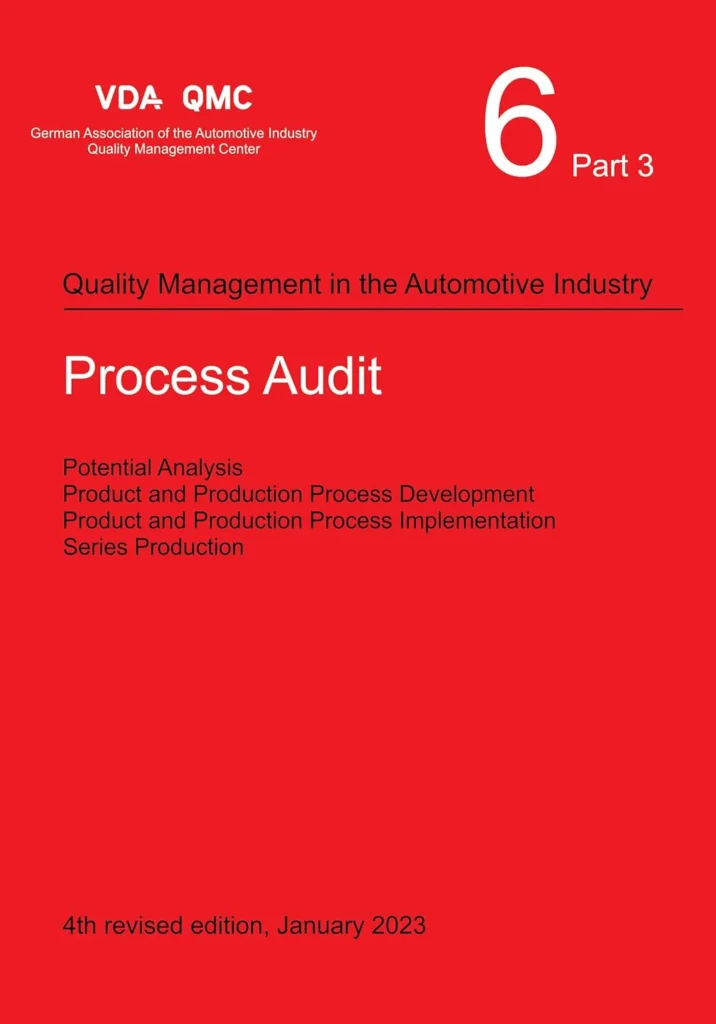
I strongly recommend the official VDA Volume 6 Part 3 : Process Audit, 4th Revised Edition for auditors working in automotive supplier quality.

Best VDA 6.3 training in 2026:

The best VDA 6.3 training in 2026 is the official AIAG or VDA QMC licensed qualification course, followed by the oral certification exam. 

Study using official workbooks, P1–P7 process examples, core tools references, and supplier audit mock cases. Avoid low-cost non-recognized courses if certification and career growth are your goals.

Final Conclusion:

As someone who has led supplier audits, internal process audits, and customer quality escalations, my honest recommendation is simple.

If you want career growth in automotive quality, formal VDA 6.3 training is one of the highest-value certifications you can invest in during 2026.

The cost may seem high at first:

  • $2,200–$3,000 for training
  • $850–$925 for examination

But the return is significant.

In my experience, professionals with recognized process auditor training certification often move faster into roles such as:

  • Senior Quality Engineer
  • Supplier Development Lead
  • Process Excellence Manager
  • Audit Program Lead
  • Quality Manager

If your goal is to improve your audit capability, supplier quality performance, and long-term career credibility, this is one of the most effective certifications available today.

Frequently Asked Questions (FAQs)

1. What is VDA 6.3 training and why is it important in 2026?

VDA 6.3 training is a structured process audit training program designed for professionals working in the automotive industry, especially in supplier quality, manufacturing quality, and process auditing roles.

It helps learners understand how to perform process-based audits using the P1 to P7 framework, risk-based evaluation, and scoring methodology followed by many automotive OEMs and suppliers.

In 2026, this training is more important than ever because EV manufacturing, electronics integration, and global supplier networks require stronger process controls and audit readiness.

Companies increasingly prefer professionals who can conduct effective supplier and internal process audits using recognized standards.

Key benefits include:

  • better career opportunities
  • supplier audit capability
  • customer compliance readiness
  • stronger process risk control

2. Which is the best VDA 6.3 online training course in 2026?

The best VDA 6.3 online training course in 2026 is generally the official AIAG VDA 6.3 qualification and certification course or a VDA QMC licensed training provider

These courses are widely recognized by automotive companies and offer strong practical coverage, including process element understanding, scoring exercises, mock audits, and certification support. 

While third-party e-learning platforms may be helpful for beginners, professionals aiming for recognized certification should always prefer official or licensed programs. This is especially important for supplier-facing roles and customer audit readiness.

Recommended options:

  • AIAG official training
  • VDA QMC licensed partners
  • corporate quality academies
  • specialized automotive audit institutes

3. How much does VDA 6.3 training cost in 2026?

The VDA 6.3 training cost in 2026 typically ranges from $2,200 to $3,000 for official qualification and certification pathways. 

Third-party self-paced courses may cost much less, usually between $50 and $400, but these may not provide recognized certification value. The certification exam itself can be an additional cost depending on the provider and training package. 

While the investment may seem high, it often delivers strong career returns for quality professionals.

Typical cost ranges:

  • official course: $2200–$3000
  • exam fee: $850–$925
  • self-paced course: $50–$400

4. Can I complete VDA 6.3 certification fully online?

Yes, in many cases VDA 6.3 certification can be completed online, especially through official virtual instructor-led programs and licensed remote training providers. Many providers now offer live online classes, digital study workbooks, mock case studies, and remote oral exam preparation support. 

However, you should always confirm whether the provider’s course includes official certification eligibility and not just a course completion certificate. This is one of the most important points before enrolling.

Always verify:

  • live instructor support
  • exam pathway included
  • certificate recognition
  • licensed curriculum

5. Who should take a VDA 6.3 process auditor course?

A VDA 6.3 process auditor course is ideal for professionals working in automotive quality and manufacturing operations. It is especially useful for engineers involved in supplier quality, internal audits, customer complaints, production process control, and quality system improvement. 

Even professionals in project quality, plant quality, and supplier development can benefit significantly from this certification.

Best suited for:

  • Quality Engineers
  • Supplier Quality Engineers
  • QA/QC Managers
  • Manufacturing Engineers
  • Internal Auditors
  • Process Excellence Leads

6. What are the prerequisites for VDA 6.3 certification?

The prerequisites usually include relevant industrial experience, quality management exposure, and knowledge of core quality tools

Most official certification routes expect experience in automotive or manufacturing environments along with practical understanding of PFMEA, SPC, MSA, PPAP, and 8D problem solving

Some providers may also require prior auditor training or process audit experience before allowing exam registration. It is always best to review the provider’s latest eligibility requirements before enrolling.

Important prerequisites may include:

  • industrial work experience
  • quality function exposure
  • core tools knowledge
  • process audit understanding

7. Is VDA 6.3 better than IATF 16949 internal auditor training?

This depends on your career objective.

If your role is focused on process audits, supplier audits, and shop-floor risk evaluation, VDA 6.3 training is often more specialized and practical. On the other hand, IATF 16949 internal auditor training is broader and focuses more on system-level quality management requirements. 

In many automotive companies, both certifications complement each other rather than replace one another.

A simple way to look at it:

  • VDA 6.3 = process audit focus
  • IATF 16949 = system audit focus

For career growth, having both is a strong advantage.

8. How long does it take to complete VDA 6.3 training online?

Most official VDA 6.3 online training courses are completed within 4 to 5 days for live instructor-led sessions. Self-paced courses may take anywhere from 2 to 6 weeks, depending on your study speed and prior knowledge. 

If you are preparing for certification, I usually recommend an additional 2 to 3 weeks of revision and mock audit practice. This helps build confidence for both written and oral assessment.

A recommended learning timeline:

  • 4–5 days course
  • 2 weeks revision
  • 1 week mock audit practice

9. What study materials are best for passing the VDA 6.3 exam?

The best study materials include the official course workbook, mock audit cases, P1 to P7 notes, scoring examples, and core tools references

I always recommend preparing with real process examples from your own plant, such as machining, assembly, molding, or stamping lines. This practical approach helps you understand how the questions apply during actual audits. 

A strong combination of theory and real-world examples usually leads to better exam performance.

Recommended study resources:

  • official workbook
  • audit checklists
  • PFMEA examples
  • control plan samples
  • supplier audit case studies

10. Is VDA 6.3 certification worth it for career growth in 2026?

Yes, VDA 6.3 certification is absolutely worth it in 2026, especially for professionals targeting growth in automotive quality, supplier quality, and manufacturing excellence roles. 

Many companies actively prefer candidates with formal process auditor certification because it directly supports customer audits, supplier development, and risk reduction initiatives. 

From my own experience in quality leadership, certified auditors often move faster into senior roles and higher responsibility positions.

Career roles after certification often include:

  • Senior Quality Engineer
  • Supplier Development Lead
  • Quality Manager
  • Audit Program Lead
  • Manufacturing Excellence Manager
This Page uses Affiliate Links. When you Click an Affiliate Link, we get a small compensation at no cost to you. Our Affiliate Disclosure for more info.

Leave a comment