VDA 6.3 in India Opportunities for Automotive Suppliers [2026]

India’s automotive supply chain is entering one of its most important growth phases, and VDA 6.3 automotive suppliers India opportunities is now a key topic for every quality professional, plant head, and export-focused supplier to understand. 

From my experience as a Quality Manager and Certified Process Auditor, I can clearly see that Indian suppliers who align with VDA 6.3 are in a far stronger position to win business from German OEMs, global Tier 1 companies, and EV manufacturers. 

In 2026, this is no longer just about compliance; it is directly linked to business growth, export opportunities, and long-term supplier credibility. 

If you are into machining, casting, plastics, electronics, batteries, wiring harness, or precision components, this framework can become a serious competitive advantage.

The Indian automotive market continues to expand at a strong pace, and this growth is creating fresh demand for process-focused suppliers.

VDA-6.3-automotive-suppliers-India-opportunities

According to recent industry data, India’s auto components sector continues to grow on the back of domestic demand and exports, with strong contribution from OEM supply and export markets. 

At the same time, German automotive manufacturers are increasing their focus on global sourcing efficiency, which opens the door for Indian automotive suppliers Germany partnerships. 

This is exactly where VDA 6.3 India automotive capability becomes a deciding factor.

Contents

VDA 6.3 in India Opportunities for Automotive Suppliers:

For Indian automotive suppliers in 2026, VDA 6.3 offers major opportunities in exports, German OEM sourcing, Tier 1 supplier development, EV component manufacturing, and process excellence. 

Suppliers with strong VDA certification India readiness, stable production controls, and IATF integration are more likely to secure contracts from German and European customers. 

The biggest opportunities lie in castings, forged parts, electronics, battery components, plastics, and precision machining. Plants that demonstrate process maturity through VDA 6.3 audits often gain better customer confidence and long-term sourcing visibility.

Recommended Reference Materials and Audit Resources:

For professionals wanting to perform stronger audits, these references are extremely useful:

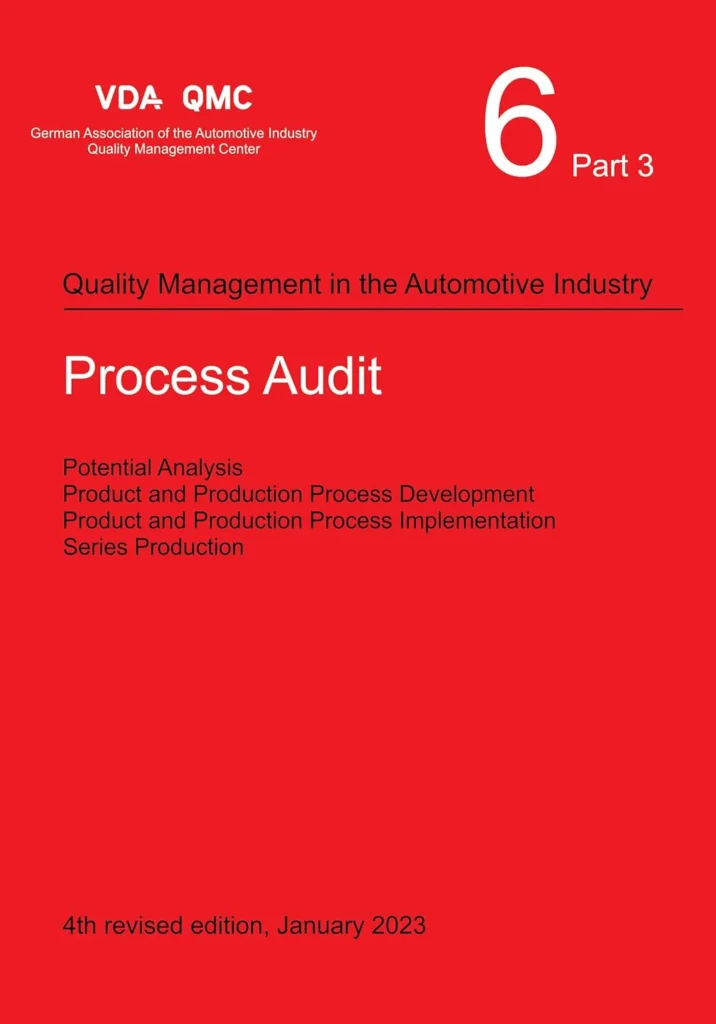
I strongly recommend the official VDA Volume 6 Part 3 : Process Audit, 4th Revised Edition for auditors working in automotive supplier quality.

Why India Is Becoming a Major Opportunity Hub for Automotive Suppliers?

India is no longer seen only as a low-cost manufacturing destination. Today, it is increasingly being viewed as a high-quality supply chain hub for global automotive programs. 

Domestic production volumes and auto component output continue to rise, supported by strong demand from passenger vehicles, commercial vehicles, EVs, and exports. From a supplier perspective, this means more RFQs, more localization projects, and more chances to enter global platforms.

One of the biggest reasons for this growth is the shift in global sourcing strategies. Many European and German automotive companies are actively diversifying supply chains outside traditional locations. 

For Indian suppliers, this creates a direct opening for supplier compliance India Germany projects, especially when they can demonstrate robust process controls. I have personally seen customers move faster with nomination decisions when the supplier already has VDA audit maturity.

A simple example is a precision machining supplier in Pune supplying transmission shafts to domestic OEMs. Once the company aligns its APQP, PFMEA, control plan, layered process audits, and traceability with VDA expectations, it becomes much easier to approach German customers. 

This is where quality becomes a sales tool, not just an audit requirement.

VDA 6.3 automotive suppliers India opportunities:

This is where the real business case begins. In 2026, suppliers who understand VDA 6.3 are not only preparing for audits but actively positioning themselves for export to German OEM India programs. 

German OEMs and their Tier 1 networks heavily rely on process-based supplier assessments, and VDA 6.3 continues to remain one of the most recognized frameworks.

From my auditor’s point of view, the biggest opportunity lies in supplier onboarding and new project awards

When a supplier can show strong performance across P2 to P6 elements—project management, product realization, supplier management, and production—it creates trust. Customers see this as lower risk, better launch readiness, and reduced field failure chances.

For example, an Indian wiring harness manufacturer targeting EV programs in Europe can use VDA 6.3 to strengthen:

  • process flow control
  • mistake proofing
  • special characteristic management
  • operator skill matrix
  • reaction plan effectiveness

These are exactly the areas German customers review deeply.

Another major opportunity is in supplier development projects led by global Tier 1 companies. 

Many Tier 1 suppliers working with brands like BMW, Mercedes, Volkswagen, Bosch, and ZF often require their Indian vendor base to align with Indian Tier 1 supplier standards that mirror VDA expectations.

Read more from:

Market Statistics That Suppliers Should Not Ignore in 2026:

Let me put this into business perspective with actual numbers. India’s auto components market is estimated at over USD 58 billion in 2025, with growth continuing into 2026 and beyond. 

This is a very significant number because even a small share of export-driven contracts can transform a mid-sized supplier.

Industry data also shows strong production and sales growth across passenger and two-wheeler segments in FY26. More vehicle production means more demand for:

  • machined parts
  • plastic molded components
  • electronics
  • stamping parts
  • battery modules
  • connectors
  • rubber seals

This naturally increases the need for automotive quality India systems that can scale without failures.

From the German side, global investment plans in automotive innovation remain strong, especially in EV, AI, software-defined vehicles, and advanced manufacturing. That means Indian suppliers who are quality-ready can tap into future programs, not just current RFQs.

Why German OEMs Prefer VDA-Aligned Suppliers?

This is a point many suppliers miss. German OEMs do not only buy parts; they buy process confidence. They want assurance that the supplier can consistently deliver the same output across volume ramps, engineering changes, and customer escalations.

VDA 6.3 helps establish this confidence because it focuses on:

  • risk-based thinking
  • process capability
  • escalation controls
  • supplier development
  • launch readiness
  • production robustness

In my audits, one of the first things German customers usually assess is whether the plant can control variation. 

For example, if a forging supplier in Chennai produces steering knuckles, the customer will check not just dimensional compliance but also process discipline such as:

  • tool life monitoring
  • SPC reaction plans
  • heat treatment validation
  • operator certification
  • layered audit effectiveness

This is why IATF VDA India integration is becoming a practical necessity.

Recommended Reference Materials and Audit Resources:

For professionals wanting to perform stronger audits, these references are extremely useful:

I strongly recommend the official VDA Volume 6 Part 3 : Process Audit, 4th Revised Edition for auditors working in automotive supplier quality.

Read more from:

How Indian Suppliers Can Convert VDA Into Business Opportunities?

This is the part where I advise suppliers as a QA/QC expert.

The first opportunity is customer approval acceleration. A supplier already trained in VDA terminology and process controls usually moves faster during technical audits. This directly improves sourcing confidence.

The second opportunity is reduction in customer complaints. Better process discipline reduces:

  • line rejection
  • PPM
  • warranty claims
  • sorting costs
  • premium freight

These savings directly improve margins.

The third opportunity is new export business. For many Indian auto components VDA suppliers, Europe remains a strong growth market. When documentation, traceability, and process validation are aligned, export qualification becomes easier.

A practical example is a die-casting supplier making EV housing components. If they implement:

  • PFMEA linkage to control plan
  • inline leak testing
  • torque traceability
  • poka-yoke fixture validation
  • SPC trend escalation

They significantly improve their chances of supplier nomination.

VDA 6.3 Opportunities in India:

In 2026, VDA 6.3 creates strong opportunities for Indian automotive suppliers by improving export readiness, supplier compliance, and process credibility for German OEMs and Tier 1 companies. 

Companies with VDA-aligned production systems are better positioned for global sourcing, EV projects, and long-term supplier partnerships. 

The framework helps improve audit scores, customer trust, and operational consistency. For suppliers targeting Germany and Europe, VDA 6.3 is increasingly becoming a growth enabler rather than only a quality requirement.

What I Recommend as a Quality Manager?

If I were guiding a supplier plant today, I would start with three actions immediately:

  • gap assessment against VDA 6.3
  • VDA training India team certification
  • process risk audit for P2 to P6

Training availability in India has improved significantly, and official programs are now more accessible. This means suppliers can start building internal auditor capability faster than before.

The plants that move early in 2026 will have the strongest advantage.

Tier 1 Growth, EV Supply Chain, Export Readiness, and Certification Roadmap:

I now want to take you deeper into where the real business opportunities exist for Indian suppliers in 2026. 

From my experience as a Quality Manager, VDA process auditor, and supplier development lead, this is the stage where companies move from theory to actual revenue opportunities. 

Many suppliers understand VDA 6.3 as an audit requirement, but the real value lies in how it helps win new business, especially from German OEMs and global Tier 1 companies. 

In 2026, the India–EU trade environment and automotive export momentum make this more relevant than ever.

Tier 1 and Tier 2 Supplier Opportunities in India:

One of the strongest growth areas for VDA 6.3 India automotive suppliers is the Tier 1 and Tier 2 ecosystem. 

German OEMs rarely source every part directly from a single supplier; instead, they rely on an extensive network of Tier 1 integrators and Tier 2 manufacturing partners. 

This creates large-scale opportunities for Indian companies involved in machining, forging, plastics, electronics, wiring harnesses, and precision assemblies. For suppliers in Pune, Chennai, Sanand, Hosur, and Manesar, this is a major business window.

In practical terms, a Tier 2 supplier making precision machined shafts, aluminum housings, and steering components can position itself for Tier 1 sourcing if it demonstrates VDA-aligned process maturity. 

What Tier 1 companies want to see is not just part quality but repeatable process stability

This includes strong control plans, reaction plans, SPC discipline, poka-yoke systems, and traceability. These are exactly the points covered under P5 and P6 of VDA 6.3.

For example, I recently guided a medium-sized CNC supplier that wanted to enter the German transmission parts market. Their dimensions were already within tolerance, but the customer concern was process variation over large volumes

Once we aligned their setup approval, tool life monitoring, first-off inspection, and layered audits to VDA expectations, the customer moved them into pilot supply discussions within a few months.

EV and Battery Component Suppliers Have the Biggest Opportunity:

If I have to identify the largest opportunity segment in 2026, it is clearly the EV supply chain. India’s EV targets remain aggressive, with policy and industry support pushing electrification across passenger vehicles, buses, trucks, and two-wheelers. 

The German automotive industry itself has highlighted India’s EV growth targets as a major opportunity area.

This directly benefits suppliers involved in:

  • battery casings
  • busbars
  • BMS enclosures
  • cooling plates
  • plastic molded connectors
  • copper terminals
  • thermal interface parts
  • die-cast EV housings

German and European OEMs are highly sensitive to process risk in EV parts because failures can lead to field recalls and safety risks. This is where IATF VDA India alignment becomes a strong advantage.

For example, if an Indian die-casting supplier is manufacturing EV inverter housings, the audit focus will usually include:

  • porosity control
  • leak test validation
  • critical torque traceability
  • material batch traceability
  • thermal cycle validation

These are areas where VDA 6.3 gives suppliers a clear roadmap.

Export to German OEM India – Where the Real Revenue Lies:

This is where many suppliers should focus strategically.

The India–EU trade environment is becoming stronger, and recent developments in trade cooperation are expected to further improve market access and automotive parts movement. 

German automotive leaders have openly recognized India as a major future market and production location.

This means export to German OEM India is no longer limited to large corporate suppliers. Mid-sized and even small specialized component manufacturers now have a realistic chance, especially in:

  • forged components
  • welded assemblies
  • sensor brackets
  • precision turned parts
  • electronics modules
  • fasteners
  • rubber molded seals

A major reason German customers prefer VDA-aligned suppliers is because it reduces launch risk. They want confidence that the supplier can handle volume ramp-up, engineering changes, and customer complaints without operational disruption.

As a QA expert, I always advise suppliers to treat VDA documentation as a commercial tool. Strong process audits improve RFQ confidence.

How VDA Certification India Creates Supplier Credibility?

Let me explain this from an auditor’s viewpoint.

Customers often use VDA audit readiness as an indirect measure of supplier maturity. Even if they do not formally ask for a certificate in the first RFQ, they often assess whether the supplier team understands:

  • process risks
  • customer-specific requirements
  • escalation process
  • supplier development
  • launch planning
  • preventive quality controls

This is why VDA certification India and VDA training India have become more valuable in 2026.

A trained team immediately performs better in customer audits because they understand the language of process compliance. They know how to demonstrate evidence for P2 to P6 process elements.

For example, when a German customer asks about reaction plan effectiveness, a trained supplier team can directly show:

  • SPC out-of-control action matrix
  • line stop escalation
  • MRB flow
  • containment actions
  • 8D trigger criteria

This level of confidence creates trust.

Real Example – Pune Supplier Success Story:

Let me give you a practical example because this helps readers understand the opportunity better.

A Tier 1 welding and metal component supplier in Pune implemented VDA 6.3 to align with German OEM expectations. The transformation focused on process discipline, APQP controls, supplier management, and layered process audits. 

The implementation reportedly improved their readiness significantly and helped strengthen their market position.

This is exactly how Indian suppliers should look at VDA 6.3.

It is not just an audit score.

It is a business growth system.

When a supplier can demonstrate 85–90% process maturity in six months, customers notice.

Step-by-Step Certification and Readiness Roadmap:

From my professional perspective, I recommend the following roadmap for suppliers.

1. Phase 1 – Gap Assessment:

Start with a full plant process audit.

Focus on:

  • project management
  • supplier controls
  • production process controls
  • customer complaint loop
  • engineering change process

2. Phase 2 – Documentation Alignment:

Strengthen:

  • PFMEA
  • control plans
  • SOPs
  • traceability records
  • skill matrix
  • layered audits

3. Phase 3 – Production Validation:

Run internal audits on:

  • process capability
  • torque control
  • SPC trends
  • preventive maintenance
  • mistake proofing

4. Phase 4 – Team Capability:

Complete VDA training India for:

  • quality engineers
  • supplier quality
  • production managers
  • internal auditors
  • plant heads

5. Phase 5 – Customer Simulation Audit:

Conduct a mock German OEM audit.

This is one of the most effective steps.

What Meant For Indian automotive suppliers in 2026?

For Indian automotive suppliers in 2026, the biggest VDA 6.3 opportunities lie in Tier 1 sourcing, EV components, exports to German OEMs, and supplier development projects. 

Suppliers with strong process controls, traceability, and VDA-trained teams are more likely to win export business and improve customer trust. The framework helps reduce launch risk, improve compliance, and support long-term sourcing relationships. 

For India-based suppliers targeting Europe and Germany, VDA 6.3 is increasingly a direct growth driver.

Implementation Strategy, Audit Best Practices, Risks, and Growth Roadmap:

I now want to guide you from a Quality Manager and Certified Auditor’s practical perspective on how Indian suppliers can convert VDA 6.3 into long-term growth, customer trust, and export success. 

By 2026, the automotive supplier landscape is changing fast, especially with strong movement toward EVs, electronics, software-led components, and global sourcing diversification. 

Industry studies show that supplier demand is expected to continue growing, with battery and EV powertrain components seeing around 13% annual growth, while India is increasingly seen as a strategic manufacturing location.

For Indian suppliers, this is exactly the right time to strengthen process maturity, because customers are no longer evaluating only cost and part quality. They now assess process stability, launch readiness, risk control, and supplier resilience

This is where VDA 6.3 gives a clear advantage.

How to Implement VDA 6.3 Effectively in an Indian Manufacturing Plant?

From my own plant audit experience, the first step is to avoid treating VDA 6.3 as just another checklist. It must be implemented as a process discipline framework that connects quality, production, maintenance, logistics, and supplier quality functions. 

When suppliers use it only during customer visits, the system never delivers business value. Instead, it should become part of everyday shopfloor management.

The best way to start is with a full process gap assessment aligned to P2 through P6 elements. This means reviewing project planning, supplier control, production validation, process capability, and customer complaint response. 

For example, if you are a machining supplier in Hosur producing shafts for European customers, your audit must cover everything from raw material traceability to final packing verification. This level of depth is what builds confidence.

I strongly recommend that every plant begins with the following internal audit points:

  • PFMEA linkage to control plan
  • operator skill certification
  • SPC reaction matrix
  • tool life control
  • preventive maintenance compliance
  • special characteristic controls

These areas often become major audit findings.

Common Audit Failures I Frequently See in Indian Suppliers:

This is one of the most important sections for readers.

In many supplier audits across India, the biggest issue is not lack of systems, but lack of process discipline. Documents are available, but the actual execution on the shopfloor does not match what is written. 

German OEMs and Tier 1 customers quickly identify this gap.

Some of the most common failures include:

  • PFMEA not updated after engineering changes
  • control plans not linked to real inspection frequency
  • SPC charts filled manually without actions
  • torque traceability missing
  • reaction plans not followed during defects
  • supplier incoming inspection weak
  • line clearance not documented

For example, I once audited a plastic molded connector supplier where the control plan clearly mentioned hourly dimensional checks. However, actual records showed inspections only every 4 hours. 

This single gap directly affected customer trust because it indicated weak process adherence.

Another common gap is poor layered audit discipline. Plants create audit formats but fail to use them consistently.

Supplier Development Opportunities with German Customers:

This is where Indian automotive suppliers Germany partnerships become highly valuable.

German OEMs and Tier 1 companies increasingly run supplier development programs rather than immediately rejecting new suppliers. If an Indian supplier demonstrates willingness to improve and shows VDA alignment, customers often support structured development plans.

Typical supplier development focus areas include:

  • process capability improvement
  • complaint closure speed
  • launch readiness
  • material traceability
  • logistics discipline
  • line poka-yoke systems

In my experience, customers appreciate suppliers who respond with data-driven improvements.

For example, if customer PPM is 850 and the target is below 100, a supplier using VDA methods can present:

  • Pareto analysis
  • process root cause
  • corrective validation
  • recurrence prevention
  • layered audit evidence

This creates credibility.

The Opportunity in EV, Electronics, and Thermal Systems:

According to recent industry studies, batteries and EV-related components remain one of the fastest-growing supplier segments globally. This is especially relevant for Indian suppliers involved in:

  • cooling lines
  • VDA connectors
  • battery housings
  • thermal management systems
  • sensor modules
  • high-voltage wiring

The global Automotive VDA connector market itself was valued at approximately USD 475 million in 2025 and is expected to continue growing.

This directly supports opportunities for Indian auto components VDA manufacturers.

For example, a supplier producing battery cooling connectors in Gujarat can align VDA process controls around:

  • sealing validation
  • pressure testing
  • leak traceability
  • material compatibility
  • mold wear controls

These process controls significantly improve export readiness.

Major Opportunities For Indian Automotive Suppliers:

VDA 6.3 creates major opportunities for Indian automotive suppliers in 2026 by improving process maturity, export readiness, and customer trust for German OEM and Tier 1 sourcing programs. 

Suppliers with strong VDA implementation can improve audit scores, reduce defects, and strengthen EV and export business opportunities. 

The biggest growth areas include battery components, electronics, machining, connectors, and precision assemblies. Plants with trained teams and stable production systems are more likely to win long-term contracts.

Practical Tips I Recommend as a QA/QC Expert:

If I were advising a plant head today, these would be my immediate recommendations.

1. Train Internal Auditors:

Build at least 3–5 trained internal auditors.

Focus teams from:

  • quality
  • production
  • maintenance
  • supplier quality

2. Run Monthly Process Audits:

Do not wait for customer audits.

Run monthly audits covering:

  • setup verification
  • process drift
  • calibration
  • operator competency

3. Strengthen Supplier Chain:

Many customer issues originate from sub-suppliers.

Audit your raw material and outsourced process suppliers.

4. Use Data for Improvement:

Track:

  • PPM
  • scrap %
  • rework %
  • COPQ
  • OEE
  • audit scores

For Indian automotive suppliers in 2026, VDA 6.3 offers significant opportunities in German OEM exports, EV supply chain growth, supplier development, and process excellence. 

The strongest opportunities lie in batteries, connectors, thermal systems, electronics, and precision machining. 

Suppliers that integrate VDA 6.3 with IATF 16949 and strong shopfloor controls can improve audit readiness and increase sourcing success. This framework is now a strategic growth tool for India’s automotive manufacturing sector.

Final Conclusion:

From my professional view as a Quality Manager, Certified Auditor, and QA/QC Expert, VDA 6.3 is no longer optional for Indian suppliers targeting premium customers. 

It directly improves customer trust, process stability, export readiness, and supplier competitiveness.

The suppliers that invest early in 2026 will be the ones best positioned for:

  • German OEM sourcing
  • EV programs
  • Tier 1 partnerships
  • export-led revenue growth

India is in a strong position globally, and suppliers who align quality systems with customer expectations will benefit the most.

Frequently Asked Questions (FAQs)

1. What is VDA 6.3 and why is it important for automotive suppliers in India?

VDA 6.3 is a process audit standard widely used in the automotive industry, especially by German OEMs and global Tier 1 suppliers, to evaluate the effectiveness of manufacturing and supplier processes. 

For automotive suppliers in India, it is important because it helps demonstrate process discipline, risk control, traceability, and production consistency

In 2026, many export-focused suppliers are using VDA 6.3 to improve customer confidence and strengthen their chances of winning business from European and German customers. 

It also supports better alignment with customer-specific requirements and global quality expectations.

Key benefits include:

  • better customer audit scores
  • improved export readiness
  • lower rejection and PPM
  • higher supplier credibility

2. How does VDA 6.3 create business opportunities for Indian automotive suppliers?

VDA 6.3 creates direct business opportunities by helping Indian suppliers become more attractive to German OEMs, European Tier 1 companies, and EV manufacturers

Customers increasingly prefer suppliers who can show strong process control and low operational risk. When a plant follows VDA 6.3, it becomes easier to qualify for new RFQs, export contracts, and supplier development programs. 

In many cases, strong audit readiness also improves long-term sourcing relationships and repeat business opportunities.

Some common opportunity areas are:

  • export programs
  • EV component supply
  • Tier 1 supplier approvals
  • global sourcing nominations

3. Is VDA 6.3 mandatory for Indian suppliers exporting to Germany?

VDA 6.3 may not always be formally mandatory in every RFQ, but in practical terms it is highly expected when supplying to German automotive customers or their Tier 1 network

Many OEMs and major suppliers use VDA 6.3 as part of their supplier qualification, process audits, and periodic assessments. Even when not explicitly requested, customers often assess suppliers using the same principles. 

This is why many Indian suppliers treat it as a strategic requirement for export business.

In simple terms, it is often a strong commercial advantage even when not mandatory.

4. What industries within automotive can benefit the most from VDA 6.3 in India?

Almost every segment in the automotive supply chain can benefit, but in 2026 the strongest growth areas include EV components, electronics, battery systems, machining, castings, plastics, and wiring harnesses

These sectors face strict customer requirements related to traceability, process capability, and defect prevention. 

VDA 6.3 helps suppliers strengthen controls across manufacturing, inspection, and supplier management.

High-opportunity sectors include:

  • battery housings
  • thermal systems
  • precision machined parts
  • plastic connectors
  • forged components
  • electronics modules

5. How is VDA 6.3 different from IATF 16949?

IATF 16949 is a quality management system standard, while VDA 6.3 is a process-focused audit methodology

IATF defines the overall quality system requirements for automotive companies, whereas VDA 6.3 goes deeper into how specific processes are planned, controlled, and improved. In practice, both work together. 

Indian suppliers that combine IATF certification with strong VDA process audits usually perform much better in customer assessments.

A simple way to understand it is:

  • IATF = system framework
  • VDA 6.3 = process execution audit

6. How can Indian Tier 1 and Tier 2 suppliers prepare for a VDA 6.3 audit?

The best way to prepare is to start with a full internal gap assessment against process elements P2 to P6. 

Suppliers should review project management, incoming quality, process capability, operator training, traceability, and customer complaint handling. 

From my experience, many audit findings come from poor linkage between PFMEA, control plans, and actual shopfloor practices. Regular mock audits and layered process audits help a lot.

Recommended preparation steps:

  • PFMEA review
  • control plan validation
  • SPC monitoring
  • operator skill matrix
  • traceability checks
  • reaction plan testing

7. Does VDA 6.3 help Indian suppliers reduce customer complaints?

Yes, absolutely. One of the biggest practical benefits of VDA 6.3 is the reduction of PPM, line rejections, warranty issues, and customer complaints. Since the standard focuses heavily on preventive controls and process discipline, it helps identify risks before defects reach the customer. 

Suppliers that use it effectively often see better process consistency and faster problem-solving.

This helps reduce:

  • sorting costs
  • premium freight
  • rework
  • customer escalations

8. What are the main opportunities for Indian EV component suppliers under VDA 6.3?

EV suppliers in India have some of the biggest opportunities in 2026 because global customers are actively expanding sourcing in batteries, electronics, and thermal systems. VDA 6.3 helps these suppliers strengthen controls for safety-critical parts such as battery enclosures, connectors, and cooling systems. 

Since EV parts often have stricter risk controls, VDA readiness significantly improves supplier confidence.

Major opportunity segments include:

  • battery casings
  • BMS housings
  • cooling connectors
  • busbars
  • sensor brackets

9. Is VDA 6.3 certification available in India?

Yes, VDA training and certification programs are available in India through recognized training bodies, certification agencies, and quality consulting organizations. 

Many suppliers now invest in training their quality engineers, supplier quality teams, and plant managers so they can conduct internal audits and customer audit preparation effectively. 

Having trained auditors internally greatly improves audit performance and process discipline.

This is especially useful for:

  • supplier quality engineers
  • QA managers
  • production leads
  • internal auditors

10. Can VDA 6.3 improve export opportunities for Indian auto component manufacturers?

Yes, VDA 6.3 can significantly improve export opportunities by making suppliers more aligned with the expectations of German and European customers. Many OEMs look for suppliers who can consistently deliver quality, manage risk, and scale production smoothly. 

A strong VDA 6.3 system demonstrates that the supplier is ready for long-term international business and customer audits.

This often leads to:

  • better RFQ conversion
  • faster supplier approvals
  • higher customer trust
  • repeat export orders
This Page uses Affiliate Links. When you Click an Affiliate Link, we get a small compensation at no cost to you. Our Affiliate Disclosure for more info.

Leave a comment